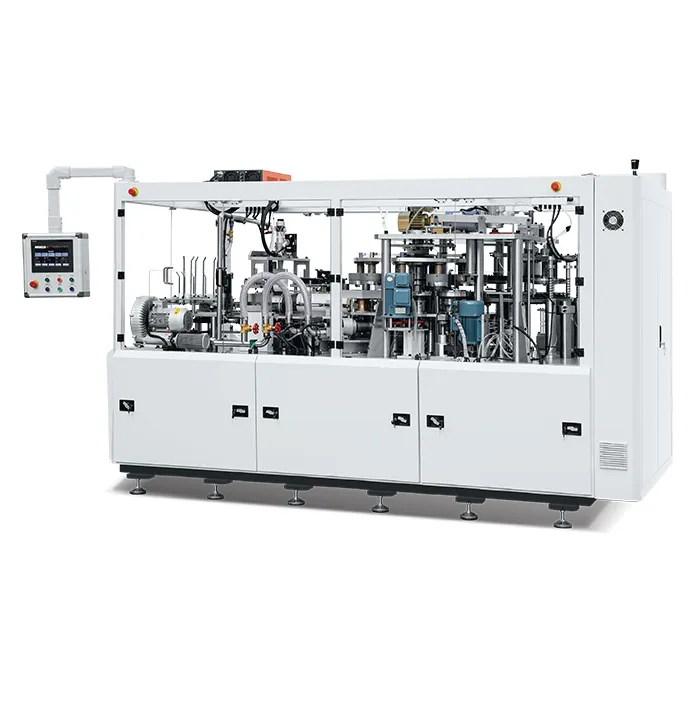
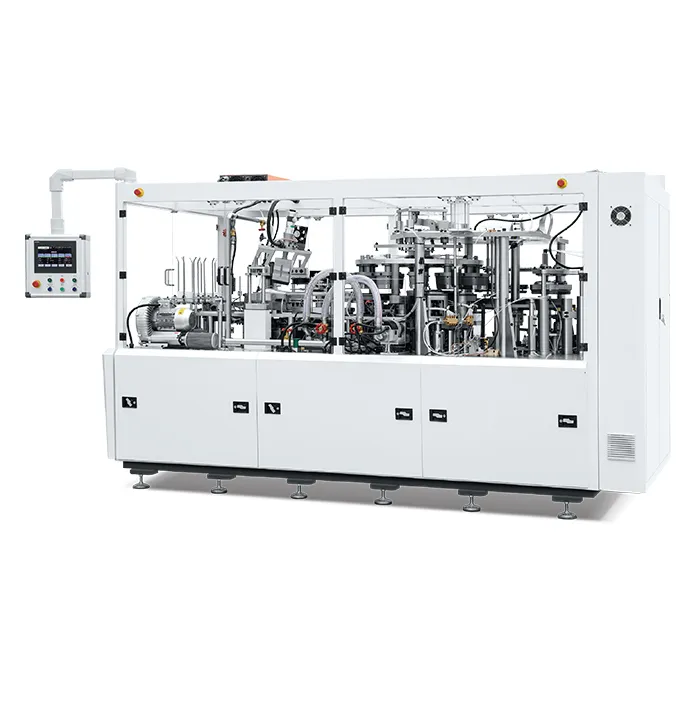
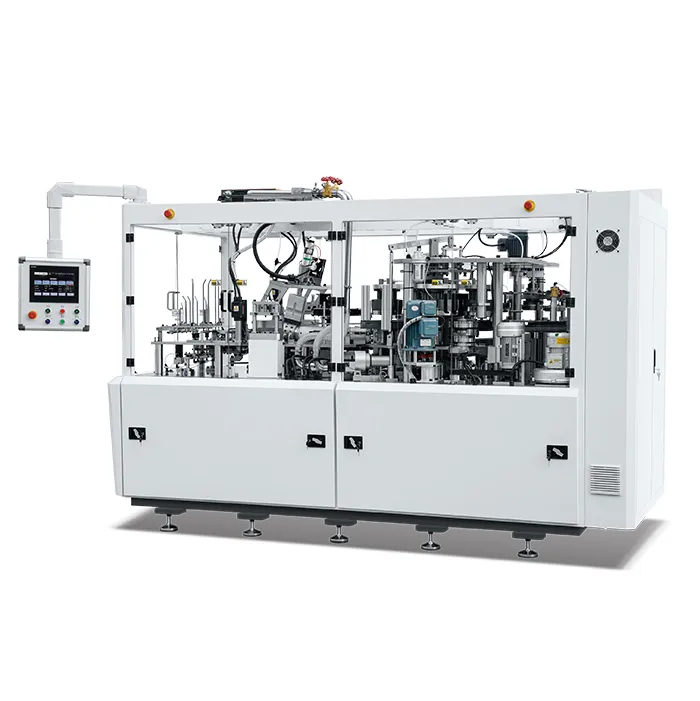
In any volume‑driven disposable cup production environment, the difference between a profitable month and a loss‑making one often comes down to unscheduled stoppages. A forming station that goes out of alignment mid‑shift, a bottom heater that drifts out of its temperature window, or a worn cam follower that finally gives way – these failures rarely happen without warning. They build up over days of skipped lubrication, missed inspections, and operators who were never given a clear checklist.
Manufacturers of automated cup forming equipment publish recommended maintenance intervals for a reason. The machines are designed to run millions of cycles, but only when the critical wear points receive consistent attention. The following daily, weekly, and monthly tasks are drawn from standard operating procedures used across the industry, and they apply broadly to medium‑speed and high‑speed forming lines alike.
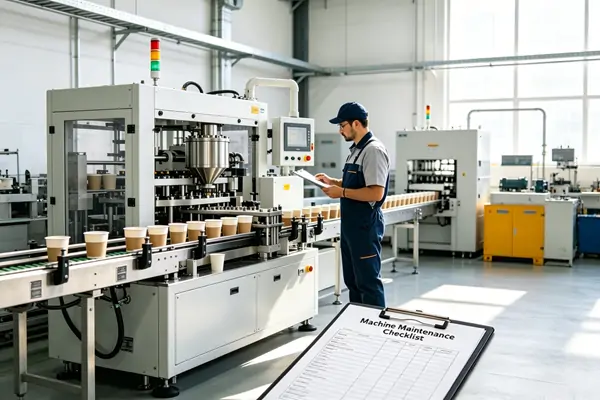
Daily Tasks (Every Shift)
Daily maintenance focuses on cleaning, visual inspection, and verifying the settings that directly affect cup quality.
1. Clean Paper Dust from Forming Stations and Sensors. Paper dust accumulates quickly on the mandrels, bottom punches, and optical sensors that detect cup position. Build‑up on sensors can cause false readings and trigger unnecessary stops. Use a dry, lint‑free cloth or low‑pressure compressed air to remove dust from sensor lenses and tooling surfaces. Avoid blowing dust into bearing housings.
2. Check the Automatic Lubrication System. Many modern forming machines – including models equipped with continuous automatic spray lubrication – ensure that critical wear points remain oiled without operator intervention. Confirm that the lubricant reservoir is filled to the indicated level and that the spray nozzles are unobstructed. A dry cam or gear can wear rapidly at production speeds. If the machine does not have an automatic system, manually apply food‑grade grease to the grease nipples on the main drive cams, linkage pins, and turret indexing mechanism.
3. Verify Bottom Heater Temperature. The Leister bottom heater, used on medium‑ and high‑speed cup forming equipment with precise temperature control, operates with a temperature control accuracy of ±1°C. Check the displayed temperature against the setpoint for the paper grade being run. A deviation of more than 3°C can cause incomplete sealing (leading to leaks) or overheating (scorching the paper). If the actual temperature drifts, inspect the thermocouple and the air gap between the heater and the cup bottom.
4. Inspect Formed Cups for the First 50 Pieces. At the start of every shift, pull and inspect at least 50 consecutive cups. Look for consistent rim curl, straight side seams, and a uniformly bonded bottom. This quick check catches misalignment that may have occurred during the previous shift change or tooling adjustment.
Weekly Tasks
Weekly maintenance adds deeper cleaning, measurement of wear items, and verification of safety systems.
5. Clean and Inspect the Rim Curling Dies. Remove any paper residue or adhesive build‑up from the curling dies. A rough or contaminated die surface produces uneven rims that can cause stacking problems downstream. Inspect the die edges for nicks or rounding; a damaged, curling die transfers its defects to every cup produced.
6. Check Drive Belt Tension and Gear Mesh. Open the drive cabinet and check the tension of all belts. A loose timing belt can slip, throwing the turret index out of synchronisation and potentially causing a mechanical crash. On gear‑driven machines, inspect the gear teeth for signs of uneven wear. Gear transmission on well‑maintained equipment delivers 98.5% torque efficiency, but only when the mesh remains correctly adjusted.
7. Inspect the Air System. Drain water from the compressed air filter bowl. Check that the air pressure regulator holds a steady pressure – typically around 0.4–0.7 m³/min consumption, depending on the model. Fluctuating air pressure causes inconsistent cup transfer and can lead to jams in the robotic arm pickup.
8. Run a Full Leak Test on Sample Cups. Take a random sample of 50 cups from the week's production and fill them with water at the intended service temperature. Let them stand for 15 minutes on absorbent paper. Any leaks indicate a developing problem with bottom sealing pressure or heater calibration.
Monthly Tasks
Monthly maintenance involves the replacement of consumable components, detailed measurement, and system‑level checks.
9. Replace Worn Sealing Elements and O‑Rings. The sealing head O‑rings and any silicone or rubber components in the bottom press degrade with heat and mechanical cycling. Replace them on a scheduled basis rather than waiting for failure. The cost of a set of O‑rings is negligible compared to the cost of scrapped cups from a missed seal.
10. Measure Mandrel and Punch Dimensions. Mandrels and bottom punches wear gradually, especially when running abrasive or thick paperboard. Use a micrometre to check the diameter at three points on each mandrel. Wear beyond 0.05 mm from the specification can affect cup forming accuracy and sealing quality. Keep a log; a trend toward undersize indicates it is time to order replacement tooling, which on high‑speed forming lines with modular quick‑change tooling sets can be swapped with minimal downtime.
11. Inspect Cam Followers and Bearings. The open‑type cam drive system, with its double longitudinal axis, delivers positioning accuracy of ±0.005 mm when properly maintained. A worn cam follower bearing introduces play that degrades this accuracy. Rotate each follower by hand; any roughness, noise, or radial play requires immediate replacement. This is especially important on high‑speed lines running 140–160 cups per minute, where cyclic loads are higher.
12. Review the Lubrication Log and Oil Analysis. If the machine uses a central lubrication system, send an oil sample for analysis to check for metal particles that indicate abnormal wear. Adjust the lubrication interval if the analysis shows elevated wear metals. For machines with continuous spray lubrication, the oil change cycle can extend to 6,000 hours, but only if the oil remains clean and the filtration system works properly.
Common Mistakes That Shorten Equipment Life
Skipping Lubrication Because the Machine "Sounds Fine." By the time a dry bearing becomes audible, wear has already begun. Lubrication is preventive, not corrective.
Using the Wrong Grease. Food‑grade grease is required for any lubrication point that could contact the paper path. Using a non‑food‑grade product risks contamination and regulatory issues.
Extending Tooling Life Beyond Tolerance. Running mandrels that are undersized or curling dies with chipped edges produces cups that may pass a quick visual check but fail at the customer's filling line. The cost of a returned shipment far exceeds the cost of timely tooling replacement.
Building Your In‑House Maintenance Program
The checklist above provides a starting point. The most effective programs add two elements: a written log that stays with each machine, and a relationship with the equipment supplier for technical support and genuine spare parts. Operators who understand why each task matters perform them more consistently than those following a list by rote.
For facilities looking to standardise their maintenance procedures across multiple machines, obtaining the manufacturer's recommended service schedule is a logical step. Technical documentation that covers automated cup production systems with detailed service intervals and spare parts lists can simplify building a program from scratch, especially when it includes model‑specific troubleshooting guides.
A cup forming line is a long‑term asset – machines from the 2008 generation are still in daily production when properly cared for. The difference between a machine that reaches 15 years of service and one that is scrapped after seven is rarely a catastrophic failure. It is the accumulation of small, skipped maintenance tasks that eventually cascade into major repairs. The daily, weekly, and monthly tasks above are designed to stop that cascade before it starts.

 English
 Pусский
 عربي
عربي