A leaking paper cup is not just a quality defect – it is a supply chain failure waiting to happen. When a batch of cups reaches a beverage filling line and leaks at the bottom seal, the result can be damaged secondary packaging, line stoppages, and a rejected shipment that erodes customer trust. In high‑volume automatic cup production, bottom sealing failures rarely appear without warning signs. The challenge is recognising those signs before they turn into a costly return.
The bottom of a paper cup is formed by pressing a die‑cut circle of paperboard against the inner wall of the cup body, then applying heat and pressure to melt the PE or PLA coating and create a bond. The process looks simple, but it depends on four variables working within tight tolerances: temperature, pressure, dwell time, and tooling condition. When cups start to leak, the root cause almost always lies in one of these four areas.
1. Bottom Heater Temperature Drift
The most common cause of inconsistent bottom seals is temperature variation at the Leister bottom heater, or whichever heating element is installed on the line. This is the station where the cup base is heated to activate the PE or PLA coating before pressing.
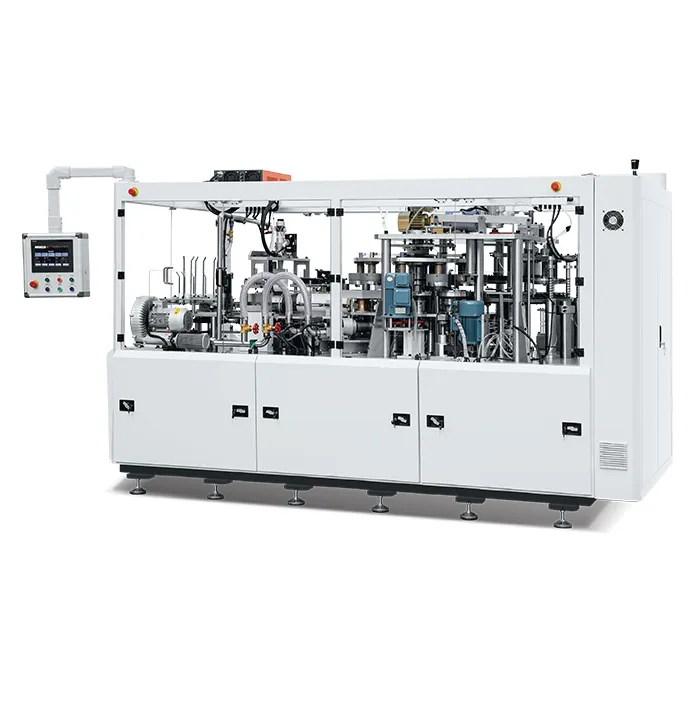
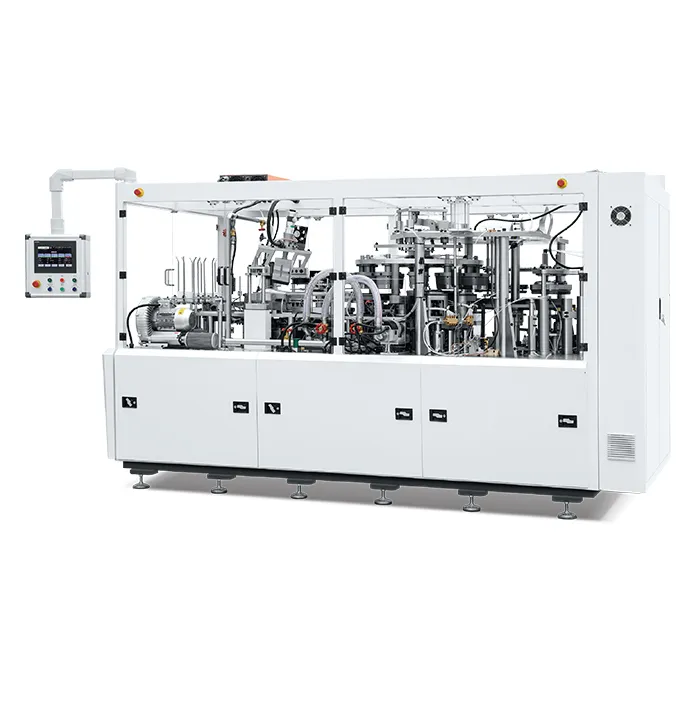
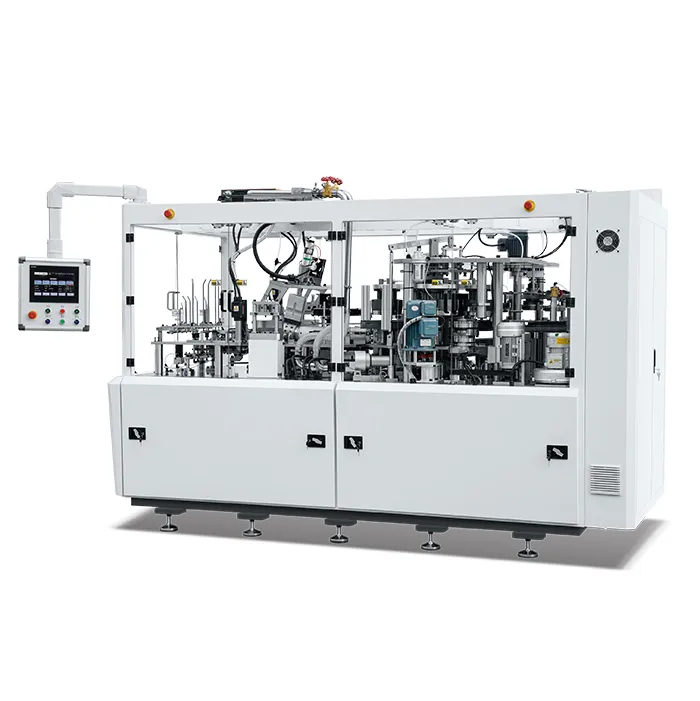
A well‑calibrated heater on equipment such as automatic cup forming systems with precise Leister bottom heating maintains temperature control within ±1°C. Even a drift of 3–5°C beyond the setpoint can produce visible defects: too low, and the coating does not flow sufficiently to bond the bottom disc to the sidewall, leaving micro‑gaps that leak under liquid pressure; too high, and the coating scorches or degrades, creating a brittle seal that cracks when the cup is flexed.
To troubleshoot heater‑related leaks:
-
Verify the displayed temperature against an independent thermocouple measurement. Do not rely solely on the machine’s built‑in display; a faulty thermocouple can report a stable value while the actual temperature wanders.
-
Check the air gap between the heater and the cup bottom. If the gap is uneven – for instance, because the heater mounting bracket has loosened – some cups in the batch will receive less heat than others, producing intermittent leaks that are difficult to reproduce.
-
Inspect the heater surface for contamination. Paper dust or polymer residue on the heating element creates hot spots that transfer unevenly to the cup.
2. Insufficient or Inconsistent Bottom Pressure
Even with a perfect temperature, a weak bond results if the pressing force is too low or if the force is applied unevenly. The bottom press mechanism – typically a cam‑driven or pneumatic punch – must deliver repeatable pressure across every cycle.
At higher production speeds (above 100 cups per minute), the dwell time under pressure becomes very short. This places a premium on mechanical consistency. A worn cam follower or a slight misalignment in the bottom‑forming station can reduce the effective pressure on part of the cup circumference. The result is often a crescent‑shaped leak pattern that appears near one side of the bottom.
To isolate pressure‑related faults:
-
Perform a dye‑penetrant test or a simple water‑fill test on a sample of 50 consecutive cups. If leaks cluster on one side, suspect tooling misalignment. If leaks are random, suspect inconsistent air pressure or a mechanical bind.
-
Check the air pressure regulator and filter. Fluctuations in compressed air supply affect pneumatic pressing systems. Drain the filter bowl and verify steady pressure within the specified range, typically 0.4–0.7 m³/min, depending on the machine model.
-
Inspect the pressing punch and its guide bushings for signs of uneven wear. A punch that rocks slightly in its bore applies a different force across the cup bottom.
3. Worn or Damaged Tooling
The bottom punch, mandrel, and curling dies all wear over time, especially when running abrasive paperboard or high‑mineral‑content coatings. Wear beyond 0.05 mm from the original specification can alter the geometry of the seal area enough to cause leaks.
Mandrels that have become undersized allow the cup body to shift slightly during bottom insertion, creating a gap between the disc edge and the wall. Bottom punches with worn edges produce a radius at the seal line instead of a sharp, complete bond. These defects develop gradually and are often missed until the leak rate crosses a threshold that triggers a quality alert.
When tooling wear is suspected:
-
Use a micrometre to measure the mandrel diameter at three points along the working length. Compare readings to the original drawing or to a new mandrel of the same specification. Record measurements in a log to track wear trends.
-
Inspect the bottom punch edge under magnification. Any rounding, chipping, or surface roughness transfers directly to the seal area.
-
Replace tooling before it reaches the tolerance limit. For lines running high‑speed cup forming platforms with quick‑change modular tooling, a complete tooling swap can be completed in under 30 minutes, minimising production loss.
4. Material Batch Variations
Sometimes the machine is in perfect adjustment, but the paperboard itself is the variable. PE‑coated paperboard from different suppliers – or even different production batches from the same supplier – can have slightly different coating thickness, melt flow index, or moisture content. PLA coatings, increasingly specified for compostable cups, have a narrower processing window than PE and are less forgiving of temperature and dwell time changes.
When leaks appear shortly after switching to a new material batch:
-
Check the coating grammage. Standard PE‑coated cupstock typically carries 15–18 g/m² of coating on each side. A lower coating weight may require a slightly higher temperature or longer dwell.
-
Verify moisture content. Paperboard that has absorbed moisture from storage in humid conditions can steam during heating, creating pinholes in the seal. Store paper rolls in a controlled environment and allow them to acclimate before use.
-
For PLA‑coated board, reduce the temperature differential between the heater setpoint and the actual melting point of the coating. Start at the lower end of the recommended range and increase in 2°C increments, testing cups at each step.
Building a Routine That Catches Failures Early
The most effective leak‑prevention strategy is not reactive troubleshooting – it is a structured quality check routine embedded into the production schedule.
-
First‑of‑shift check: Pull 50 consecutive cups and water‑test them for 15 minutes.
-
After every tooling change, run a 30‑cup leak test before resuming full production.
-
Hourly spot check: Visually inspect the bottom seal area for discolouration, incomplete bonding, or a ragged edge.
-
Log all readings: Heater temperatures, air pressure, and tooling measurements should be recorded in a shift log. Trends become visible long before a problem reaches the customer.
When a forming line is built around well‑designed heating and pressing stations, operators spend less time chasing intermittent leaks and more time running productive output. For production teams evaluating automatic cup forming equipment with calibrated Leister heating and closed‑loop temperature control, the specification sheet should list the temperature accuracy, the bottom bonding strength (typically ≥18 N/cm for a correctly set machine), and the tooling changeover time.
Bottom sealing is a precision operation disguised as a simple pressing step. The difference between a consistently leak‑free cup and a batch that fails at the filling line is often a few degrees of temperature, a fraction of a millimetre of wear, or a pressure fluctuation that lasts half a second. The troubleshooting steps above give operators a systematic way to locate the source of the problem and correct it before the next shipment leaves the factory.

 English
 Pусский
 عربي
عربي