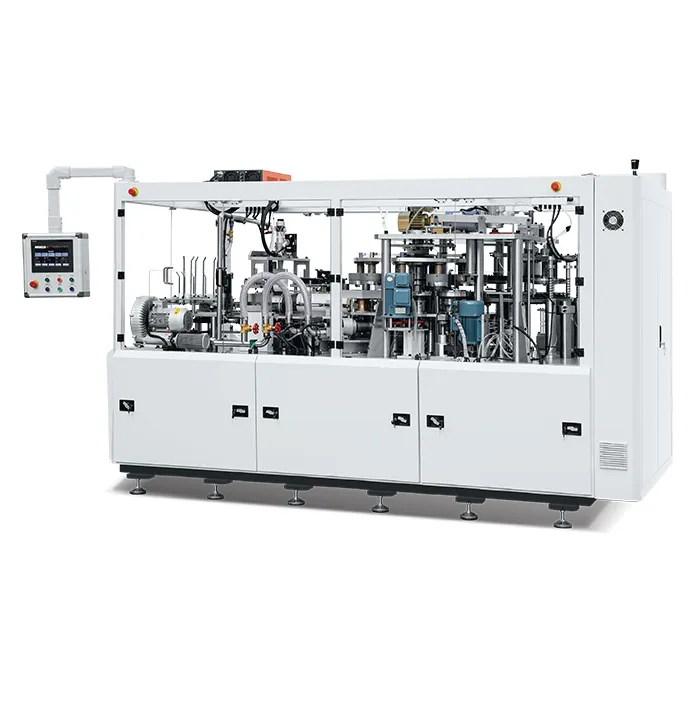
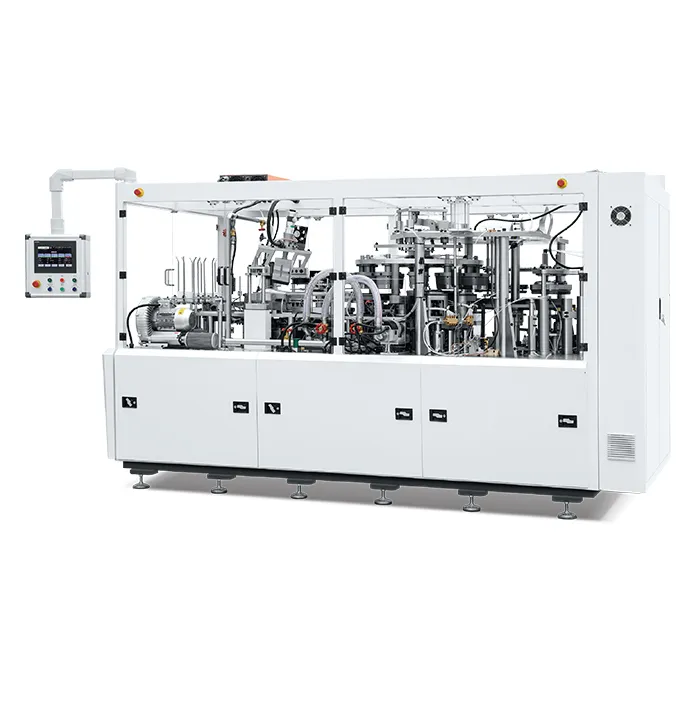
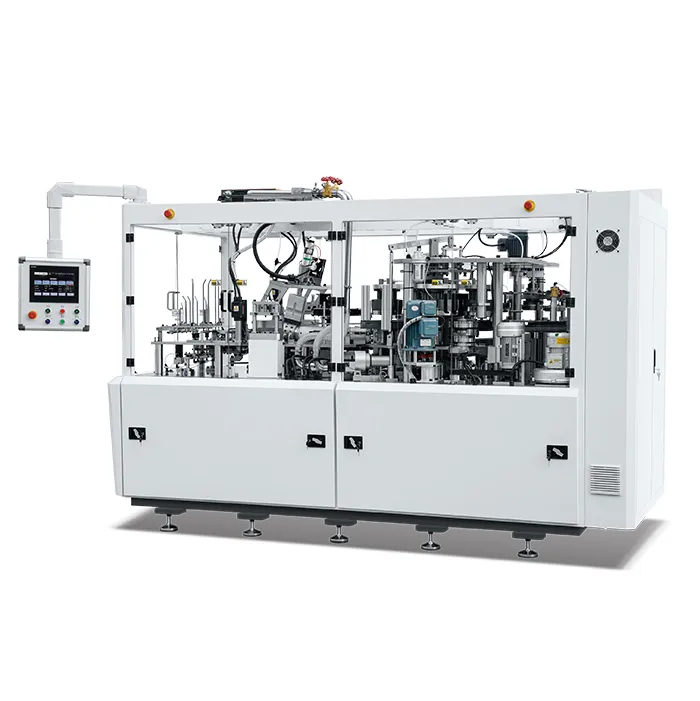
For a business entering disposable cup manufacturing for the first time, the price tag on a cup-forming machine is naturally the first number that catches the eye. Comparing quotes from different suppliers and choosing the lowest figure feels like the sensible financial decision. However, an entry‑level machine that runs 20% slower than expected, requires frequent manual adjustments, or cannot switch between cup sizes without hours of downtime will cost far more over its first year of operation than the difference between the cheapest quote and a well‑specified mid‑range model. Before you commit to your first Paper Cup Machine, it is essential to look beyond the headline price and understand the specifications that determine whether the equipment will support your business or hold it back.
A first‑time buyer rarely has the in‑house experience to know which specifications drive long‑term profitability and which are merely numbers on a brochure. The five factors below are the ones that experienced cup manufacturers check before signing an order—and they matter far more than the purchase price.
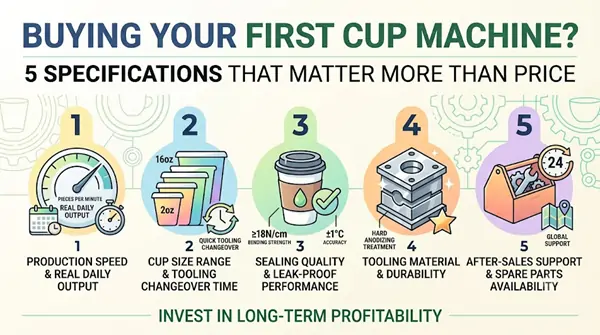
1. Production Speed and Your Real Daily Output
The rated speed of a cup-forming machine—expressed in pieces per minute—is measured under ideal conditions with a specific paper grade and cup size. The actual output over an eight‑hour shift is always lower, accounting for start‑up, changeovers, material replenishment, and minor stoppages. A machine rated at 100 cups per minute may realistically deliver 70–80 cups per minute across a full shift.
When evaluating speed, the critical question is not “How fast can this machine run?” but “How many cups can this machine reliably produce in a shift?” A machine that runs at 160 pieces per minute but stops three times per shift for adjustments may produce fewer usable cups per day than a machine running at 110 pieces per minute with stable, uninterrupted operation.
For a first‑time buyer, matching the machine’s realistic output to the business’s order volume is essential. A small startup fulfilling orders of 50,000 cups per week does not need a high‑speed machine rated at 160 cups per minute. A medium‑speed machine in the 90–110 cups-per-minute range, such as the ZSJ‑III model in the Discover cup-forming machine range, will comfortably meet that demand while leaving room for growth.
2. Cup Size Range and Tooling Changeover Time
A machine that produces only one cup size limits the business to a single market segment. A machine that can produce cups from 2 oz to 16 oz—and do so with a quick tooling changeover—allows the manufacturer to serve coffee shops, fast‑food chains, and event caterers from the same production line.
The tooling changeover time is as important as the size range. Some machines require 30–45 minutes of mechanical adjustment to switch between cup sizes. Others use modular tooling that can be swapped in 15–20 minutes. For a manufacturer producing multiple cup sizes per day, the difference between a 20‑minute changeover and a 45‑minute changeover can mean an extra 30–50 minutes of productive time per shift. Over a month, that adds up to hours of additional output—far outweighing any saving on a cheaper machine with slower changeover.
3. Sealing Quality and Leak‑Proof Performance
The reputation of a cup manufacturing business depends on one thing above all: the cups must not leak. A cup that fails at the customer’s filling line—dripping coffee onto a consumer’s hand or leaking soup into a delivery bag—can cost the manufacturer a contract.
Sealing quality depends on two machine characteristics: the bottom heater and the sealing pressure control. A Leister bottom heater with precise temperature control maintains the bond strength needed for a leak‑proof seal. The Discover machines, for example, specify a cup bottom bonding strength of ≥18 N/cm and a temperature control accuracy of ±1 °C. These numbers translate directly into seal reliability. When comparing machines, ask the supplier for the bottom-bonding strength specification and the temperature-control accuracy. A supplier that cannot provide these figures is not measuring the parameter that matters most. Before you decide on a Paper Cup Machine, make sure the sealing technology has been proven to deliver consistent, leak‑proof cups across long production runs.
4. Tooling Material and Durability
The moulds that form the cup—the bottom punch, mandrels, and rim‑curling dies—are consumable items. They wear over time, and when they wear, the cup dimensions drift, and the seal quality degrades. The material of the tooling determines how quickly this wear occurs.
Entry‑level machines may use lower‑grade aluminium for the moulds. Higher‑specification machines use 6061‑T6 or 7075‑T651 aluminium alloys, which offer significantly better wear resistance and dimensional stability. Hard anodising treatment further increases the surface hardness and extends the tooling life.
The cost of replacing a set of worn moulds can be substantial, and the production lost during the replacement adds to the expense. A machine with high‑grade alloy moulds costs more upfront but delivers a longer interval between tooling replacements, reducing the total cost of ownership over the machine’s life.
5. After‑Sales Support and Spare Parts Availability
A cup machine is not a consumer product that can be replaced at short notice. When a machine stops, every hour of downtime is an hour of lost production and potentially missed delivery deadlines. The supplier’s after‑sales support—how quickly they respond to technical queries, whether they provide installation and training, and how fast they can ship spare parts—directly affects the manufacturer’s ability to meet commitments.
Before ordering, ask the supplier:
-
What is the warranty period, and what does it cover?
-
Do they provide on‑site installation and operator training?
-
How quickly can they ship common spare parts?
-
Is remote technical support available?
A supplier that provides a one‑year warranty, comprehensive training, and same‑day dispatch of stock spare parts reduces the risk that a minor mechanical issue becomes a major production stoppage.
Making the Decision
A first cup-forming machine is a foundation investment, not a one‑off purchase to be driven by the lowest quote. The five factors above—realistic output, tooling flexibility, sealing performance, mould durability, and supplier support—determine whether the machine becomes a reliable production asset or a source of constant frustration.
For businesses entering the cup manufacturing market, starting with a machine that balances these five factors against a realistic budget is the safest path to a profitable operation. The price difference between a basic machine and a well‑specified model is often recovered within the first year through higher output, fewer stoppages, and less wasted material. For a comprehensive comparison of cup‑forming solutions with detailed technical specifications, reviewing the machine data sheets against the five factors above provides a solid basis for a decision that will serve the business well beyond the initial purchase.

 English
 Pусский
 عربي
عربي