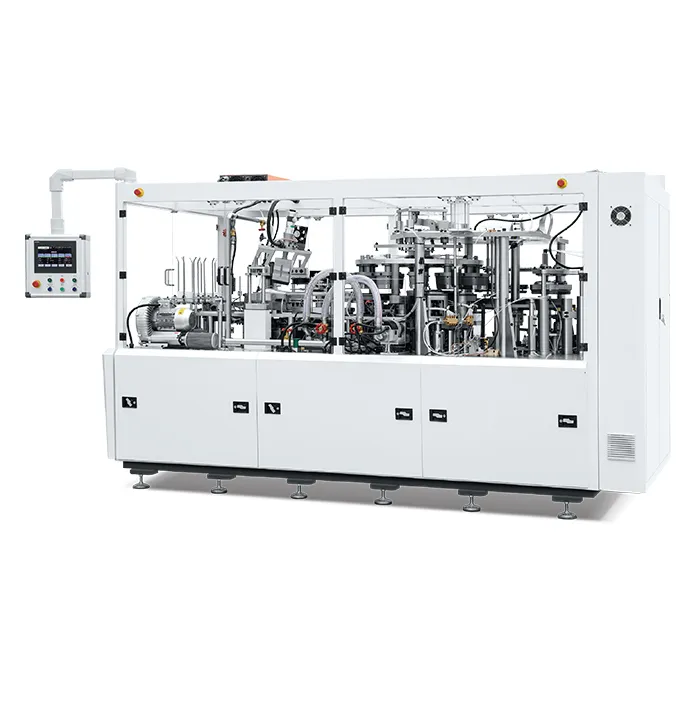
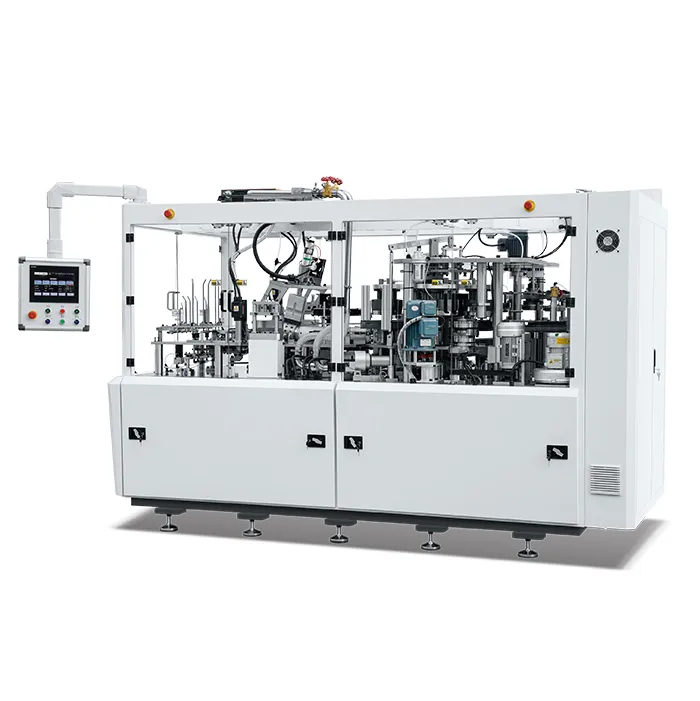
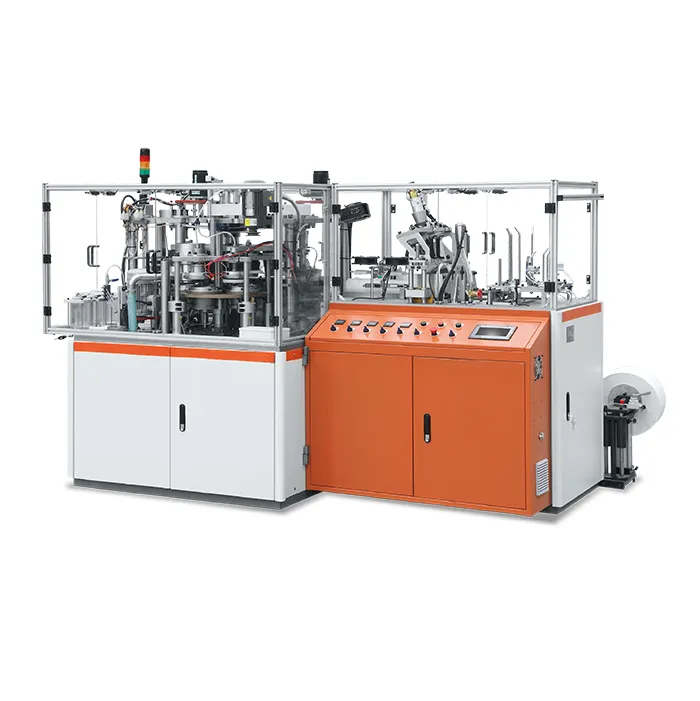
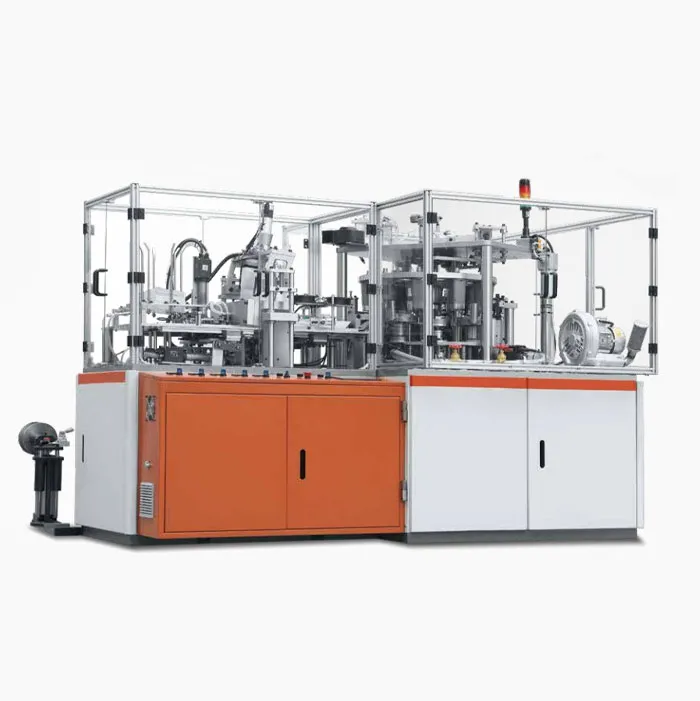
Paper bowl machine manufacturer

Paper Bowl Machines for Round, Large and Rectangular Food Containers

Compare five DISCOVER paper bowl forming machines for round, large-diameter and rectangular containers. Use the published size and output data for initial screening, then confirm the bowl, paper, tooling, utilities and downstream scope for the selected model.

Category definition

What is a paper bowl machine?

01Feed and position the prepared bowl blank
02Form the side wall and seal the seam
03Insert, heat and knurl the wider bottom
04Finish the rim, discharge and inspect

Station sequence, tooling and heating method vary with bowl geometry, coating structure and machine model.

A paper bowl machine forms prepared coated-paper side-wall blanks and bottom material into finished food containers. A conventional round-bowl process normally includes blank feeding, sleeve forming, side-seam sealing, bottom insertion, heating, knurling, rim curling and discharge.

Compared with a conventional paper cup, a bowl may have a wider opening, larger bottom-seal area, greater depth or non-round corners. These differences affect tooling, heating, forming load and downstream handling, so capacity alone is not a sufficient selection criterion.

Round and rectangular bowls may use different forming sequences and mold systems. Confirm the complete finished drawing and paper structure before using a published speed or size range to select a machine.

5 machine modelsFor initial category comparison
Round and non-roundSeparate model-dependent paths
55–120 pcs/minPublished ranges; actual output depends on the project

Choose by finished container

Three paper bowl machine selection paths

Use the finished geometry to identify a model group before comparing output. Capacity labels do not replace the top, bottom, height and shape dimensions required for tooling review.

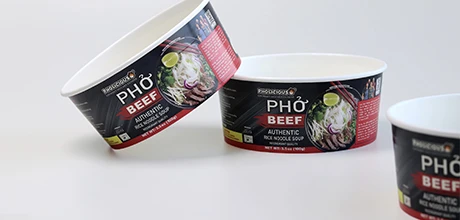
Standard round food bowls for soup, noodles, salad and takeaway applications
01 / ROUND BOWLS

Standard round food bowls

For round soup, noodle, salad and takeaway containers within the selected model's dimensional range. Provide top diameter, bottom diameter, height, paper structure and required net output to compare DWJ-IV, ZWJ-IV and ZWJ-III.

Compare round-bowl models →
Large-diameter and deeper paper bowl formats
02 / LARGE FORMATS

Large-diameter or deeper bowls

DWJ-IV lists a maximum top diameter of 185 mm and height of 136 mm. Confirm the bottom diameter, side-wall angle, paper stiffness and finished sample because a wider base and deeper wall change the forming and sealing conditions.

Review DWJ-IV →
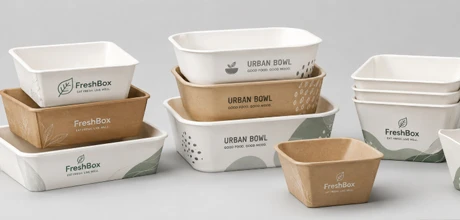
Rectangular and shaped paper bowls in multiple sizes
03 / NON-ROUND

Rectangular and shaped bowls

Provide length, width, depth, corner radius, bottom structure and material data. These formats require a model-specific review of corner formation, mold design, side seam, bottom sealing and product release.

Review FWJ-IV →

Model comparison

Compare five paper bowl machine models

Use these published values for initial screening. A listed maximum or nominal range is not a guaranteed net output: bowl dimensions, paper, coating, sealing conditions, operator setup and downstream handling must be confirmed for the selected configuration.

Model Primary fit Published size Published speed Paper/type Air Details
DWJ-IV Large-diameter round bowls Top Ø ≤185 mm; H ≤136 mm 70–80/min Confirm for bowl 0.6 m³/min View →
FWJ-IV Rectangular bowls requiring shape-specific tooling 170 × 120 mm 55–70/min 210–350 gsm; single/double PE Confirm View →
ZWJ-IV Round bowls requiring the highest published output in this group Top Ø ≤150 mm; H ≤136 mm 110–120/min Confirm for bowl 0.6 m³/min View →
ZWJ-III Medium-speed round bowl production 5–24 oz 80–90/min 210–350 gsm; single/double PE Confirm View →
FBJ-L Selected shaped bowls within the published capacity range 6–28 oz 70–80/min 210–320 gsm; single/double PE Confirm View →

Power supply, rated power, air pressure, machine dimensions, weight and complete bowl dimensions are configuration data to confirm on the relevant product page and quotation.

Available models

Review each machine before technical confirmation

Open the matching product page for dimensions, electrical data, tooling, options and quotation details.

The circular badge shows the published maximum value for initial comparison, not a guaranteed net production rate. Final configuration, material, utilities, test conditions and output require confirmation.

Not sure which model matches your bowl?

Send a finished sample or drawing, complete dimensions, paper and coating data, target net output and downstream requirements.

Engineering features

Confirm the forming architecture for the selected bowl

Drive, heating, lubrication and tooling choices influence synchronization, wide-bottom sealing, shaped corners, material setup and maintenance. Review the actual configuration instead of assuming that every feature applies to every model.

01 / DRIVE

Double open cylindrical cam

Buyer relevance
Drive architecture influences station synchronization, access and maintenance planning.
Published on
FWJ-IV and ZWJ-IV.
Ask or verify
Final drive layout, inspection points, lubrication interfaces and wear-parts list.
02 / HEATING

Heating for the wider bottom

Buyer relevance
Side-seam and bottom heating must suit the coating, bowl depth and wider sealing area.
Published on
Leister bottom heating is listed for FWJ-IV and ZWJ-IV.
Ask or verify
Heating method, material trials and acceptance points for the side seam and bottom knurl.
03 / LUBRICATION

Plan lubrication with maintenance

Buyer relevance
A defined lubrication system supports planned servicing of moving components.
Published on
Integral spray lubrication is listed for FWJ-IV and ZWJ-IV.
Ask or verify
Lubricant specification, service points, inspection frequency and separation from the forming area.
04 / TOOLING

Tooling for round or shaped bowls

Buyer relevance
Tooling controls the wall profile, bottom geometry, corner formation, rim and product release.
Prepare
A finished sample and revision-controlled drawing for each bowl.
Ask or verify
Mold set, change parts, material, dimensional acceptance points and changeover requirements.

Feature availability differs by model, bowl shape and project configuration. Record the final machine architecture, tooling, material and acceptance scope in the quotation and technical agreement.

Application and process fit

Match bowl geometry, material and workflow

Define the finished bowl, use conditions and complete production flow before confirming equipment. Machine compatibility does not by itself establish the food-contact compliance or end-use performance of the finished package.

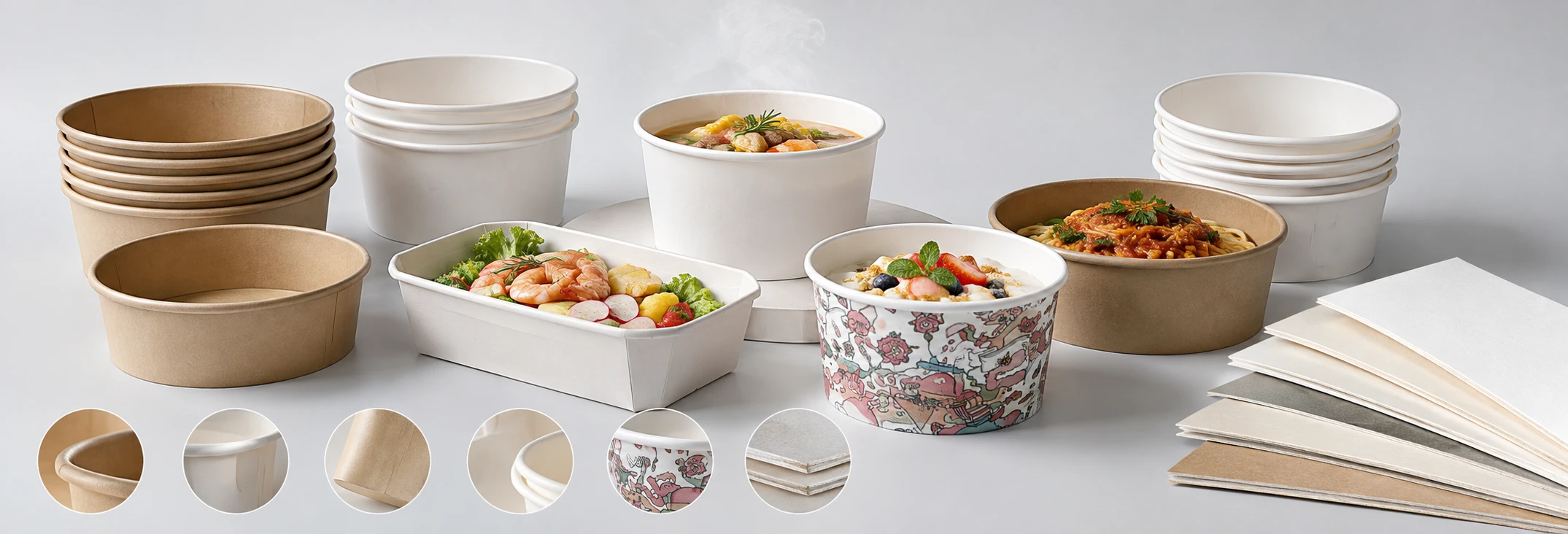
Paper bowl formats, food applications and coated paper material details

Bowl and material questions

  • Round, rectangular or shaped format and complete dimensions
  • Paper weight, stiffness, supplier, coating structure and blank data
  • Hot, cold, aqueous or oily food use and expected contact conditions
  • Required rim, side-seam, bottom-seal, appearance and stacking result
  • Material trials or finished-container tests required before approval
Paper bowl applications →
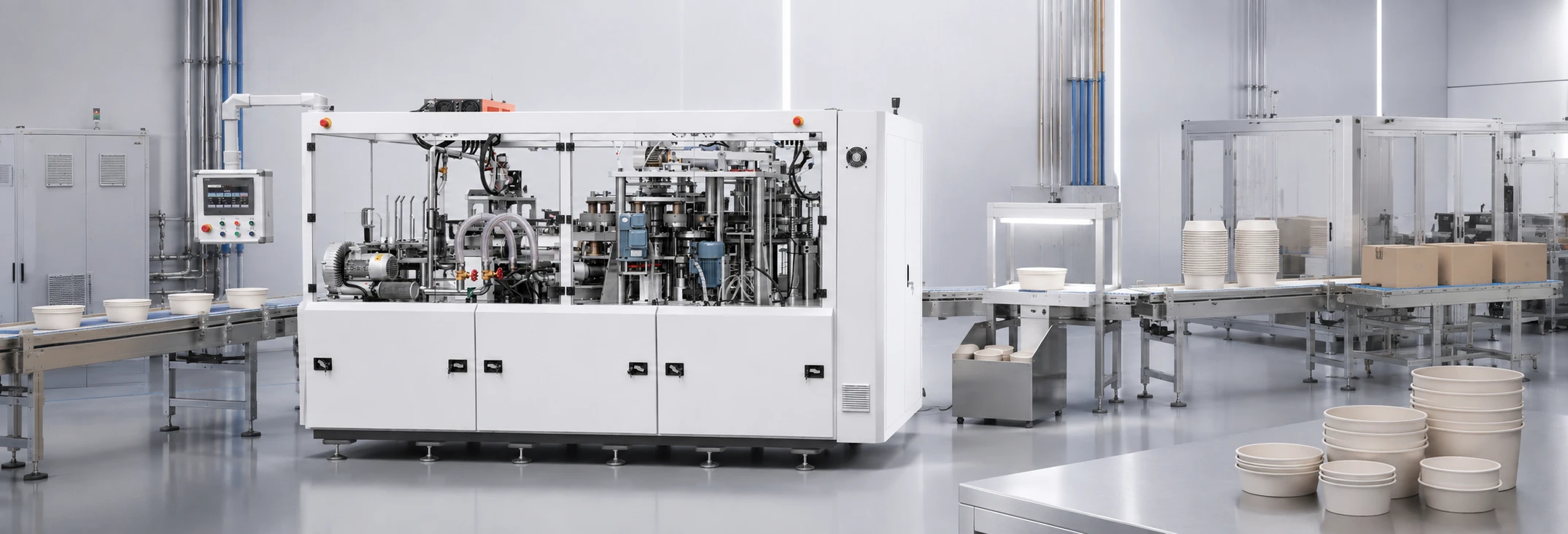
Paper bowl forming line with inspection, conveying and collection equipment

Line and operation questions

  • Required net output, shifts, planned bowl mix and changeover frequency
  • Destination voltage, frequency, compressed-air conditions and floor space
  • Inspection, rejection and factory-acceptance requirements
  • Counting, stacking, collection and packing scope
  • Machine interfaces, labor plan and future line expansion
Ancillary equipment →

Forming workflow

How a paper bowl forming machine works

The sequence below describes a conventional round-bowl workflow. Station arrangement, sealing method and tooling may differ for rectangular or special-shaped containers.

1

Blank feeding

Prepared side-wall blanks are separated, fed and positioned; bottom material is supplied according to the machine arrangement.

2

Wall forming and sealing

The side-wall blank is wrapped to the required profile and the seam is sealed using the method specified for the paper and coating.

3

Bottom forming

Bottom material is cut or supplied, inserted, folded, heated and knurled to form the bottom joint.

4

Rim and discharge

The rim is curled or finished before the bowl is discharged for inspection, counting, stacking or downstream handling.

Technical confirmation

Prepare a quotation-ready bowl project

A complete input package reduces model-selection and tooling assumptions. Mark any unavailable item so it can be confirmed during the technical review.

Bowl and material

  • Finished sample and revision-controlled dimensioned drawing
  • Top, bottom, height, side angle and corner radius where applicable
  • Paper supplier, weight, stiffness, coating structure and blank data
  • Food-contact conditions and required leak, rigidity and appearance checks

Production and line

  • Required net output, shifts, bowl mix and changeover plan
  • Destination voltage, frequency, compressed-air pressure and capacity
  • Inspection, rejection, counting, stacking and packing requirements
  • Factory acceptance, training, wear parts, installation and commissioning scope

Manufacturing evidence

Review the capabilities behind the machine

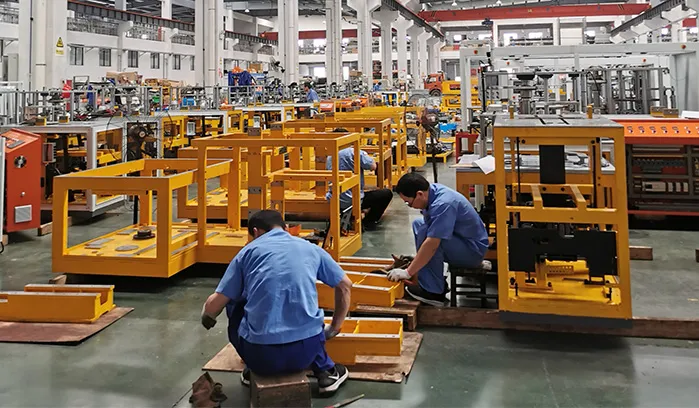
Use factory, machining, mold, assembly and test evidence to verify that the supplier can support the selected machine and bowl—not only to evaluate the appearance of the workshop.

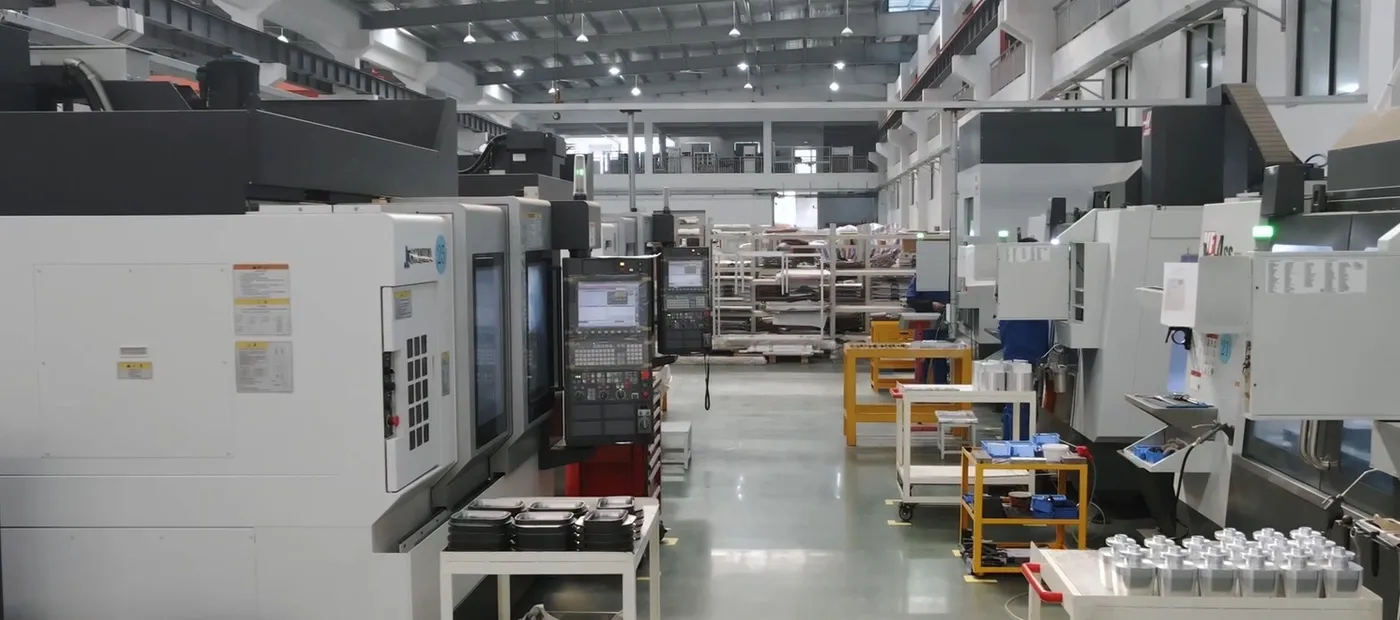
DISCOVER machining centers

Machining and tooling preparation

Request drawing-linked evidence for the applicable parts and tooling, together with the inspection method and acceptance criteria agreed for the selected bowl project.

Equipment development

Review the published forming, drive, lubrication and heating information, then request the final architecture for the selected model.

Technology →
Assembly and commissioning

Ask which assembly, no-load operation, material trial and factory-acceptance records are available for the project machine.

Quality →
Paper-container project references

Review published round and non-round container examples to understand project scope, then confirm the machine model, bowl, material and result relevant to your application.

Review Cases →

Quality and compliance evidence

Verify documents for the selected paper bowl machine

Confirm the legal holder, issuing body, scope, validity and model applicability of each document. Destination-market and finished-package requirements must be reviewed separately from company-level certificates.

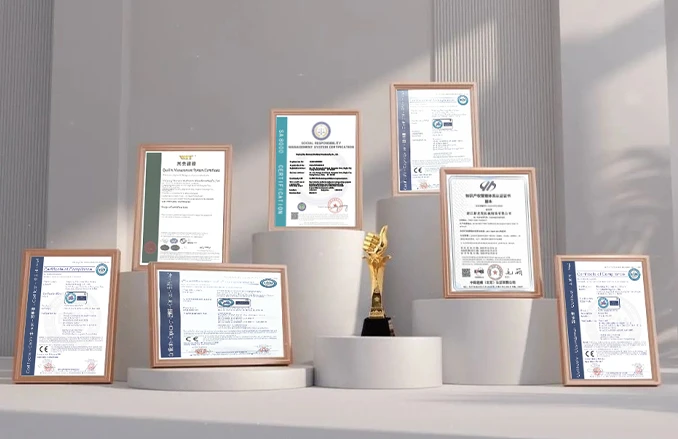
DISCOVER certificate wall
Use the certificate image as a review starting point; verify the readable document and its current validity before relying on it.
01 / COMPANY

Management-system documents

Review the certificate holder, standard, issuing body, certificate number, scope and validity in the certificate library.

Certificates →
02 / MODEL

Confirm machine applicability

Request the declaration, electrical information, manual or other documents applicable to the exact machine configuration and destination.

Request documents →
03 / INSPECTION

Review operating evidence

Agree the available inspection record, material trial, operating footage and factory-acceptance points for the project machine.

Videos →
04 / PROJECT

Agree the project file

Record the bowl, tooling, utilities, packing list, wear parts, installation, training and acceptance scope in the project documents.

Support →

Company certificates, machine conformity documents and finished food-container compliance serve different purposes. Confirm each responsibility and applicable requirement in the contract.

Model and operating footage

Review machine operation before technical confirmation

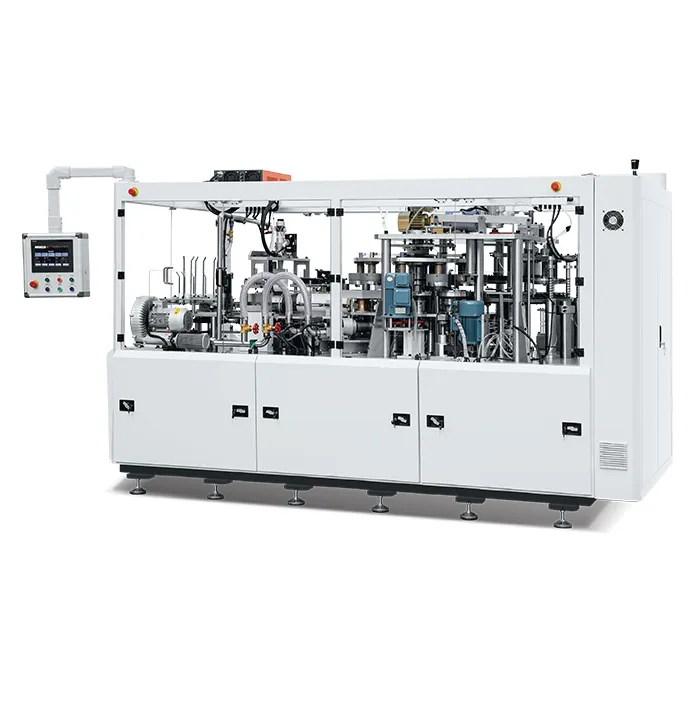
This published video identifies a ZWJ-IV intelligent paper bowl machine with a collector. Use it to understand the visible equipment arrangement and handling flow; confirm the video date, bowl, material, configuration, operating conditions and acceptance data separately for your project.

Project support

Support from bowl definition to operation

Support content and delivery method depend on the selected machine, destination and agreed project scope. Confirm responsibilities, timing and exclusions in the commercial and technical documents.

Machine assembly and commissioning
Assembly and commissioning before delivery
Before purchaseReview the bowl drawing, material, output, utilities and line boundary before routing the model and tooling.
Delivery and startupConfirm site preparation, documentation, installation responsibilities, commissioning and acceptance arrangements.
Operation supportAgree operator and maintenance training, wear-parts planning, spare-parts scope and available remote or on-site support.

Common questions

Paper bowl machine selection questions

How should I choose a paper bowl machine?

Start with the finished bowl rather than capacity or machine speed alone. Provide the shape, complete dimensions, paper and coating structure, food-use conditions, required net output, destination utilities and downstream requirements. Use the published model data for initial screening, then confirm the tooling and test conditions.

What is the difference between a paper bowl machine and a paper cup machine?

A paper bowl may have a wider opening, larger bottom-seal area, greater depth or non-round corners. These characteristics can require different tooling, heating, bottom forming and product handling. The final drawing and material determine whether a listed machine is suitable.

Can one machine produce different bowl sizes?

A selected model may cover more than one size within its confirmed dimensional and material range, but each bowl can require a dedicated mold set or change parts. Provide every drawing and ask which components change, how changeover is performed and which settings require revalidation.

Can the machine produce rectangular or non-round bowls?

Selected models are published for shaped containers. Provide length, width, depth, corner radius, bottom structure, paper data and a finished sample so that the forming sequence, mold, side seam, bottom seal and release method can be reviewed.

Can single-PE and double-PE paper be used?

Some listed models publish single-PE and double-PE compatibility. Do not apply that statement to every model or material. Confirm paper weight, coating sides and coating data, then agree any material trial and sealing acceptance criteria for the selected machine.

Does the published speed equal the line's net output?

No. A published speed is an initial model reference. Net output can vary with bowl dimensions, paper and coating, sealing settings, operator setup, rejection rate, changeovers and downstream counting or packing. Define the required net output and agree the test conditions.

Can counting, collection and packing equipment be included?

Counting, collection, inspection, stacking and packing should be defined as part of the line boundary. Availability and interfaces depend on the selected forming machine, bowl, output and project scope; confirm each item in the quotation and layout.

What information is required for a quotation?

Provide a finished sample or revision-controlled drawing, complete dimensions, paper and coating data, food-use conditions, required net output, bowl mix, voltage, frequency, compressed-air conditions, factory-acceptance needs and downstream requirements.

Send your bowl sample or drawing for model review

Include complete dimensions, paper and coating structure, food-use conditions, required net output, bowl mix, destination voltage and frequency, compressed-air conditions, acceptance needs and downstream packing requirements.

GET A QUOTE

0
Service & Support

Our paper cup machine service is supported by a dedicated team of professionals, from providing pre-sales advice and customizing machines to meet specific production requirements, to providing ongoing post-sales support and guidance.

  • Genuine parts ensure long-term availability
  • Seamless installation by technicians
  • Digital back-office management and compatible systems
mb-1.webp
Products and solutions to support a wide range of production needs
Exhibitions
Exhibitions
We value your privacy
We use cookies to provide you with a better online experience, analyse and measure website usage, and assist in our marketing efforts.
Accept All