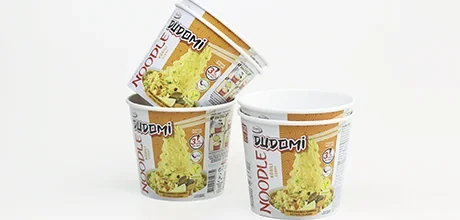
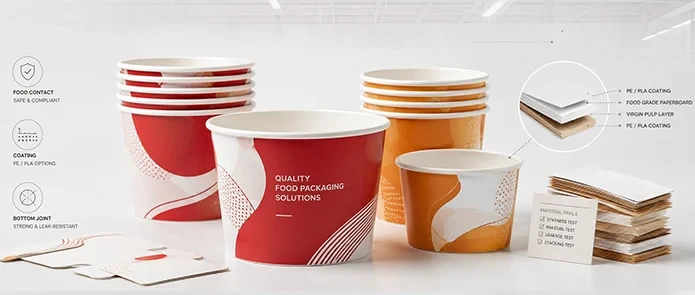
Large round food buckets
For popcorn, family-meal and other large round containers. Provide top diameter, bottom diameter, height, side-wall angle, paper structure and required net output for model and tooling review.
Review ZTJ-III →Paper bucket machine manufacturer
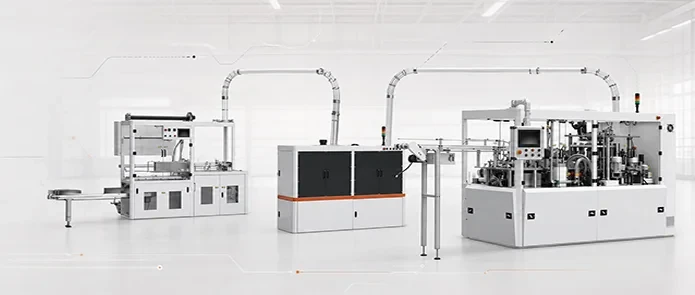
Compare two DISCOVER paper bucket forming machines by finished-container geometry, published dimensions, output and air requirements. Use the data for initial screening, then confirm the bucket, paper, tooling, utilities and downstream scope.
Category definition
Station sequence, tooling and heating method vary with bucket geometry, paper structure and machine model.
A paper bucket machine forms prepared coated-paper side-wall blanks and bottom material into large paper food containers. A conventional process can include blank feeding, sleeve forming, side-seam sealing, bottom insertion, heating, bottom forming, rim finishing and discharge.
Compared with a paper cup or smaller bowl, a bucket normally has a larger wall blank, wider bottom area or greater depth. Rectangular and square containers also introduce corners and shape-specific tooling. These factors affect forming, sealing, handling and the achievable operating output.
Capacity labels such as ounces or liters are not sufficient for machine selection. Confirm the complete finished drawing, material and expected use before relying on a published speed or dimensional limit.
Choose by finished container
Use the finished geometry to reach the right technical discussion before comparing output. Provide dimensions even when the bucket capacity is already known.

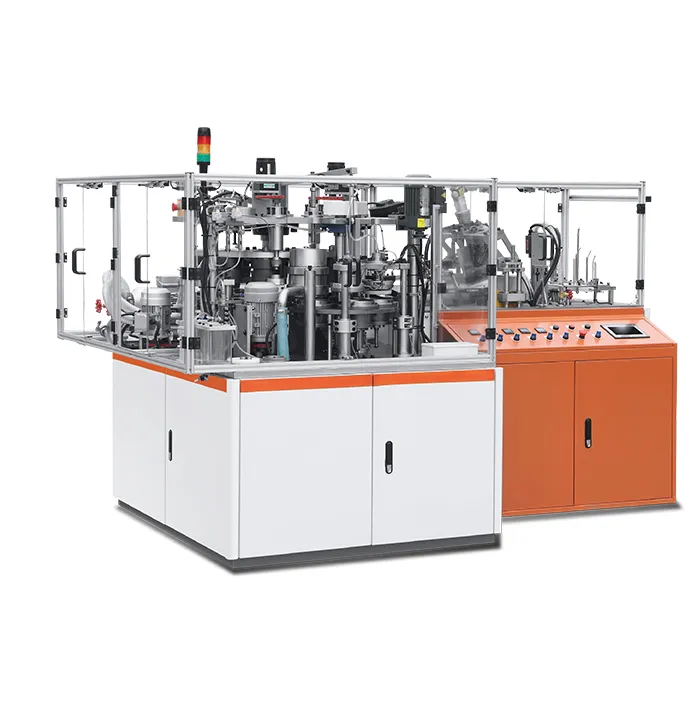
For popcorn, family-meal and other large round containers. Provide top diameter, bottom diameter, height, side-wall angle, paper structure and required net output for model and tooling review.
Review ZTJ-III →
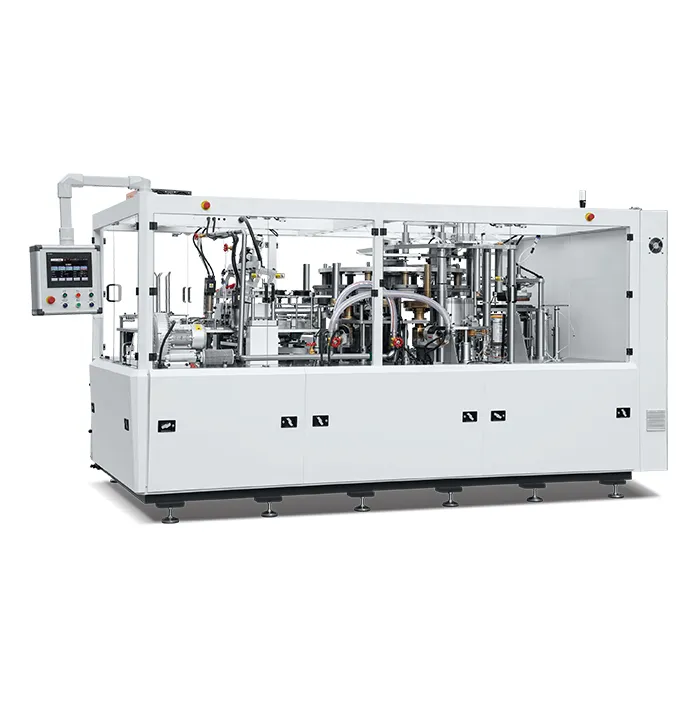
Provide length, width, height, corner radius, bottom structure and blank data. Shape-specific projects require confirmation of corner formation, mold design, sealing and product release.
Review FTJ-IV →
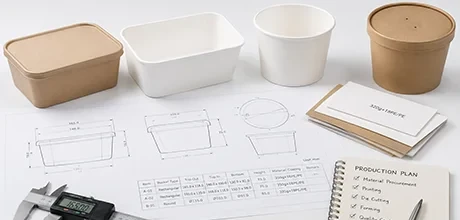
If the bucket falls outside published data, send the finished sample, controlled drawing, material and production plan. Confirm feasibility and tooling before discussing optional line equipment.
Prepare project inputs →Model comparison
Use the source-published values for initial screening. A listed maximum or nominal range is not a guaranteed net output; dimensions, material, sealing conditions, setup and downstream handling require confirmation.
| Model | Primary fit | Published dimensions | Published speed | Paper/type | Air | Details |
|---|---|---|---|---|---|---|
| FTJ-IV | Large rectangular and square containers | Top dimension ≤230 mm; H 40–150 mm | 55–65 pcs/min | Confirm for bucket | 0.8 m³/min | View → |
| ZTJ-III | Large round paper buckets | Confirm complete drawing | 35–45 pcs/min | Confirm for bucket | 0.4 m³/min | View → |
The source page contains inconsistent dimensional text for ZTJ-III, so the exact top, bottom and height range must be confirmed from the current technical sheet. Also confirm paper weight and coating, air pressure, power, voltage, machine dimensions and weight.
Available models
Use these cards for model routing, then open the matching product page and confirm the current configuration, drawing, electrical data, tooling, utilities and acceptance scope.
65pcs/min
For large rectangular and square paper containers within the published dimensional limits. Confirm the complete geometry, corner radius, blank, tooling, sealing method and finished-container acceptance points.
Top dimension
Up to 230 mmHeight
40–150 mmAir
0.8 m³/minModel
FTJ-IV
45pcs/min
For large round paper buckets such as popcorn or family-meal formats. Because the source dimensional text is inconsistent, confirm the complete bucket drawing, material, tooling and operating conditions before selection.
Size range
Confirm drawingPublished speed
35–45 pcs/minAir
0.4 m³/minModel
ZTJ-IIIThe circular badge shows the published maximum value for initial comparison, not a guaranteed net production rate. Final material, configuration, utilities, test conditions and output require confirmation.
Send a finished sample or drawing, complete dimensions, paper and coating data, target net output and downstream requirements.
Engineering features
Large wall blanks, wider bottoms and shaped corners place different demands on positioning, drive, heating, tooling and discharge. Verify which published feature applies to the selected model and bucket.
These are source-published category features, not a statement that every feature is standard on both machines. Record the exact architecture, material, tooling and acceptance scope in the quotation and technical agreement.
Application and process fit
Define the finished bucket, use conditions and complete production flow before confirming equipment. Machine compatibility does not by itself establish finished-package food-contact compliance or performance.


Forming workflow
This sequence describes a general large paper-container workflow. Station arrangement, blank handling, sealing and tooling can differ for round, rectangular or custom buckets.
Prepared side-wall blanks are separated, fed and positioned; bottom material is supplied according to the machine arrangement.
The large side-wall blank is wrapped or shaped and the seam is sealed using the method specified for the paper and coating.
The bottom is supplied or cut, inserted, heated and formed to create the specified bottom joint.
The rim is finished before the bucket is removed for inspection, counting, collection or downstream packing.
Technical confirmation
A complete input package reduces model and tooling assumptions. Mark unavailable data so it can be resolved during the technical review.
Manufacturing evidence
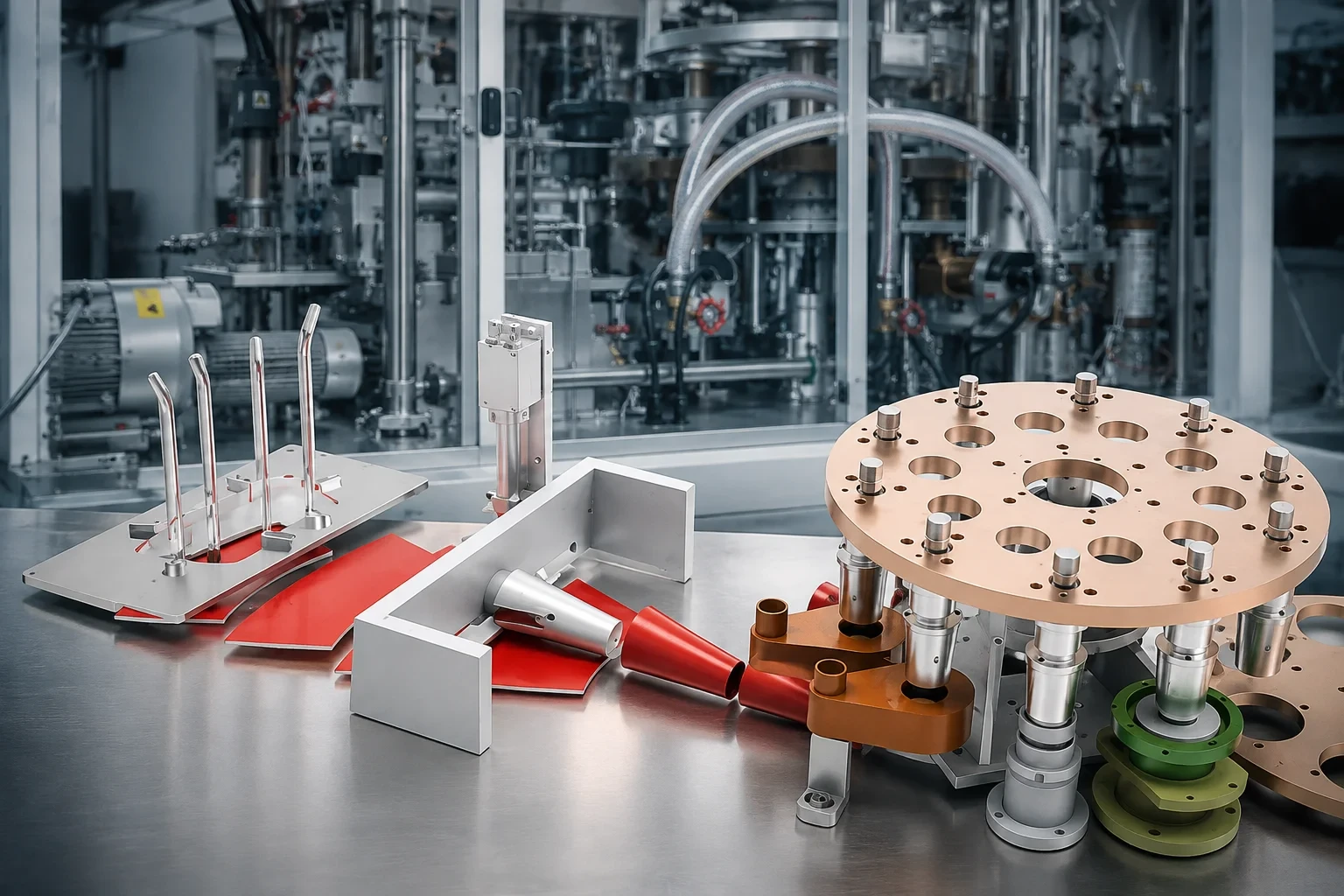
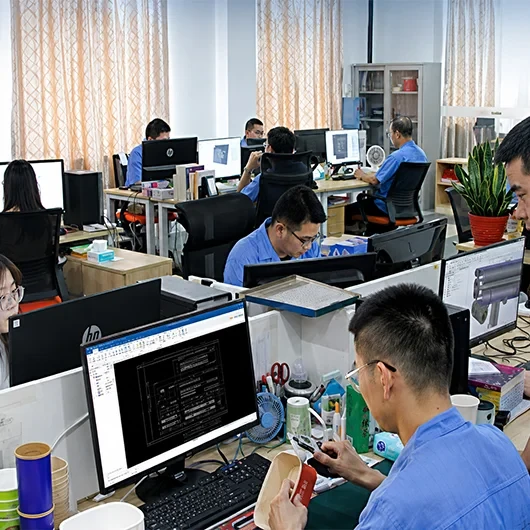
Use development, machining, mold, assembly and test evidence to verify support for the selected machine and bucket—not only the appearance of the workshop.
For a large or shaped bucket, ask which parts and molds are manufactured or inspected, which drawings control them and which acceptance points apply to the selected project.
Review the published forming, drive, heating and discharge information, then request the final architecture for the selected model.
Technology →Ask which assembly, no-load operation, material trial and factory-acceptance records are available for the project machine.
Quality →Review published large and non-round container examples, then confirm the machine, bucket, material and project context relevant to your application.
Review Cases →Quality and compliance evidence
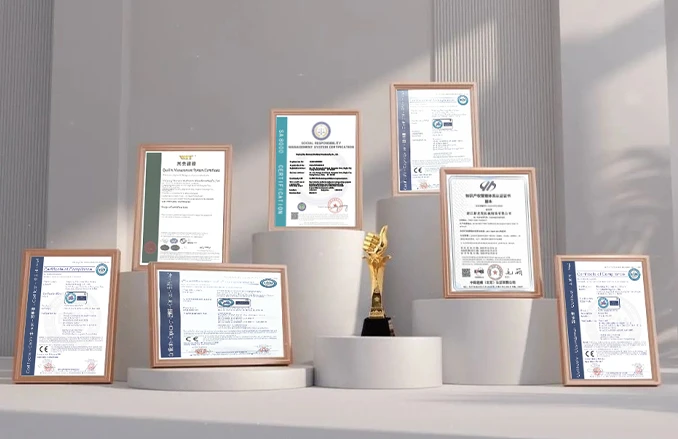
Confirm the legal holder, issuing body, scope, validity and model applicability of each document. Destination-market and finished-package requirements must be reviewed separately from company certificates.
Review the certificate holder, standard, issuing body, certificate number, scope and validity in the certificate library.
Certificates →Request documents applicable to the exact machine configuration and destination, including available electrical information and manuals.
Request documents →Agree the available inspection record, material trial, operating footage and factory-acceptance points for the project machine.
Videos →Record the bucket, tooling, utilities, packing list, wear parts, installation, training and acceptance scope.
Support →Company certificates, machine conformity documents and finished food-container compliance serve different purposes. Confirm each responsibility and applicable requirement in the contract.
Company and equipment footage
The company-profile video provides general factory and equipment context. It is not a model-specific performance test; request current FTJ-IV or ZTJ-III footage, the bucket and material used, configuration and agreed operating data for project verification.
Project support
Support content and delivery method depend on the selected machine, destination and agreed project scope. Confirm responsibilities, timing and exclusions in the project documents.
Common questions
Start with the finished bucket rather than capacity or speed alone. Provide shape, complete dimensions, paper and coating, application conditions, required net output, destination utilities and downstream requirements. Use published values for initial screening, then confirm tooling and test conditions.
A paper bucket is generally larger or deeper and may use a larger wall blank and bottom area. These factors affect material handling, side-wall control, bottom forming, rim finishing, tooling and discharge. The finished drawing determines whether a listed model is suitable.
A selected model may cover multiple sizes within its confirmed dimensional and material range, but each bucket can require a dedicated mold set or change parts. Ask which components change, how changeover is performed and which settings require revalidation.
FTJ-IV is published for large rectangular and square containers. Provide length, width, height, corner radius, bottom structure, blank data and a finished sample so that tooling, sealing, forming and release can be reviewed.
No. Net output can vary with bucket dimensions, paper and coating, sealing settings, operator setup, rejection, changeovers and downstream collection or packing. Define the required net output and agree the test conditions.
Provide a finished sample or revision-controlled drawing, complete dimensions, paper and coating data, application conditions, required net output, bucket mix, voltage, frequency, compressed-air conditions, acceptance needs and downstream requirements.
Include complete dimensions, paper and coating structure, application conditions, required net output, bucket mix, destination voltage and frequency, compressed-air conditions, acceptance needs and downstream packing requirements.
Our paper cup machine service is supported by a dedicated team of professionals, from providing pre-sales advice and customizing machines to meet specific production requirements, to providing ongoing post-sales support and guidance.