When a beverage packaging business reaches the point of upgrading from semi‑automatic or entry‑level equipment to a fully automatic cup forming line, one of the first questions is whether to invest in a medium‑speed model running around 90–110 cups per minute or a high‑speed unit pushing 140–160 cups per minute. The price difference between these two categories can be substantial, and the decision affects not just monthly output but also labour requirements, tooling flexibility, and the ability to take on short‑run custom orders.
Rather than defaulting to the fastest available machine, a more useful approach is to map the equipment’s capabilities to the production scenarios the business actually faces. The following five factors are the ones that experienced converters and plant managers return to when making this choice.
1. Output Demand and Order Profile
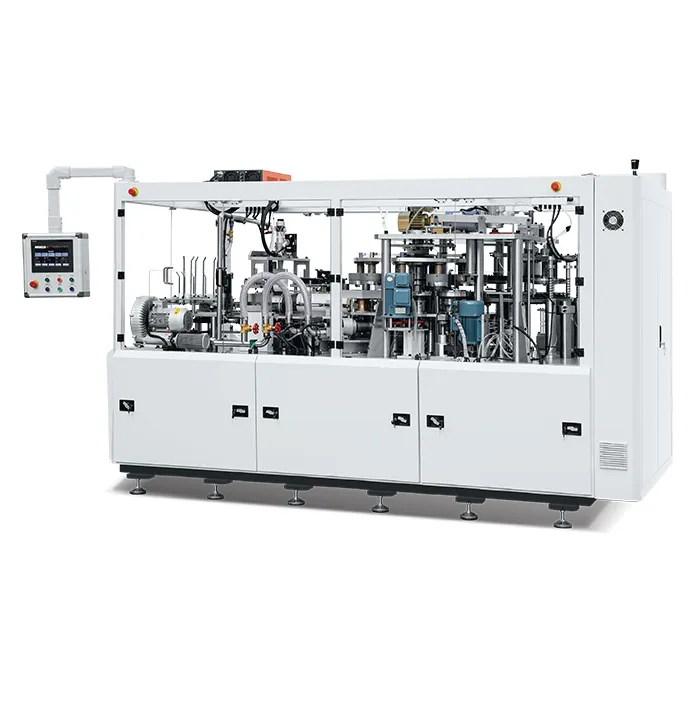
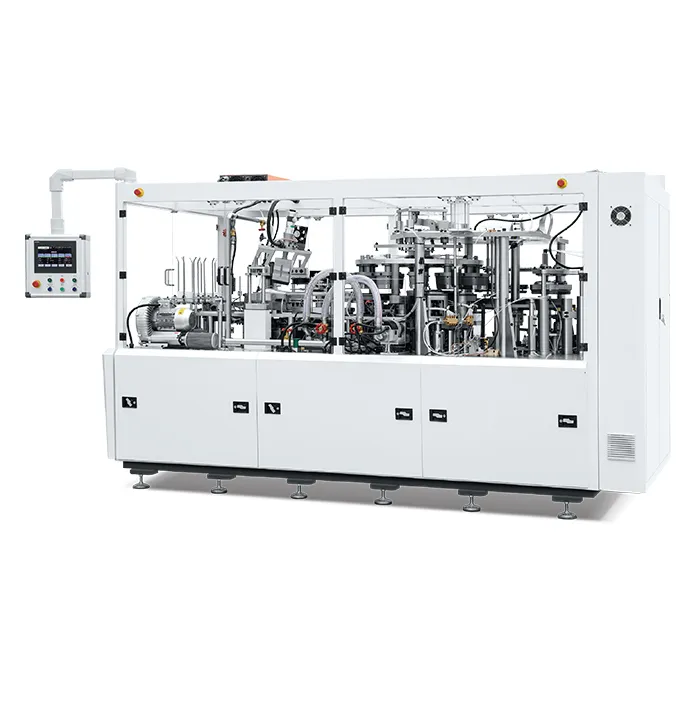
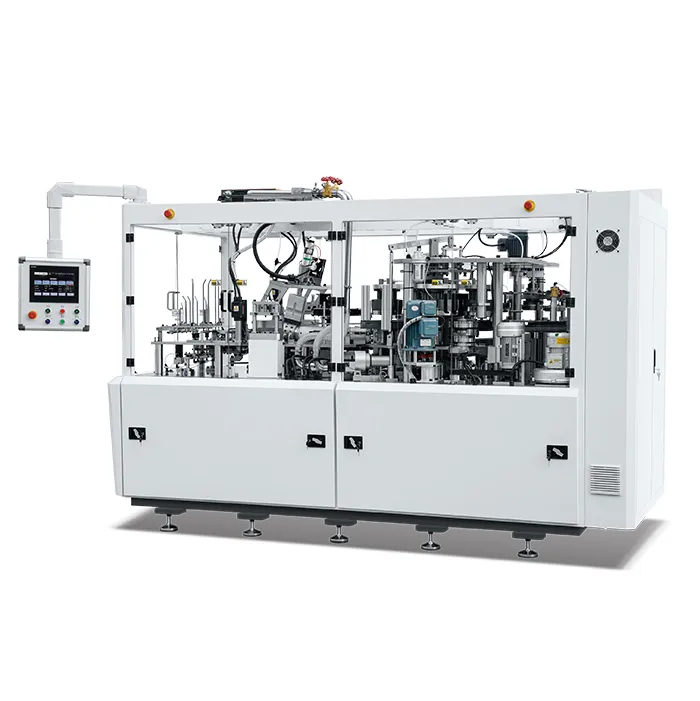
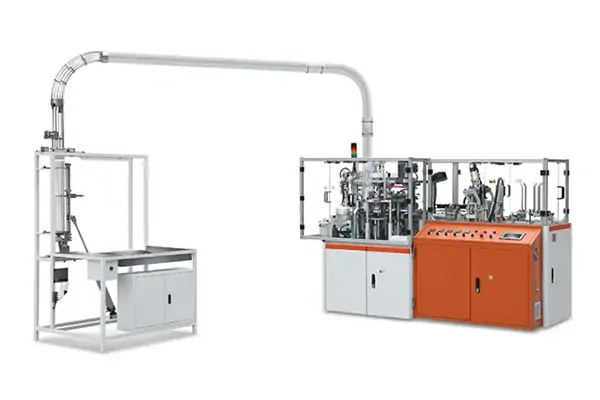
The most obvious differentiator is throughput. Medium‑speed machines in the Discover range, such as the ZSJ‑III, produce 90–110 cups per minute for standard sizes from 2 oz to 16 oz. A single eight-hour shift at 100 cups per minute yields approximately 48,000 cups, assuming normal stoppages. High‑speed variants like the KSJ‑160 push output to 140–160 cups per minute, or roughly 67,000–77,000 cups per shift under similar conditions.
For a business that consistently runs two shifts and supplies regional coffee chains or dairy brands with predictable monthly volumes, a high‑speed line can pay for its higher capital cost within 18–24 months through lower per‑cup labour and overhead costs. However, if the plant serves a mix of short‑run private‑label jobs – a 5,000‑piece order for a boutique café one day, a 30,000‑piece run for a supermarket promotion the next – the medium‑speed machine often proves more versatile. Changeover time eats into high‑speed capacity when runs are short, and the faster machine’s throughput advantage only materialises on batches that run for several hours without interruption.
2. Tooling Changeover and Size Flexibility
Both medium‑speed and high‑speed designs use modular tooling sets – bottom punches, mandrels, rim‑curling dies – that can be swapped to produce different cup sizes. The difference lies in the complexity and time required. Medium‑speed machines typically allow a complete size change within 15–25 minutes, while high‑speed units, due to tighter tolerances and additional forming stations, may take 20–35 minutes. A plant that changes cup sizes three times a day loses roughly 30–45 additional minutes of production on a high‑speed machine compared to a medium‑speed one – about 750–1,100 cups of lost output per day, which partially offsets the raw speed advantage.
For converters who run the same cup size for weeks at a time, this is irrelevant. For those who juggle multiple sizes daily, the medium‑speed platform’s quicker changeover can result in higher total daily output than a poorly utilised high‑speed machine.
3. Material Compatibility and Process Stability
The shift towards biodegradable materials – PLA‑coated paper, aqueous coatings, and thinner paperboard to reduce fibre use – has introduced new process variables. PLA, for example, has a narrower sealing temperature window than PE. Both medium‑speed and high‑speed machines can handle PLA when equipped with precise temperature control; the Discover models use Leister bottom heaters with ±1°C accuracy to maintain seal consistency across both speed ranges.
However, at very high speeds, the dwell time under the sealing head becomes shorter, placing tighter demands on the material’s heat‑seal response. In practice, when running PLA or challenging substrates, some converters deliberately run high‑speed machines at 80–85% of their maximum rated speed to maintain a wider process window. Under those conditions, the practical throughput difference between a medium‑speed machine at full rate and a high‑speed machine at reduced rate narrows considerably. Evaluating cup forming solutions that accommodate both standard PE and biodegradable materials helps avoid a scenario where the purchased speed cannot be fully utilised on the materials the market demands.
4. Manpower, Floor Space, and Ancillary Equipment
A medium‑speed machine typically requires one dedicated operator per shift, plus a helper for material handling if the raw paper rolls are heavy. A high‑speed line often needs the same operator count but adds demand on upstream and downstream equipment: the paper roll unwinding must keep pace, the collection and packing station must handle a higher cup flow, and compressed air consumption increases – the KSJ‑160, for instance, requires 0.4 m³/min, while some medium‑speed models use less.
Floor space is another practical constraint. High‑speed machines tend to have a longer frame and a larger footprint for the extended conveyor and stacking unit. For a facility adding capacity within an existing factory bay, the medium‑speed machine may fit without structural changes, while the high‑speed option requires reorganising the layout or expanding the building.
5. Maintenance Complexity and Parts Availability
High‑speed machines operate closer to their mechanical limits. Continuous automatic spray lubrication – a feature on the Discover medium‑ and high‑speed platforms – reduces wear on cams and gears, but the higher cycle rate still means components reach their service intervals sooner. A high‑speed machine running 160 cycles per minute completes about 70 million cycles per year in two‑shift operation; a medium‑speed machine at 100 cycles per minute reaches roughly 42 million cycles. Bearings, belts, and sealing elements wear proportionally faster, and the maintenance budget should reflect that.
Before committing, it is worth confirming that the supplier can provide spare parts with short lead times and that local technicians are familiar with the specific drive system – gear transmission versus servo, for example. Comparing fully automatic cup production machinery across medium and high‑speed models with a clear view of service support and part availability can prevent a high‑output asset from sitting idle.
A Practical Decision Framework
| Factor |
Medium‑Speed (90–110 pcs/min) |
High‑Speed (140–160 pcs/min) |
| Typical daily output (1 shift, 8 h) |
43,000–53,000 cups |
67,000–77,000 cups |
| Tooling changeover time |
15–25 minutes |
20–35 minutes |
| Suited for short‑run custom jobs |
Well suited |
Less efficient |
| Suited for long runs of standard sizes |
Adequate |
Ideal |
| Material flexibility at rated speed |
Good with PLA & PE |
May require speed reduction for PLA |
| Maintenance intensity |
Lower |
Higher, proportional to cycle count |
| Approximate relative investment |
Base |
40–60% higher |
For businesses currently producing below 30 million cups per year, a medium‑speed machine typically covers current needs with room to grow. For those already at or above 40 million cups annually with visibility of contract renewals, the high‑speed investment becomes the lower‑cost option per thousand cups over a five‑year horizon.
If the decision remains finely balanced, a practical next step is to examine the full specification sheets of both categories. Discover’s range of cup-forming equipment includes models at both speed tiers with published throughput data, dimensional drawings, and material compatibility lists that allow a direct comparison against the plant’s actual production data.
Choosing between medium‑speed and high‑speed cup forming machinery is ultimately a question of matching the machine’s rhythm to the business’s rhythm. The fastest option is not always the most profitable when changeovers, material constraints, and maintenance are factored in. But when the order book justifies it, the step up in throughput transforms unit economics. The five factors above provide a framework for making that call on numbers, not on catalogue promises.

 English
 Pусский
 عربي
عربي