Understanding the real cost of cup forming equipment goes far beyond the initial purchase price. Return on investment depends on utilization rate, material costs, energy consumption, labor, maintenance, and several hidden expenses that many buyers overlook. This article explains how to evaluate these factors and build a realistic cost model before you commit.
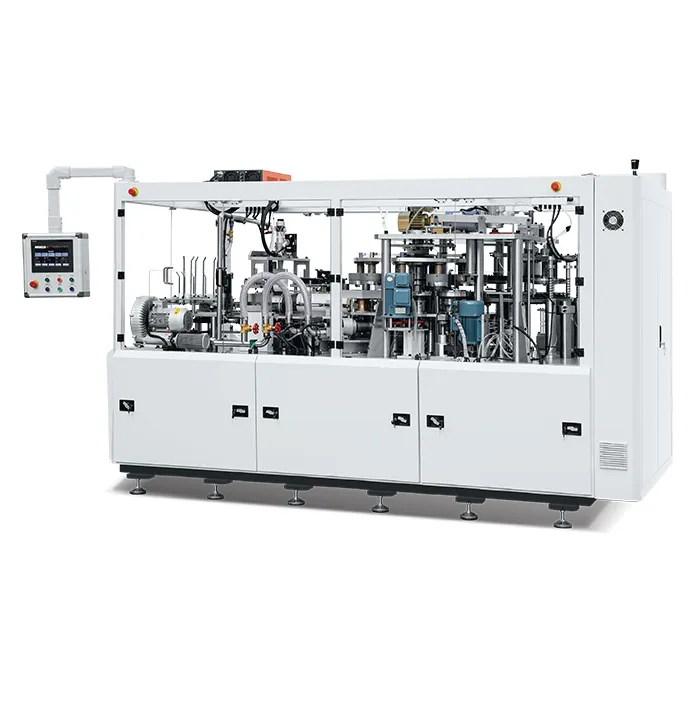
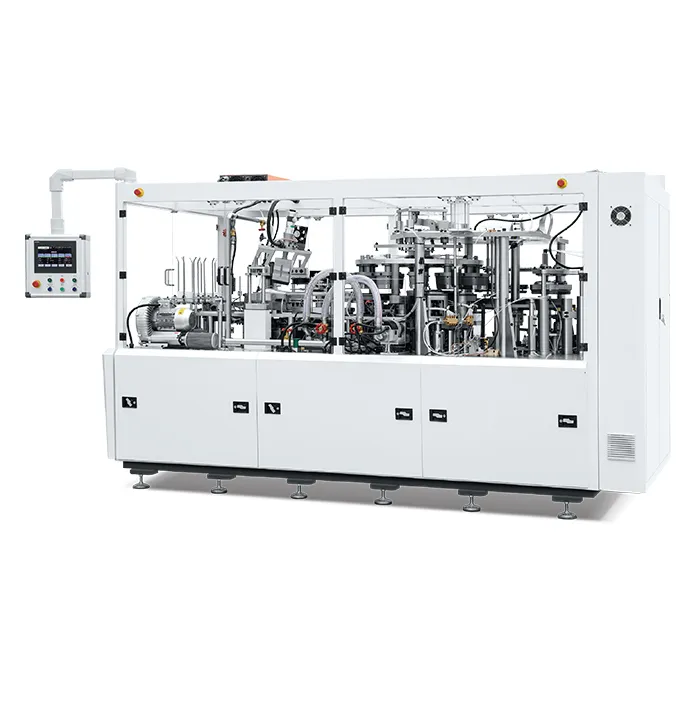
Before diving into the numbers, it helps to understand the full cost structure of paper cup machine category configurations and how each operational variable affects long-term profitability.
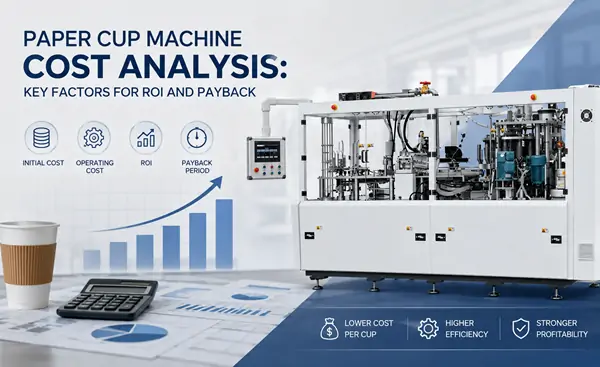
What Drives the Total Cost of Ownership?
The total cost of ownership (TCO) for cup production equipment includes both one-time capital expenses and ongoing operating costs. A narrow focus on equipment price often leads to underestimating the actual investment required.
The table below summarizes the main cost categories and why they matter for cost analysis.
| Cost category |
Key variables |
Why it matters |
| Initial equipment cost |
Automation level, rated speed, cup size range, material compatibility |
Affects capital requirements and depreciation |
| Tooling and change parts |
Number of cup sizes, cup shape, material type |
Often overlooked as an additional upfront cost |
| Energy consumption |
Electric power, compressed air consumption |
Recurring operating expense that scales with production volume |
| Labor |
Number of operators per shift |
Direct operating cost, influenced by automation level |
| Raw materials |
Paper grade, PE/PLA coating, paper weight |
Usually the largest variable cost per cup |
| Maintenance and spare parts |
Wear parts, lubrication, service frequency |
Prevents unplanned downtime and quality issues |
| Scrap and rework |
Setup waste, sealing defects, material handling issues |
Impacts material efficiency and final profitability |
Each of these categories should be estimated based on your specific production environment and confirmed with the equipment supplier.
How to Build a Realistic ROI Model
A practical ROI model does not need to be overly complex, but it must use local data and realistic assumptions. The following steps provide a structured approach.
- Estimate annual production volume based on confirmed orders or a conservative sales forecast.
- Calculate effective output per hour: multiply the rated speed by a realistic utilization factor. For example, a machine rated at 120 pieces per minute may not run continuously at full speed due to setup, material changes, or minor stops.
- Determine cost per thousand cups: add material, energy, labor, maintenance, and allocated overhead costs.
- Estimate the average selling price per cup based on your local market and target customer segment.
- Compute annual net cash flow as (selling price - cost per cup) × annual production volume.
- Divide the initial total investment by the annual net cash flow to obtain an approximate payback period.
Actual results may vary significantly by location, product mix, and market conditions. Buyers should verify all input values with their own accounting data and confirm technical specifications with the supplier.
Hidden Costs That Can Change the Picture
Several hidden costs are frequently underestimated in the planning stage. Identifying them early can prevent budget overruns and improve the accuracy of your ROI model.
- Tooling for multiple cup sizes: Different cup sizes may require separate mandrels, bottom punches, and curling dies. If you plan to produce several sizes, confirm which tooling is included in the standard package.
- Compressed air system: If your facility does not already have adequate compressed air capacity, you may need to invest in a compressor, air dryer, and filters. This can add meaningful upfront cost.
- Operator training and ramp-up: New operators need time to reach stable output. During the ramp-up phase, scrap rates may be higher than normal, which affects material cost.
- Power stability: Voltage fluctuations can affect sealing quality and electronic components. In areas with unstable power, additional voltage regulation may be needed.
- Spare parts inventory: Keeping critical wear parts on hand reduces downtime but ties up working capital. Buyers should ask for a recommended spare parts list.
- Material compatibility testing: If you plan to use PLA-coated paper or unusual paper weights, additional testing and setup time may be required before stable production.
Factors That Influence Payback Period
Payback period is not a fixed value. It changes with operating conditions and market factors. The most important drivers include:
- Utilization rate: Higher order volumes shorten the payback period, while idle time extends it.
- Product mix: Producing custom or higher-margin cup types may generate more profit per unit than standard commodity cups.
- Material price volatility: Paper and coating costs can fluctuate significantly over time, affecting cost per cup.
- Local labor and energy prices: These directly influence operating costs and vary widely by region.
- Maintenance quality: Consistent maintenance keeps speed and quality stable, reducing hidden losses from downtime and scrap.
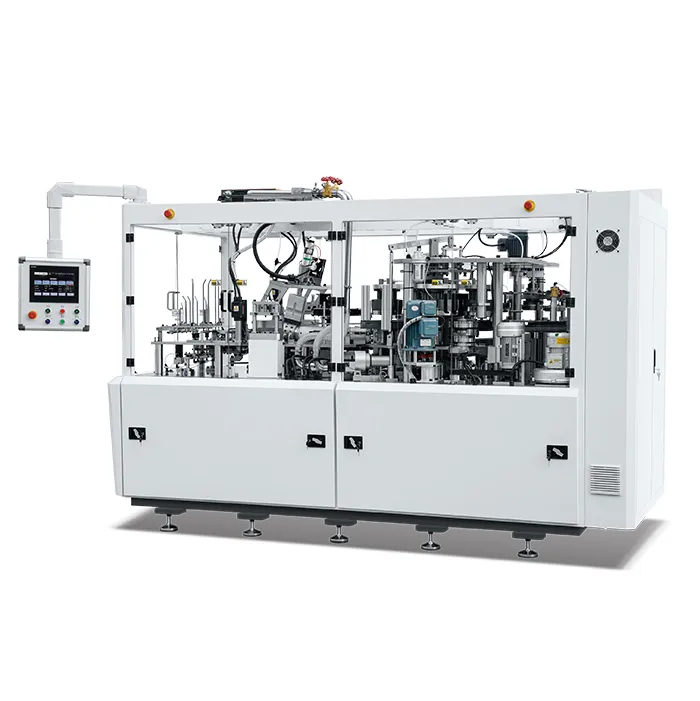
For a closer look at a specific model that balances automation and flexibility, you can compare the Intelligent Paper Cup Machine specifications.
Practical Checklist for Estimating Real Costs
Use the following checklist to build a more complete cost picture before making a purchase decision.
- Obtain a complete quotation including standard accessories and optional items.
- Confirm which tooling sizes and cup shapes are included in the base price.
- Ask for typical power consumption and compressed air requirements for the specific model.
- Estimate local electricity and compressed air generation costs per unit.
- Calculate material cost per cup based on paper width, weight, and coating type.
- Plan for operator training and initial ramp-up scrap.
- Allocate a maintenance budget for wear parts and lubrication.
- Check whether your facility has adequate power and compressed air capacity.
- Request a recommended spare parts list and typical lead times.
- Verify supplier support for installation, training, and after-sales service.
When to Ask for a Detailed Cost Breakdown
Before comparing quotes, request a detailed cost breakdown from each supplier. This should include energy consumption, compressed air consumption, expected wear part life, tooling changeover time, and recommended spare parts. A reliable supplier will provide this information without hesitation.
Comparing only the initial price without understanding operating costs can lead to a misleading investment decision. If you are ready to discuss your specific production requirements, contact Discover for further technical clarification.
FAQ
How much does cup forming equipment cost?
There is no single price. The total cost depends on speed, automation level, cup size range, and material compatibility. Buyers should request a quote based on specific production requirements rather than comparing list prices alone.
What is the average payback period?
There is no universal figure. Payback depends on utilization, local operating costs, material prices, and product margins. A realistic model requires local data and verified assumptions.
Do energy costs significantly affect total cost?
Yes. Electricity and compressed air are recurring costs. Machines with different rated outputs may consume different amounts of compressed air, so this should be included in any cost calculation.
Are there additional costs for making different cup sizes?
Yes. Tooling such as mandrels and bottom punches may need to be purchased for additional sizes. Buyers should confirm what is included in the standard package before ordering.
How can I reduce operating costs?
Regular maintenance, reducing scrap through proper setup, improving utilization, and selecting materials that match the machine’s capabilities can help control operating costs.
Should I choose a high-speed or medium-speed model?
It depends on order volume and consistency. High-speed equipment may offer lower cost per cup at high utilization, but if order volumes are variable, a medium-speed model may be more practical and reduce idle capacity risk.
Conclusion
The true cost of cup production equipment is not the purchase price alone. By analyzing energy, labor, material, tooling, and maintenance costs, buyers can build a more realistic ROI model and avoid hidden surprises. Before making a decision, review the available configurations and discuss your specific production requirements with the supplier.

 English
 Pусский
 عربي
عربي