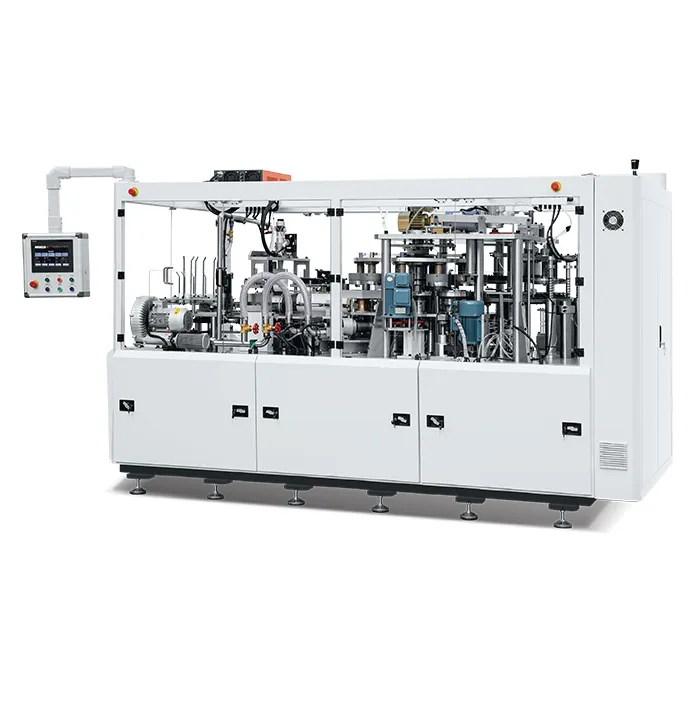
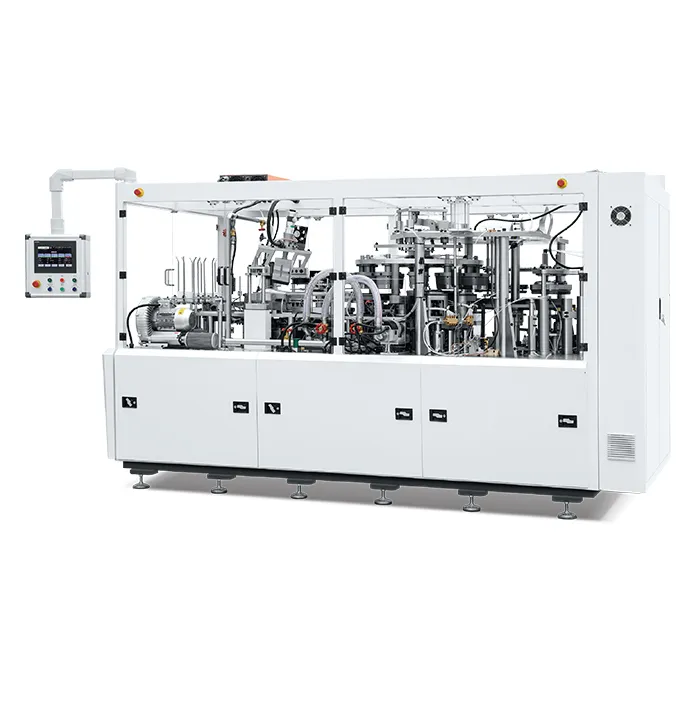
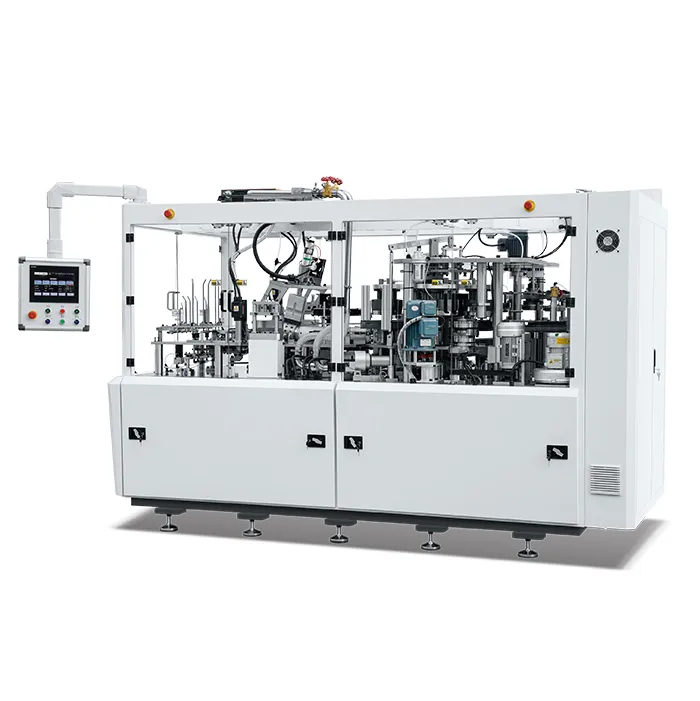
If you look at two fully automatic paper bucket machines side by side, one might be rated at 65 pieces per minute while another sits at 45. That spread isn’t random—it reflects real differences in what the machine is being asked to form. A paper bucket machine forming a 10L KFC family bucket simply cannot run at the same cycle rate as one making a small popcorn tub. The rated speed is a starting point. The actual output is determined by the interaction of bucket dimensions, shape, material, heating time, and the machine’s mechanical design.
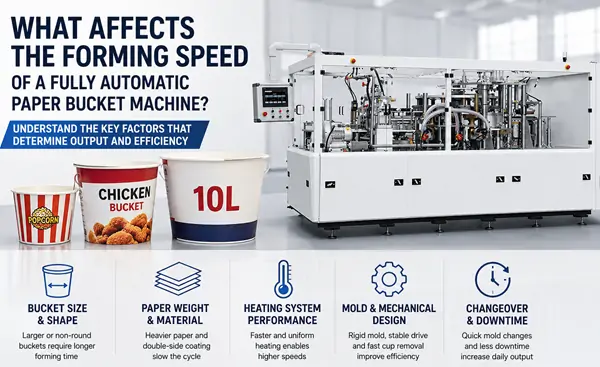
1. Bucket Size and Shape
Size is the most direct speed limiter. The DISCOVER product line illustrates this clearly. The FTJ‑IV intelligent rectangular machine produces 55–65 pcs/min for containers with a maximum top diameter of 230 mm and heights of 40–150 mm. The ZTJ‑III medium‑speed machine produces 35–45 pcs/min for buckets with top diameters up to 225 mm and heights reaching 1210 mm.
A larger forming area requires longer heating and pressing time per cycle. The paper web must be heated uniformly across a greater surface before the bottom is extruded into shape, and the formed piece takes longer to cool and stabilize. The difference between a 4‑liter popcorn bucket and a 10‑liter family meal bucket can cut the achievable cycle rate by 30% or more.
Shape adds a separate factor. Rectangular and square buckets—the FTJ‑IV is specifically described as an intelligent rectangular paper bowl machine—involve more complex forming motions than simple round containers. Corner formation requires precise material flow, and the mold must dwell slightly longer to ensure sharp, consistent angles. If you are producing non‑round shapes, expect the maximum speed to be lower than the machine’s headline rating.
2. Paper Weight and Material
The weight and coating of the paper directly influence how quickly the bucket can be formed. The DISCOVER product pages specify a paper weight range of 210–350 gsm for both models, with single‑side and double‑side PE‑coated paper as the primary materials.
Heavier paper—300–350 gsm versus 210 gsm—requires more heat energy to bring the coating to bonding temperature. If the cycle is pushed too fast, the bottom seal may not reach full strength, leading to leaks or structural weakness. Double‑side coated paper also tends to require slightly more dwell time because both surfaces must be heated sufficiently for proper bonding.
The machine’s rated speed is usually established with a mid‑range paper weight. When running the heaviest stock in the machine’s range, operators should expect to reduce the cycle rate to maintain quality.
3. Heating System Capacity and Preheating
The bottom‑forming process is thermally driven. The DISCOVER advantage section describes bottom Leister heating as efficient and energy‑saving, which optimizes energy usage and improves production efficiency. However, heating is also the process bottleneck: the bottom disc must reach forming temperature before the extrusion die can press it into shape.
A faster preheating phase enables a shorter overall cycle time. If the heating system is undersized for the bucket diameter, the machine must dwell longer at the heating station. The open‑type indexing box design mentioned in the advantages helps maintenance access to the heating zone, but it is the heating power and thermal uniformity that ultimately determine the maximum cycle rate for a given bucket size.
4. Mold and Mechanical Design
The forming station’s mechanical configuration has a direct impact on how quickly the machine can cycle. The DISCOVER advantages highlight an integrated leaf mold frame, which reduces the risk of mold loosening and misalignment. A rigid mold frame maintains alignment at higher speeds, allowing the machine to run closer to its theoretical maximum without producing defective buckets.
The single manipulator cup removal system is another speed‑related feature. DISCOVER describes it as providing quicker, more accurate removal of formed containers compared to multi‑arm operations, reducing downtime. Fewer moving parts mean less inertia and faster cycle‑to‑cycle consistency.
Gear drive, listed as a standard feature, provides stable power output and smooth operation. At higher speeds, a well‑designed gear transmission maintains timing precision between the indexing table, heating station, and forming die. Any backlash or timing drift would force the machine to slow down to avoid misfeeds or incomplete forming. For a closer look at how these mechanical features are implemented, you can see the FTJ‑IV and ZTJ‑III specifications.
5. Changeover and Downtime
Average output over a shift is never the same as the momentary cycle rate. If the machine is stopped to change molds between bucket sizes—say from a round 8‑liter container to a rectangular 5‑liter container—those minutes count against the daily total. The DISCOVER FAQ indicates that customization options are available, and mold‑based size changes can be accommodated, but the time required depends on the complexity of the mold set.
A machine with quick‑change mold features and modular tooling can minimize this lost time. Even a difference of 10 minutes per changeover, multiplied by multiple changes per shift, can make a machine running at 45 pcs/min more productive over a full day than one running at 65 pcs/min that takes 30 minutes to change over.
Summary of Speed‑Affecting Factors
| Factor |
How It Affects Forming Speed |
| Bucket size (diameter & height) |
Larger area = longer heating & forming time per cycle |
| Bucket shape (round vs rectangular) |
Non‑round shapes require longer dwell and more complex forming |
| Paper weight (gsm) |
Heavier paper needs more heat energy, slowing the cycle |
| Coating (single/double PE) |
Double‑side coating increases required heating time |
| Heating system |
Faster preheating and uniform heat allow higher cycle rates |
| Mold frame rigidity |
Better alignment reduces defects at high speed |
| Cup removal mechanism |
Single manipulator allows faster, more accurate part removal |
| Changeover time |
Quick‑change tooling preserves more running time per shift |
All machine features referenced are based on DISCOVER product pages. Actual output depends on the specific bucket dimensions, paper grade, and operating conditions.
Frequently Asked Questions
Q: Why is the FTJ‑IV faster than the ZTJ‑III even though it makes larger containers?
A: Speed ratings are not directly comparable across models because they reflect different machine generations and drive systems. The FTJ‑IV is a newer intelligent model with optimized forming kinematics, while the ZTJ‑III is designed for medium‑speed production and covers a wider height range. Within each model, the speed still decreases as bucket size increases.
Q: Can I run a paper bucket machine at its rated speed all day?
A: The rated speed is typically measured under optimal conditions with a specific bucket size and paper weight. Continuous operation speed is usually 85–95% of the rated speed to maintain consistent quality and reduce wear. Frequent size changes or heavy paper will reduce the sustainable average.
Q: How much does bucket shape affect output?
A: Rectangular and square shapes require longer forming cycles than round buckets of equivalent volume because corners need precise material distribution. The FTJ‑IV is specifically designed for rectangular shapes, but the complex forming naturally limits the maximum cycle rate compared to a round‑only machine of similar size.
Q: Does the type of PE coating affect forming speed?
A: Single‑side PE‑coated paper generally allows slightly faster cycles than double‑side coated because less total heat transfer is required. PLA‑coated paper, which DISCOVER lists as a compatible material, has a narrower sealing temperature window and may require a slower cycle or tighter temperature control.
Q: What is the most effective way to increase daily output without changing machines?
A: Reducing changeover time and unscheduled downtime usually has the biggest impact. Quick‑change molds, standardized setup procedures, and preventive maintenance can recover more production minutes per shift than trying to push the cycle rate beyond the machine’s comfort zone.
Conclusion
The forming speed of a fully automatic paper bucket machine is not a single specification. It is the product of bucket size, shape, paper weight, heating system performance, mechanical design, and operational discipline. When evaluating output, the most useful metric is not the headline speed but the actual number of good buckets produced per shift for your specific product mix.
If you are planning production targets or selecting equipment, contact DISCOVER to discuss your expected output and get a tailored recommendation.

 English
 Pусский
 عربي
عربي