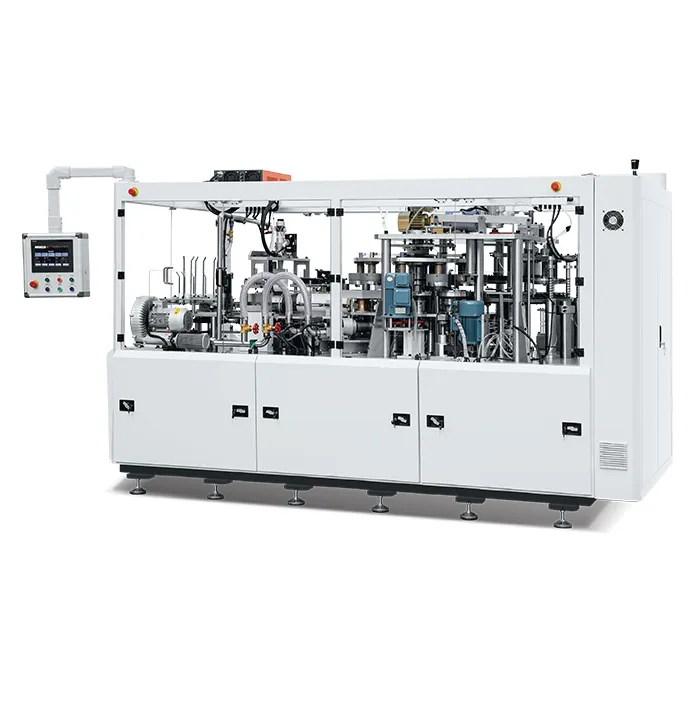
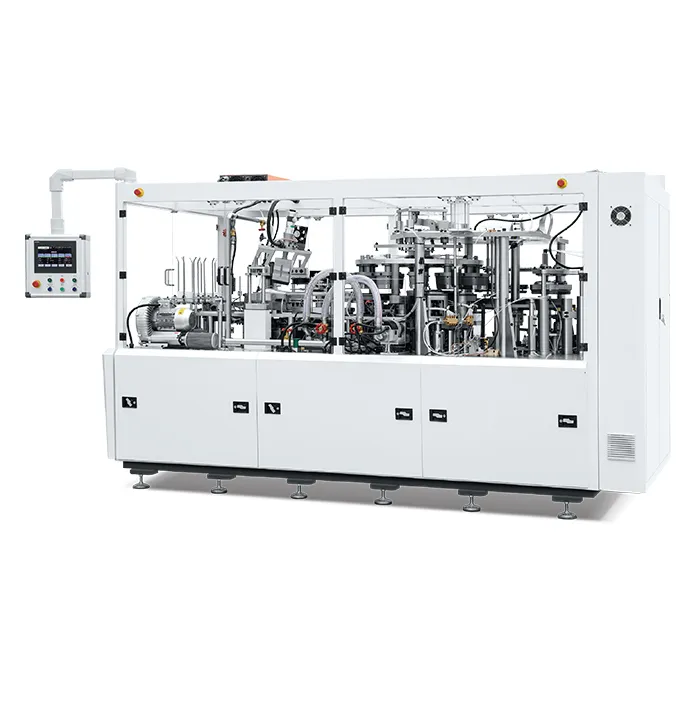
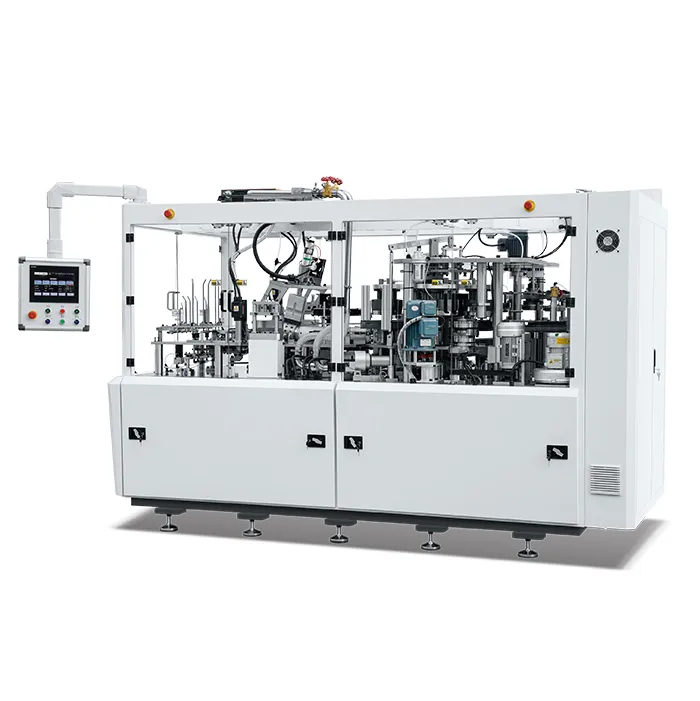
Predictive maintenance uses real-time sensor data and trend analysis to identify potential equipment faults before they cause unplanned downtime. Instead of relying on fixed time intervals, maintenance teams can act only when data indicates a developing problem. This article explains how the approach works for intelligent bowl forming equipment and what maintenance teams need to implement it.
Before setting up a predictive maintenance program, it helps to understand the configuration of modern automated paper bowl production lines. You can review the available intelligent paper bowl machine specifications to see which parameters are commonly monitored.
Predictive vs Preventive Maintenance: What Is the Difference?
Preventive maintenance follows a schedule—daily, weekly, or monthly tasks performed regardless of equipment condition. Predictive maintenance replaces time-based assumptions with condition-based decisions. The table below summarizes the main differences.
| Maintenance type |
Trigger for action |
Typical data used |
Main advantage |
| Preventive |
Fixed time interval or operating hours |
Maintenance schedule, manual inspection records |
Simple to plan and execute |
| Predictive |
Condition threshold or trend deviation |
Vibration, temperature, pressure, energy consumption, cycle time |
Reduces unnecessary maintenance and detects issues earlier |
Both approaches can be combined. Preventive tasks remain useful for items that cannot be easily monitored, while predictive methods cover critical components where data is available.
Key Parameters to Monitor
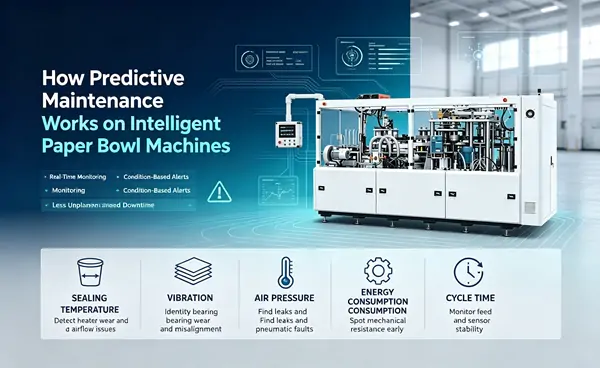
For intelligent bowl forming machines, several parameters provide early warning of developing faults. The exact sensor setup depends on equipment configuration, but the following are commonly used.
- Sealing temperature: Deviations from the normal range can indicate heater wear, thermocouple drift, or airflow problems.
- Vibration: Increased vibration may signal bearing wear, cam misalignment, or loose components.
- Air pressure: Changes in compressed air consumption or pressure can reveal leaks or pneumatic issues.
- Energy consumption: A gradual increase in power draw for the same output may indicate mechanical resistance or electrical problems.
- Cycle time: Unstable cycle time can point to feed issues, sensor problems, or control loop instability.
How Data Becomes Maintenance Action
Predictive maintenance is not just about collecting data. The data must be processed and turned into decisions. A typical workflow includes:
- Data collection: Sensors and the PLC record key parameters during production.
- Baseline establishment: The system learns normal operating patterns during a commissioning period.
- Trend monitoring: Current readings are compared to baseline values in real time.
- Alert generation: When a parameter crosses a preset threshold or shows a concerning trend, the system generates an alert.
- Maintenance scheduling: Technicians investigate the alert and plan corrective work during a convenient window.
- Feedback loop: The results of the maintenance action help refine thresholds and improve future predictions.
This workflow reduces the reliance on reactive maintenance and helps avoid emergency stops.
Practical Implementation Checklist
Before introducing predictive maintenance on a bowl forming line, consider the following checklist.
- Confirm which sensors are already included and which need to be added.
- Ensure the PLC or control system can export data to a local database or HMI for trend review.
- Identify the most critical components: sealing heads, heaters, cam drives, bearings, pneumatic valves.
- Define baseline operating ranges for each monitored parameter.
- Set conservative alert thresholds at first, then adjust based on experience.
- Train operators to recognize early warning signs and understand alert messages.
- Establish a clear response protocol for each alert level.
- Schedule regular review of trends to refine thresholds.
- Document all maintenance actions linked to predictive alerts for future reference.
Common Challenges and How to Address Them
Predictive maintenance is not always straightforward. Some common challenges include:
- Sensor coverage gaps: Not all failure modes can be detected by standard sensors. Manual inspection should still supplement automated monitoring.
- False alarms: If thresholds are too tight, operators may ignore alerts. Start with wider limits and tighten gradually.
- Data overload: Too many parameters without clear prioritization can overwhelm maintenance teams. Focus on a few key indicators first.
- Integration with existing systems: Older machines may not support data export. Retrofitting may be possible but requires technical confirmation.
When to Move from Preventive to Predictive
A full predictive maintenance program is most valuable when production volume is high and unplanned downtime is costly. For smaller operations, a hybrid approach may be sufficient: use predictive monitoring for critical components and keep preventive schedules for the rest.
If you are planning to add predictive capabilities to a bowl forming line, it is advisable to discuss the available configurations with the equipment supplier. You can also review the broader paper bowl machine category to understand which models support the required data interfaces.
FAQ
What is the first step in setting up predictive maintenance?
The first step is to identify the most critical components and confirm which sensors and data outputs are available on the machine. Without reliable data, predictive maintenance cannot be implemented effectively.
Can predictive maintenance completely eliminate unplanned downtime?
No. Predictive maintenance reduces unplanned downtime by catching many developing faults early, but it cannot prevent all failures, especially those caused by sudden external events or material problems.
Does predictive maintenance require a dedicated software platform?
Not necessarily. For smaller operations, the HMI or a local database may be sufficient to review trends and set basic alerts. Larger operations may benefit from dedicated condition monitoring software.
How long does it take to establish a reliable predictive maintenance baseline?
The baseline period depends on production stability. It can take several weeks of normal operation to establish reliable reference values for key parameters.
What is the difference between predictive and reactive maintenance?
Reactive maintenance waits for a failure to occur, while predictive maintenance uses condition data to schedule work before a failure happens. Predictive maintenance typically leads to fewer emergency repairs and lower total maintenance cost over time.
Can older intelligent paper bowl machines be retrofitted with predictive maintenance sensors?
It depends on the control system and available interfaces. Some machines can be retrofitted with external sensors and data loggers, but the feasibility should be confirmed with the equipment supplier.
Conclusion
Predictive maintenance offers a practical way to reduce unplanned downtime and extend the service life of intelligent bowl forming equipment. By monitoring the right parameters and turning data into timely action, maintenance teams can avoid many failures before they occur. For a deeper discussion on how to set up a predictive maintenance plan for your production line, contact Discover and share your operational requirements.

 English
 Pусский
 عربي
عربي