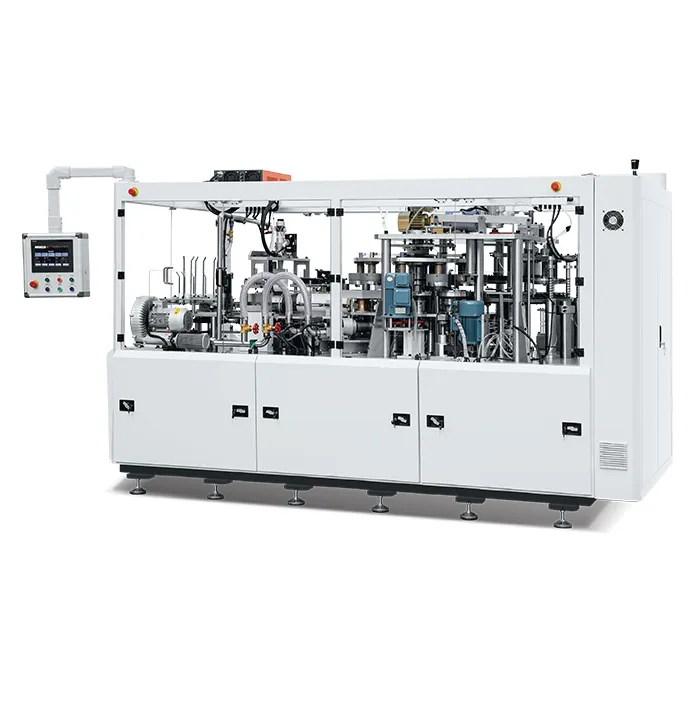
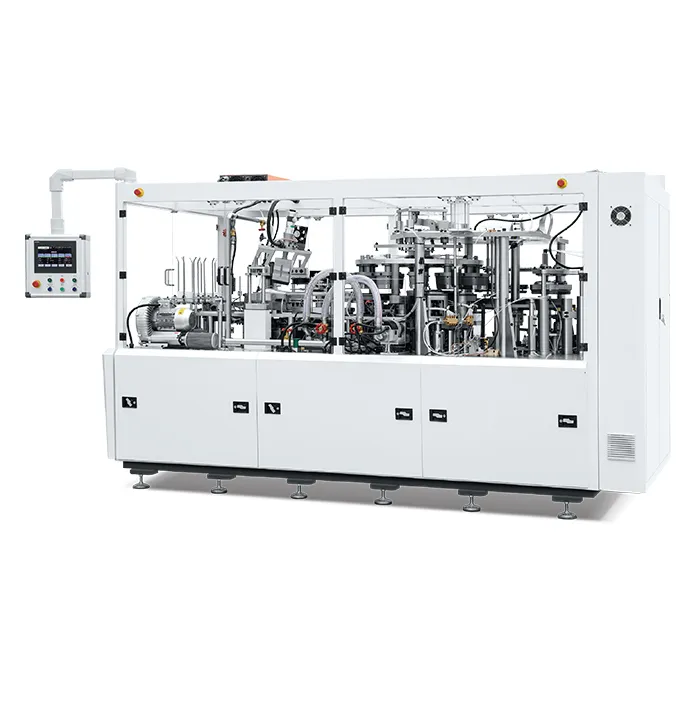
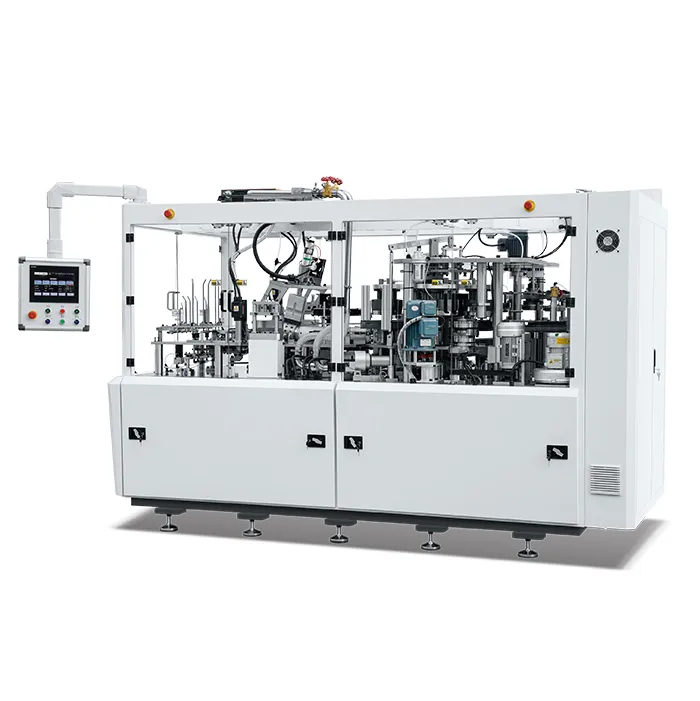
If you’re planning to start or scale a paper cup manufacturing operation, the technical details of the machinery can feel overwhelming. Different models boast different speeds, cup size ranges, degrees of automation, and material capabilities. But which of these actually matter for your daily output, product quality, and long-term profitability? This article distills the key specifications and evaluation criteria, turning technical jargon into practical decision-making tools—no product promotion, just a clear framework to help you choose intelligently.
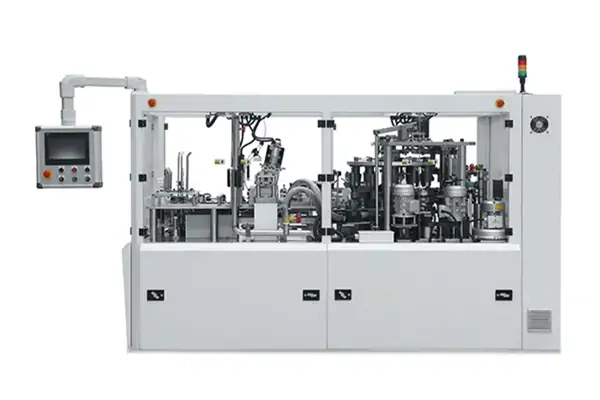
Understanding Core Machine Specifications and What They Mean for Your Output
When you first look at a paper cup machine datasheet, you’ll encounter numbers like “80–100 pcs/min” and phrases like “single/double PE coated paper.” Instead of just comparing these figures, ask what they mean in your real production environment.
Production Speed and Real Output
A machine’s rated speed is typically measured under ideal lab conditions. In a real factory, factors like paper quality, operator skill, and machine warm-up time reduce actual output. A machine rated at 80 cups per minute may consistently deliver 65–70 cups per minute over an 8-hour shift. Understanding this gap helps you plan staffing, warehousing, and fulfillment accurately.
Cup Size Flexibility and Changeover Time
If you plan to produce cups ranging from 4 oz espresso cups to 16 oz takeaway cups, a machine with quick-change mold sets becomes critical. Some designs allow size changes in under 20 minutes; others may need an hour or more. That difference can eat up daily production time, especially if you run multiple size batches.
Material Compatibility
Standard paper cup machines handle single-side PE coated paper. But market trends—like the shift to PLA (bioplastic) lining or water-based barrier coatings—mean future-proof machines should also handle heat-sealable bio-materials. Even if your current orders use PE, the ability to switch coatings without modifying the heating system gives you an edge.
The table below compares two general classes of cup forming machinery to illustrate how specifications translate into operational fit:
|
Specification
|
Moderate-Output Configuration
|
High-Output Configuration
|
|
Typical Rated Speed
|
60–80 cups/min
|
100–150+ cups/min
|
|
Cup Size Range
|
4 oz – 12 oz
|
3 oz – 16 oz
|
|
Changeover Time (avg.)
|
25–40 min
|
10–20 min (with quick-change)
|
|
Energy Consumption
|
~3–5 kW
|
~6–10 kW
|
|
Material Support
|
Standard PE-coated paper
|
PE, PLA, aqueous coatings
|
|
Best For
|
Startups, niche short runs
|
High-volume, multi-SKU orders
|
If you anticipate rapid growth, it may be wise to explore cup forming solutions designed for varying throughputs to see how the mechanical design itself improves changeover speed and material versatility.
*Market data supports the growing demand for multi-format capability. According to an analysis by Grand View Research, the global paper cups market size was valued at USD 11.94 billion in 2023 and is projected to expand at a CAGR of 4.9% from 2024 to 2030. This growth is partly driven by the diversification of cup sizes and eco-friendly coatings—putting a premium on machines that adapt quickly.*
(External authority link: Grand View Research – Paper Cups Market Size Report )
Matching Machine Features to Your Product Line and Market Demands
Beyond core speed and size, several advanced features can dramatically affect your product range and profit margins.
Single-Wall vs. Double-Wall Capability
Standard hot beverage cups require a single wall. But for premium coffee chains or high-temperature drinks, double-wall cups provide insulation without a sleeve. If you see a strong local demand for double-wall cups, evaluate whether a dedicated double-wall machine or a hybrid model better suits your volume. Dedicated double-wall machines often produce a more consistent ribbed outer layer with less scrap.
Integrated Lid and Accessory Production
Some manufacturers also produce paper lids on separate ancillary equipment. Even if you don’t need lid-making immediately, check whether the control system of your potential cup machine can later integrate with a lid production line. Integrated data exchange prevents mismatched cup-lid pairs during high-volume runs.
Automation Level and Labor Implications
Fully automatic machines handle paper feeding, bottom punching, curling, and stacking. Semi-automatic versions require manual paper loading or cup collection. While the initial price difference is substantial, full automation reduces labor costs and inconsistencies, especially across three-shift operations. If your local labor costs are high or rising, pushing toward higher automation from day one often yields a faster return.
If you already produce paper bowls or plan to, it’s worth noting that dual-layer forming technology shares some principles with cup machines but requires dedicated tooling. You might later explore how dual-layer options open additional revenue streams without completely overlapping your cup production line.
Assessing Total Cost of Ownership and Operational Efficiency
The purchase price of a machine is just the starting point. Use this five-step evaluation to compare total cost of ownership (TCO):
-
Calculate energy consumption per 1,000 cups.
Request the machine’s average power consumption (kW) and multiply by your electricity rate. A machine consuming 5 kW produces roughly 4,000 cups per hour, giving you a clear energy cost per cup.
-
Estimate routine maintenance parts and their replacement cycles.
Heat-sealing elements, ultrasonic units, and punch dies wear over time. A machine with easily accessible, modular components reduces downtime. Ask for a recommended spare parts list and the average lifespan of each.
-
Evaluate raw material waste rates.
High-precision feeding systems reduce paper waste. A 2% waste rate versus a 5% waste rate on a 10-ton monthly paper consumption translates to serious cost savings over a year.
-
Consider operator training requirements.
A machine with an intuitive touchscreen interface and fault-diagnosis display can cut the learning curve for new operators by half compared to purely button-and-light systems. Many modern machines now log production data, helping you pinpoint inefficiencies.
-
Project scalability over 3–5 years.
If you start with one machine running single shift but plan to add a second and move to 24/7 operation, check whether the control architecture supports line coordination—e.g., central monitoring for multiple machines.
Practical Application Scenarios
Scenario 1: Starting a Local Eco-Friendly Cup Brand
You target cafés wanting to switch from plastic to paper. Your order sizes are small but vary widely—3 oz sample cups to 12 oz regular cups. Here, quick mold changeover and PLA material capability are far more important than top speed. A mid-speed machine (60–80 ppm) with easy size switching minimizes downtime between batches.
Scenario 2: Large-Scale Distribution to Chain Stores
You have long-term contracts for 12 oz and 16 oz cups, millions of units per month. High speed (100+ ppm) and reliability become paramount. Double-wall options for hot beverages might also be a future requirement. In this case, look at high-output models with robust cooling systems and automatic stacking for downstream packing lines. The ability to handle bio-linings keeps you ahead of chain sustainability mandates.
When you’ve nailed down your typical order profile, it becomes easier to match your needs to specific technical blueprints. For instance, a machine platform that readily switches from 4-oz espresso cups to 16-oz takeaway formats might already exist within a specialized cup forming series—examining such real-world configurations helps you visualize what your day-to-day operation would look like.
Moving Forward: From Guidelines to Specific Solutions
You now have a framework for evaluating speed ratings, size flexibility, material compatibility, automation, and total cost of ownership—all based on your business context, not just the seller’s spec sheet.
Once you have clarified these key decision factors (e.g., required daily output, cup size range, coating type, and acceptable changeover time), comparing the detailed specifications of different machine configurations becomes the logical next step. You can review Discover Machinery’s paper cup machine series for high-capacity setups or explore their ancillary equipment range if you aim to build a complete, coordinated production line from cup forming to lid making and packaging.
If you’re still unsure whether a dedicated paper cup machine or a multi-purpose bowl-and-cup line is the right starting point, you might find value in a guide that compares investment paths for paper container businesses.
Related Reading
-
Paper Bowl vs. Paper Cup Machinery: Which Should You Invest In First?
-
The Role of Automation in Modern Paper Container Production
-
How to Maintain Your Paper Cup Machine for Long-Term Performance
-
Understanding PE, PLA, and Water-Based Coatings for Paper Cups
-
Cost-Saving Tips for Small-Scale Paper Cup Manufacturers
This article is part of Discover Machinery’s technical content library. No direct sales or pricing information is included. All technical discussions aim to help you make informed purchasing decisions.

 English
 Pусский
 عربي
عربي