For packaging engineers and production managers, few frustrations match the sound of a finished cup failing a leak test. You check the bottom curl, inspect the side seam, yet the issue persists.
Often, the culprit isn’t the forming process itself—it’s a mismatch between the paper substrate weight and the mechanical dynamics of your production line.

When we discuss raw material preparation, we are talking about a variable that impacts everything from heating parameters to ejection timing. Let’s break down how to master this variable without falling into common industry traps.
Why GSM Fluctuations Break Your Production Rhythm
GSM (Grams per Square Meter) defines the stiffness, porosity, and thermal responsiveness of your blanks. According to industry material standards (ISO 536), even a 15% deviation from your baseline can alter how the paper behaves under pressure.
-
Low GSM (<210 gsm): Ideal for cold beverages. However, when run on high-torque forming stations, the material tends to wrinkle at the bottom knurling point.
-
High GSM (>350 gsm): Provides structural integrity for hot soups. The risk? Excessive stress on the mandrel and excessive energy consumption during sealing.
“We spent three weeks recalibrating our sensors, only to realize the paper lot had a 20gsm variance,” shared a production lead at a Midwest packaging plant. “The equipment was fine; the substrate was the variable.”
3 Critical Parameters to Adjust for Heavy Substrates
If you are moving from single-wall to double-wall production, your current setup will struggle. Here is how to troubleshoot using mechanical adjustments rather than guesswork.
1. The Pre-Heating Window
Heavy paper (above 320 GSM) acts as a heat sink. If your pre-heating station lacks sufficient surface contact, the polyethylene (PE) coating won't activate properly. You need a pre-heating dwell time of approximately 0.3 to 0.5 seconds longer than standard substrates to ensure molecular bonding at the seam.
2. Mandrel Friction Management
Stiffer paper creates higher radial resistance. Operators often increase pressure to compensate, which leads to internal scoring. Instead, check the mandrel surface finish. A polished surface (Ra 0.4µm or lower) reduces drag, allowing heavy GSM materials to slide into form without micro-tears.
3. Bottom Curl Hydraulics
The bottom curl process requires a specific force curve. If the paper is too soft, the curl collapses. If too hard, the mechanism stalls. Hydraulic pressure monitoring is essential here. Ensure your system maintains a steady 4-6 bar range specifically for the final 10 degrees of the curling stroke.
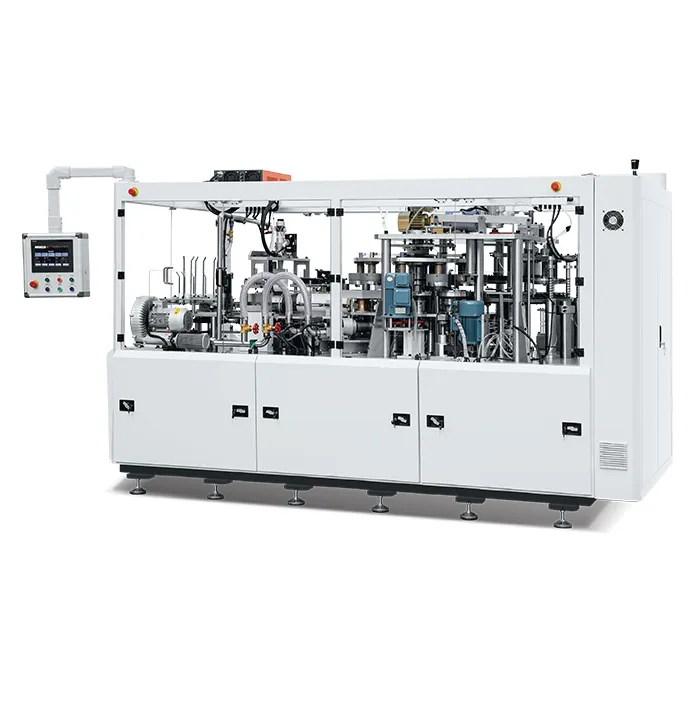
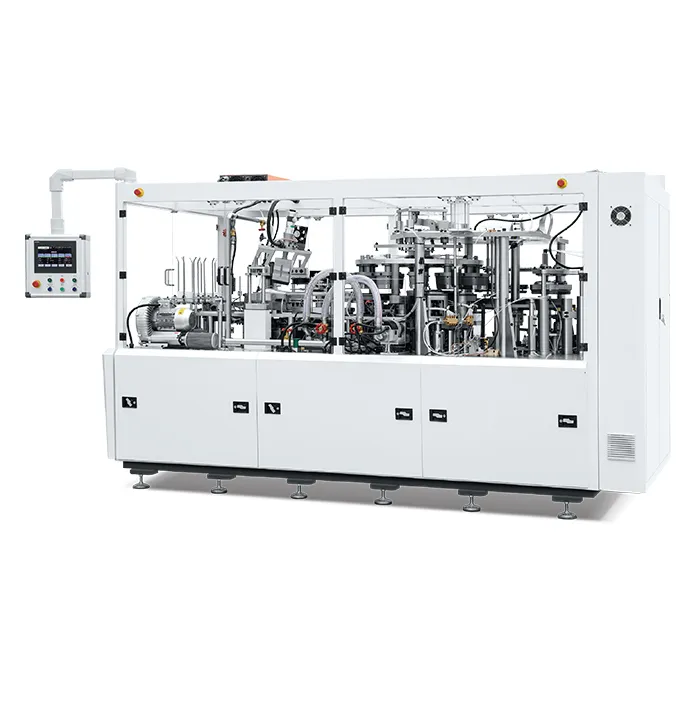
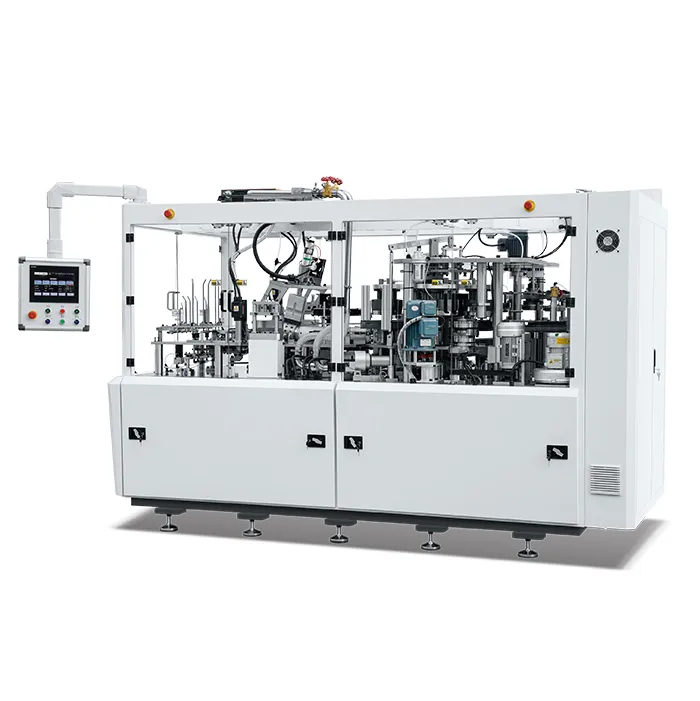
To achieve these specific calibrations, you typically need a forming platform that supports modular tooling adjustments. You can review the technical specifications of modular systems here to see how different models handle variable substrate stiffness.
Common Misconception: "High Pressure Fixes Weak Seams"
It does not. Excessive pressure crushes the paper fibers, creating a "hinge" effect that actually promotes fatigue cracking during transport.
Instead, focus on seam overlap geometry. For 250-300 GSM paper, an overlap of 1.2mm to 1.5mm is optimal. Anything above 1.8mm, and the ultrasonic or hot air sealing struggles to penetrate the multiple layers evenly.

If you notice sporadic leaks, run a simple "peel test" on your scrap bins. A good seal will tear the paper fiber across the entire overlap area. A bad seal will show a clean, smooth plastic peel—indicating that the heat didn't penetrate the high GSM substrate.
How to Build a Substrate Validation Protocol
Before running a full batch of 500,000 units, use this 3-step validation protocol to save thousands of dollars in waste:
-
The 10-Cup Warm-Up: Run 10 cups. Cut them vertically. Check if the side seam shows a "shadow" (unmelted PE layer).
-
The Stack Test: Place 20 finished cups under a 15kg weight for 24 hours. Measure the deformation rate. High GSM should deform less than 2mm.
-
The Torque Check: Monitor your main camshaft torque during the forming phase. Any spike over 12% from your baseline indicates the paper lot is too resistant for your current gearing.
For those managing multiple SKUs with varying paper weights, having a drive system that logs torque data per cycle is invaluable. You can explore available data-logging configurations through the manufacturer’s technical library.
Future-Proofing Your Line for Sustainable Materials
The industry is shifting toward recycled and lower-GSM barrier papers to meet ESG goals. These materials behave differently. They have shorter fibers and lower tear resistance.
To handle these without slowing your output, look for features like servo-driven independent cam profiles and quick-change bottom forming sets. These allow you to switch between a rigid 350 GSM board and a fragile 220 GSM eco-board within 15 minutes, rather than 2 hours.
If you find that your current setup struggles to adapt to these new material trends without mechanical retrofitting, consider evaluating a platform built for flexibility. You can check the adaptability features of modern forming solutions to see if an upgrade fits your 2025 production roadmap.
Final Advice: When to Calibrate vs. When to Upgrade
If your current line runs one paper weight perfectly but fails on others, calibration will suffice. However, if you face daily seizures, inconsistent bottom sealing, or high maintenance on the cam followers, the mechanical limits of your current machine may be the bottleneck.
A reliable forming system should handle a range of 190 GSM to 380 GSM without requiring a full tooling rebuild. If yours does not, you are losing margin on every material changeover.
For teams looking to standardize their substrate variance tolerance, the engineering team has compiled a stress-test report comparing single-station vs. multi-station forming. You can request the full material stress test data via their support portal to see how your current specs compare.
References & Notes:
-
ISO 536:2019 – Paper and board — Determination of grammage.
-
*TAPPI T 410 om-18 – Grammage of paper and paperboard.*
-
Industry data on PE coating activation temperatures (120°C – 140°C for standard substrates).

 English
 Pусский
 عربي
عربي