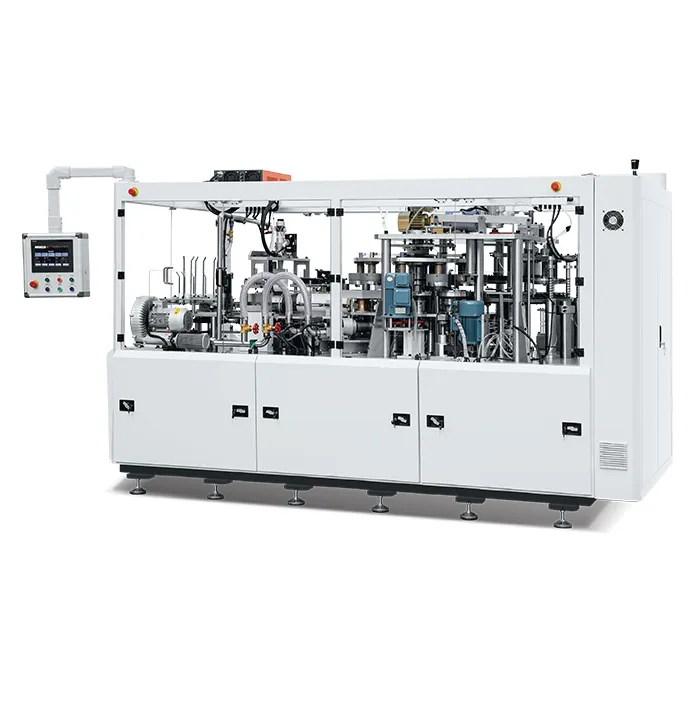
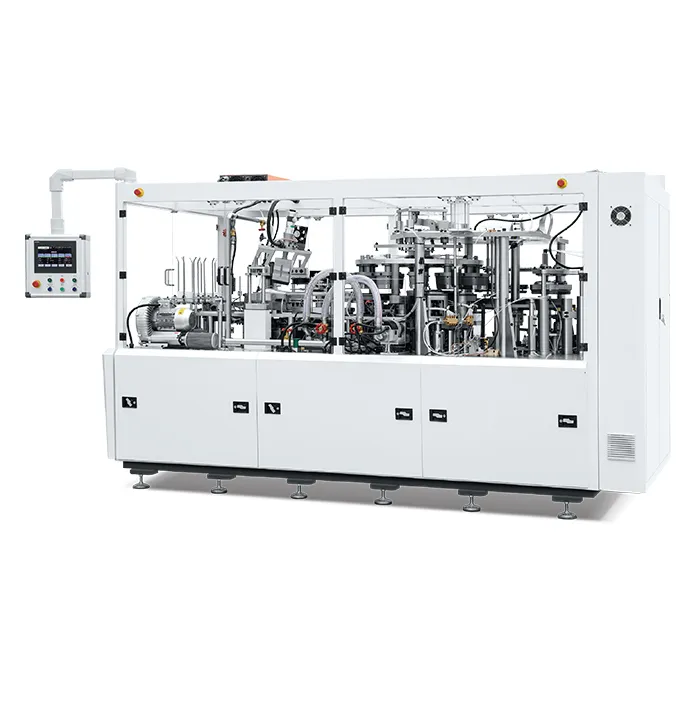
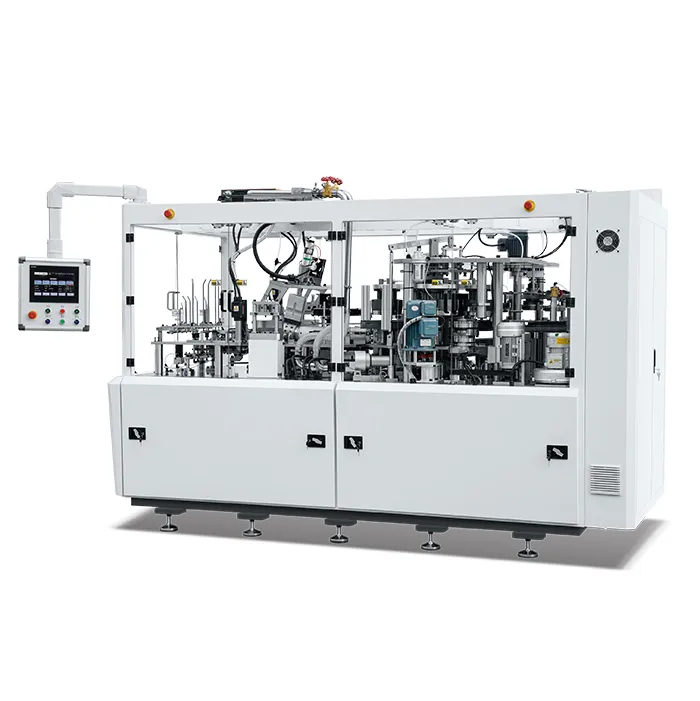
If you‘re standing in a paper cup machine facility right now listening to the rhythmic thump of machinery, you already know the sound tells you everything. A smooth, almost silent whir versus a percussive mechanical knock—that’s the first clue. The debate between open cam and gear drive isn‘t just engineering jargon for the procurement department; it’s the difference between hitting 180 cups a minute without touching the controls and spending your Friday night explaining to the plant manager why the line is down again.
The short answer? Open cam wins on pure speed and high-volume consistency. Gear drive wins on torque stability and longevity under variable loads. But that‘s like saying a sports car is faster than a truck—technically true but useless if you’re hauling gravel. Let‘s dig into the metal-on-metal reality of what these systems actually do to your bottom line, your maintenance crew‘s sanity, and the quality of the cup in your customer‘s hand.
The Rhythm of Production: What Your Maintenance Logs Reveal
Before we get lost in mechanical transmission theory, let‘s talk about the 3:00 AM phone call. The one where the operator says, “It’s making a noise.” In a gear-driven system, that noise usually means heat. In an open cam system, that noise usually means wear.
Traditional gear drive configurations rely on a series of enclosed reduction gears—often a 125-type speed reducer mated to a longitudinal shaft—to transfer power from the main motor to the various stations: cup body forming, bottom crimping, and rim curling . The advantage here is brute force and damping. The gear mesh absorbs the shock of the turntable indexing. When that heavy star wheel with a diameter pushing one meter has to accelerate and decelerate 180 times per minute, the inertial forces are violent. Gear drives, particularly those with helical cuts, distribute that impact load across a broader surface area. That’s why older machines running gear systems from Taiwan or Japan (often spotted with NSK bearings) can still hold registration tolerance a decade later if they‘ve been lubricated religiously .
But there’s a thermal tax. Gear mesh friction generates heat. In enclosed housings, that heat cooks the oil, degrades seals, and—if you‘re running a high-speed production line near the machine’s upper limit—can warp the very tolerances the gears were meant to protect. I‘ve walked plants where the ambient temperature around a gear-driven machine was noticeably higher than the rest of the floor. That’s energy bleeding out as waste, and it‘s a silent killer of precision paper cup machinery.
Open cam technology throws the gearbox out the window—literally. The mechanism is exposed, running on a cylindrical indexing cam with groove wheel followers . Instead of teeth meshing, you have a hardened cam profile pushing against a roller bearing. This is a fundamental shift from sliding friction to rolling friction. The result? You can push the cycle rate higher because you‘re not fighting the inertia of a gear train. You’re also eliminating a major source of mechanical backlash. When the cam profile says “stop,” the follower stops. There‘s no slop in the teeth to account for.
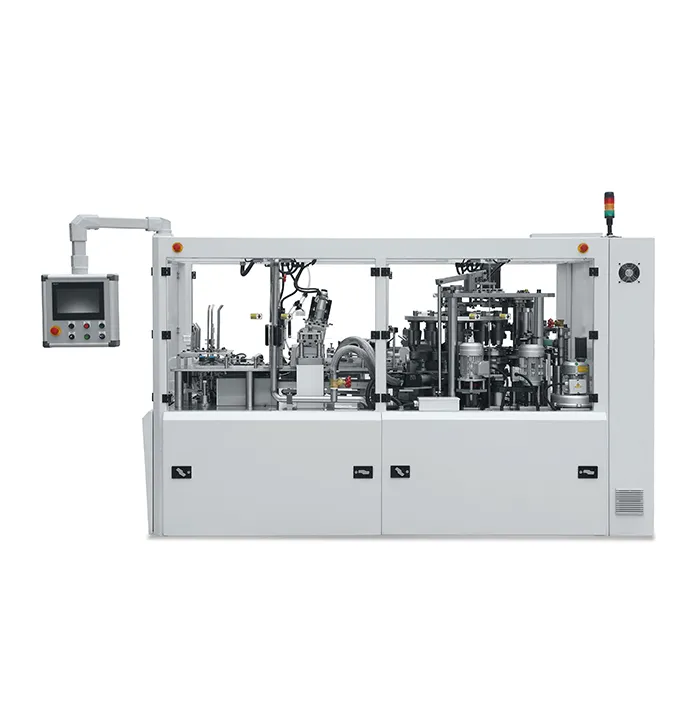
The Speed Illusion vs. The Torque Reality
This is where most spec sheet comparisons fail the buyer. They look at rated speed—say, 100 pieces per minute versus 80—and think the decision is made. But transmission efficiency changes everything when you move from a 6oz espresso cup to a 32oz soda tub.
Open cam machines are dragsters. They love a consistent, narrow band of operation. If you‘re running the same 12oz double PE coated paper blank 24/7, the open cam system will outrun the gear drive almost every time. The reduced rotating mass allows for snappier acceleration of the turntable indexing mechanism. Because the cam profile can be machined to a specific acceleration curve (often mimicking sinusoidal motion), the jerk rate (the change in acceleration) is minimized, keeping the paper blank feeding smooth even at high cycling speeds .
But switch that machine to a thicker heavy-weight paperboard for a soup container, and the story changes. Gear drives, particularly those paired with a variable frequency drive (VFD) , offer a wider torque band. When you‘re punching a thick bottom disc or curling a dense rim, the gear reduction multiplies the motor’s force. The open cam is at the mercy of the motor‘s direct torque output and the bearing contact stress. In these heavy-stock applications, the gear drive’s mechanical advantage often translates to a lower rejection rate and less ultrasonic sealing variability because the forming stations aren‘t bogging down.
Here‘s where it gets interesting: automated lubrication. Open cam systems require constant, precise oil film on that exposed cam face. If the auto-lubrication system fails for even a cycle, you‘re now running metal-on-metal with hardened steel surfaces at high speed. It’s catastrophic. Gear drives are more forgiving; they can run in an oil bath with a bit of thermal degradation before they seize. This is why the total cost of ownership often hinges more on your maintenance team‘s discipline than the machine’s design.
A Word on Power Electronics: The Overlooked Third Player
We‘re talking mechanical drive, but no discussion of cup-forming efficiency is complete without mentioning the servo motor integration creeping into this space. Both open cam and gear systems are increasingly being driven by AC vector drives rather than simple induction motors . This changes the physics of the debate.
When a high-performance inverter drive like a Yaskawa GA700 or similar unit controls the main motor, you can mitigate many of the inherent flaws of both mechanical systems. For a gear drive, a vector control algorithm can reduce regenerative voltage spikes by up to 30% during braking, keeping the braking resistor temperatures closer to ambient and reducing thermal stress on the control cabinet . For an open cam machine, the same precise speed regulation smooths out the velocity ripple that can cause paper fan misalignment at the transfer station.
Where Discover Draws the Line: The Application-Specific Verdict
After spending years retrofitting and calibrating these lines, the most honest answer I can give is: It depends on the cup, not the catalog. You shouldn‘t be shopping for a drive system in isolation. You‘re shopping for output consistency.
Open Cam Configuration Shines When:
-
You are running standard PE coated paper in the 130-300 gsm range.
-
Your production volume demands maximum throughput (approaching or exceeding 100-120 pcs/min).
-
You have a dedicated maintenance schedule and can ensure positive lubrication to the cam followers.
-
You‘re operating in a climate-controlled environment where ambient dust won‘t adhere to the exposed oil film.
Gear Drive Configuration Remains Relevant When:
-
You are processing high-gsm paperboard or biodegradable PLA linings that require higher forming pressure.
-
Your product mix changes four times a shift. The robustness of gears handles quick changeover procedures with less tooling wear than a cam profile.
-
You‘re in a region with unstable power supply; the inertia of the gear train acts as a flywheel, smoothing out momentary power dips.
The Discover Perspective: Hybrid Rigidity in a High-Speed World
This brings me to the structural integrity of the platform itself. We‘ve seen too many manufacturers bolt a high-speed open cam system onto a lightweight fabricated frame. The result? At peak acceleration, the frame twists, the cam and follower misalign by fractions of a millimeter, and you start producing cups with uneven sidewalls or bottom leakage.
At discover, we approached this problem from the foundation up. Whether the application calls for the high-cycle speed of an open cam or the unyielding torque of a gear train, the platform underneath it must be immovable. We‘ve standardized on a heavy-gauge square steel frame that brings the machine weight up significantly—this isn‘t about making shipping harder; it‘s about creating a damping mass that absorbs harmonic vibration before it reaches the cup-forming mandrel.
If you‘re currently battling unexplained waste rates in the 5-8% range or noticing chatter marks on the rim curl, the issue might not be the drive type. It might be the mechanical resonance between the drive and a lightweight chassis. You need a system that treats the drive mechanism and the machine architecture as a single, unified solution rather than a collection of off-the-shelf components.
What‘s Next for Your Production Floor?
We‘ve moved past the era where “open cam” and “gear drive” were competing religions. The smart money is on contextual engineering. You need a partner who won‘t just sell you a high-output cup former but will analyze your specific paper stock, your target cycle rate, and your operational skill level.
Before you sign that PO, ask the supplier one question: Show me the frame deflection data at maximum RPM. If they look at you like you‘ve asked for nuclear launch codes, you know they‘re selling a motor attached to a tin can. If they can walk you through the finite element analysis of the main drive shaft housing, you‘re talking to people who understand that speed is meaningless without stability.
You can explore the specific structural advantages we‘ve engineered into the REHOBOTH platform to see how we‘ve tackled the vibration problem at its source. If you‘re torn between the maintenance profile of gears and the speed profile of cams, it‘s worth taking a closer look at the hybrid approach we take with variable speed actuation. For a deeper dive into how these systems handle specialty barrier papers, review our case studies on sustainable material processing.

 English
 Pусский
 عربي
عربي