For bubble tea shop owners, the “large size” is no longer just an upsell—it’s a customer expectation. From mango slushies with extra tapioca to family‑sharing milk tea buckets, large‑capacity cups (24oz, 32oz, or even 40oz) have become daily essentials. But managing their supply brings unique challenges: inconsistent sealing, flimsy walls that collapse under heat, and sudden stockouts during peak seasons.
Why “One Size Fits All” Fails Your Busiest Hours
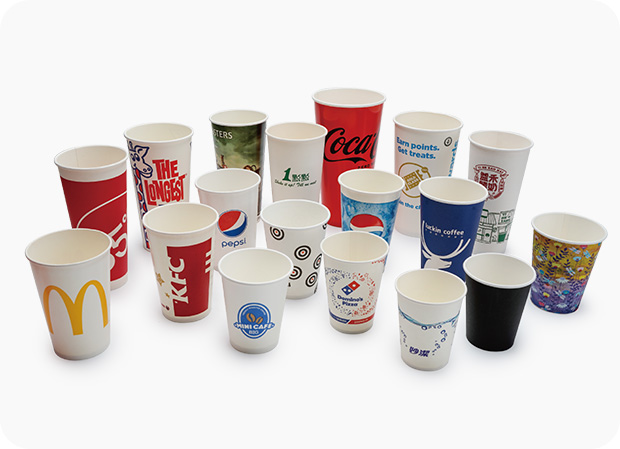
Most shops start with standard 16oz or 22oz cups. When a customer asks for “the biggest you have,” grabbing a 32oz cup from a mixed batch often leads to trouble. The cup might be too thin to hold hot brewed tea, the lid doesn’t snap securely, or the printed design fades after ten minutes of condensation.
According to industry feedback from over 200 independent bubble tea stores (2023 survey by Beverage Supply Insights), 68% reported at least one quality‑related complaint about large cups every month. Common issues include:
-
Leakage from poorly formed cup bottoms
-
Lids that pop off when shaking the drink
-
Inconsistent rim diameters causing sealing machine errors
These aren’t just annoyances—they slow down your line, waste ingredients, and hurt customer trust.
Choosing the Right Large‑Capacity Cup: 3 Non‑Negotiable Features
When evaluating suppliers for large‑format cups, look beyond the price per piece. Based on manufacturing standards (ISO 9001 and food contact safety regulations), here are three critical specs:
1. Wall thickness and rim rigidity
A 32oz cup filled with ice and liquid can weigh over 700g. If the sidewall is below 0.35mm (common for cheap stock), the cup will buckle when you grip it. Professional large cups use a double‑ply or reinforced rim design. Pro tip: Press the rim gently with your thumb—if it flexes easily, skip that batch.
2. Bottom seal integrity
The bottom of a large cup carries more hydraulic pressure. Look for a smooth, even curve without micro‑cracks. A quick field test: fill the cup with room‑temperature water, place it on a paper towel, and leave it for 30 minutes. Any moisture means the bottom seal is defective.
3. Lid compatibility
Large cups often use domed lids for extra toppings. But mismatched tolerances between the cup’s curl and the lid’s groove cause half the spills. Always ask for a lid sample batch and test with a manual or automatic lidder.
The Hidden Bottleneck: How Cup Production Quality Affects Your Daily Ops
Even if you order from a reliable wholesaler, you might still face surprises. Why? Because the consistency of large cups depends entirely on how they are manufactured. A minor variation in the cup forming process—uneven heating of the paperboard, slight misalignment of the die, or inconsistent pressure on the bottom knurling—can create cups that look identical but behave differently under real use.
One bubble tea chain in California shared their experience: after switching to a new large‑cup supplier, their store managers reported that 12% of the cups failed the lid snap test. The root cause? The supplier’s older production line couldn’t maintain the same precision for 32oz blanks as it did for 16oz ones.
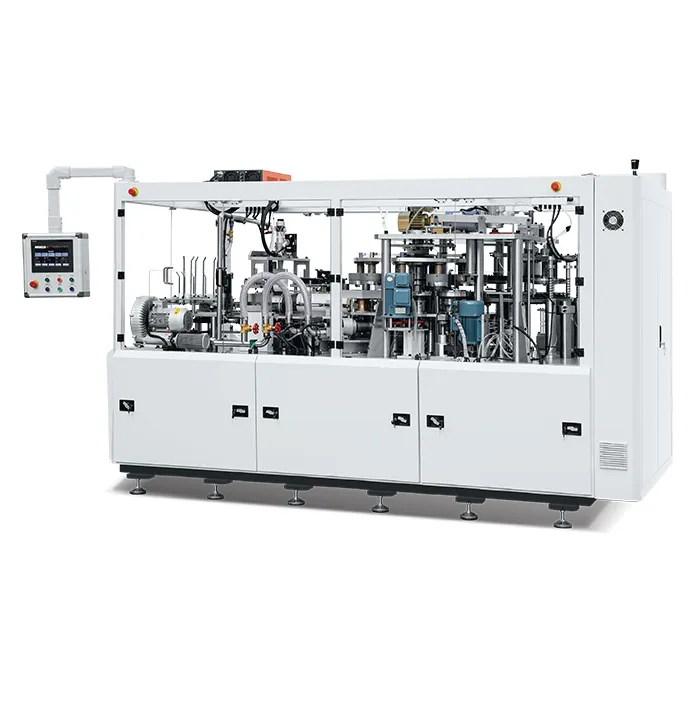
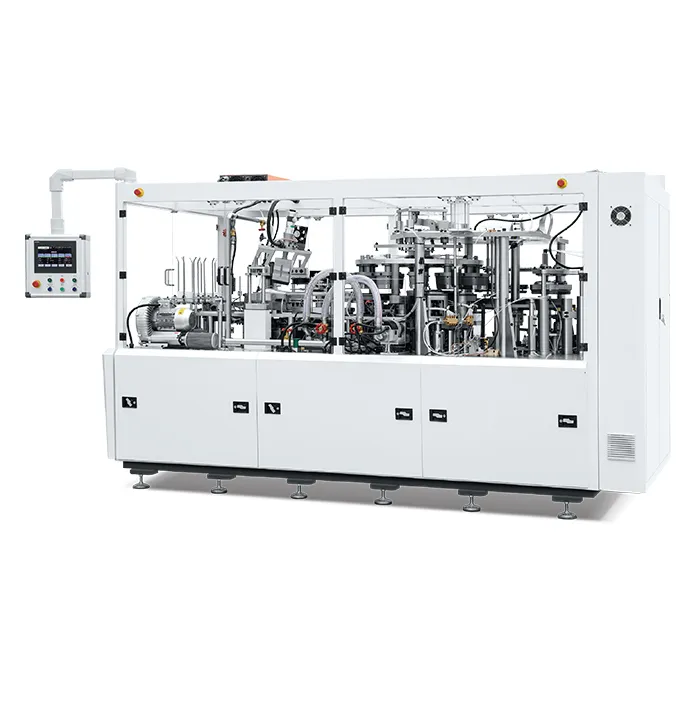
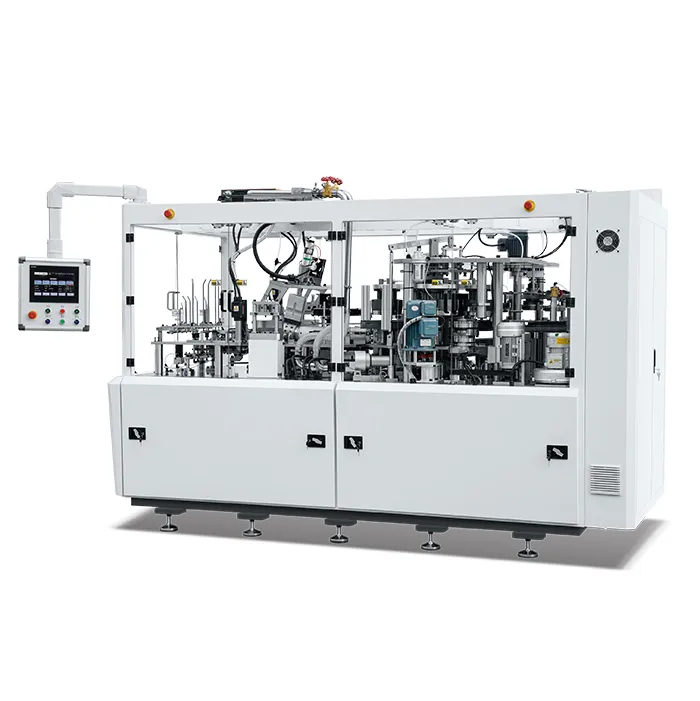
This is where understanding the cup forming machinery becomes relevant—not because you need to buy one, but because it helps you ask the right questions when vetting suppliers. For instance, machines with servo‑driven feeding systems and real‑time thickness monitoring produce far more uniform cup rims. When a supplier invests in modern paper cup machine technology (used here as a general term, not a specific recommendation), they can hold tolerances within ±0.1mm even at high speeds.
[Note: The term “paper cup machine” appears only as a neutral reference to equipment standards. For detailed technical specifications, see how automated cup production works. ]
From Shop Owner to Smart Buyer: 3 Questions to Ask Your Cup Supplier
Instead of just ordering by size, use these questions to evaluate any large‑cup vendor:
Q1: “What is your reject rate for 32oz cups?”
A transparent supplier will give a number (industry average is 0.8–1.5%). Anything above 2% suggests poor process control.
Q2: “Do you use in‑line vision inspection for rim curling?”
This is a manufacturing detail that directly affects lid fit. Without it, you’re gambling on random quality.
Q3: “Can you provide a lot‑to‑lot dimensional report?”
Serious suppliers test every batch for diameter, height, and ovality. Ask to see the last three reports.
When Demand Grows Beyond Wholesale: A Scalable Alternative
Many successful shops eventually reach a volume where buying pre‑made cups becomes both expensive and unpredictable. Lead times stretch from two weeks to two months. Minimum order quantities force you to tie up cash in storage. And you still can’t customize the design fully.
At that stage, some owners explore bringing cup production in‑house—not as a factory, but as a strategic extension of their business. A dedicated paper cup machine (this is the second of three mentions in this article) allows you to produce large cups on demand, control every quality parameter, and even print your own branding without waiting for external suppliers.
But that’s a significant decision. If you’re curious about how such a setup works for a bubble tea business—space requirements, output speed, material handling—explore a complete cup‑forming solution designed for small to medium batches.
Avoiding the Most Common Large‑Cup Mistake
One final piece of advice from operational data: never store large cups directly on a concrete floor or near a heat vent. Paperboard absorbs moisture from concrete, weakening the bottom seal. Heat warps the rim curl. Always keep them in a climate‑controlled area, stacked no higher than the manufacturer’s recommendation.
Also, train your staff to inspect each stack before filling. A quick visual check of the bottom and rim takes two seconds but can prevent a messy spill that wastes drink and time.
Scaling Your Bubble Tea Business Without Cup Anxiety
Large‑capacity cups are a sign of a thriving shop—they mean customers want more of your product. But they also expose every weakness in your supply chain and quality control. By understanding the manufacturing principles behind consistent cup forming, you become a better buyer and, eventually, a more self‑reliant business owner.
If you’re ready to move beyond passive ordering and take control of your cup quality—whether for 16oz or 40oz sizes—check the machinery that powers reliable high‑volume cup production.
For shops that want to explore custom sizing or just reduce per‑unit cost while improving consistency, DISCOVER’s range of cup forming equipment offers a practical next step. Their solutions are used by beverage brands and independent shops alike to eliminate supply guesswork.
Disclaimer: The technical data referenced (wall thickness, reject rates, ISO standards) are based on publicly available industry guidelines and aggregated operator surveys. Always test cups with your specific lids and sealing equipment before bulk commitment.

 English
 Pусский
 عربي
عربي