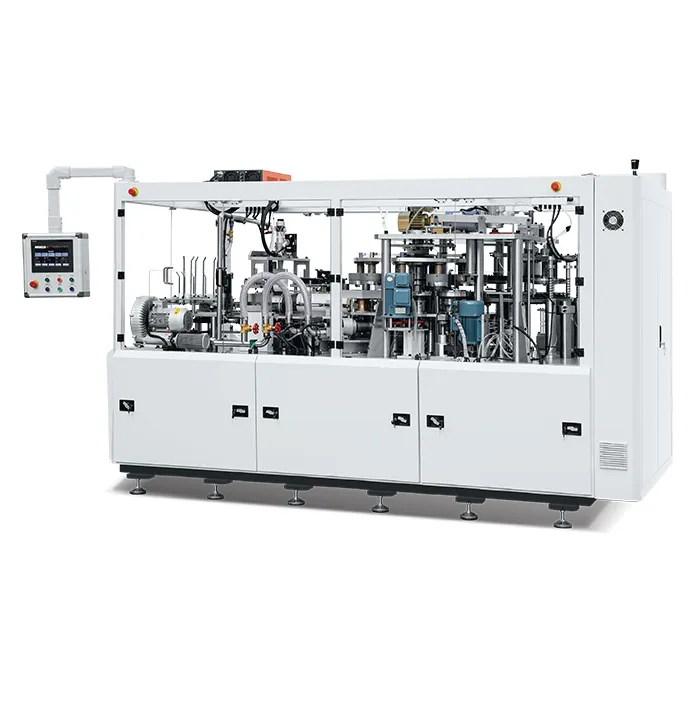
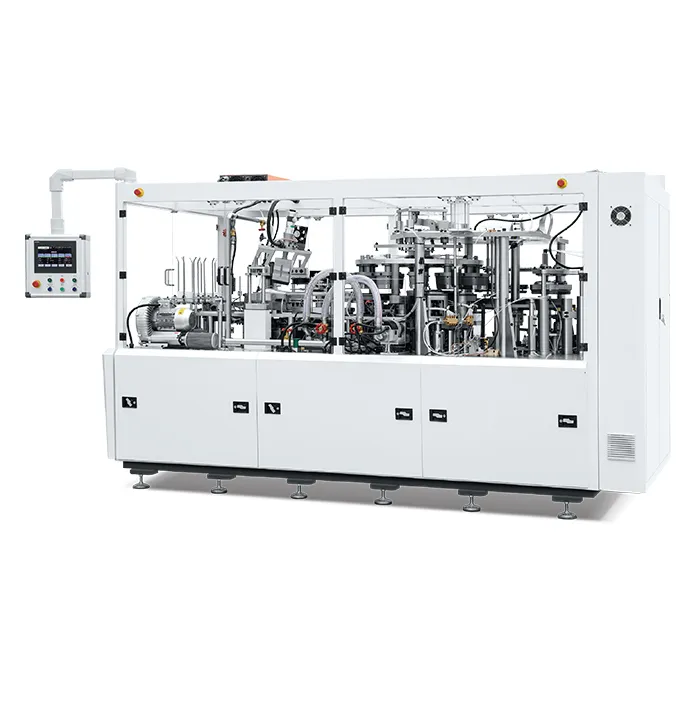
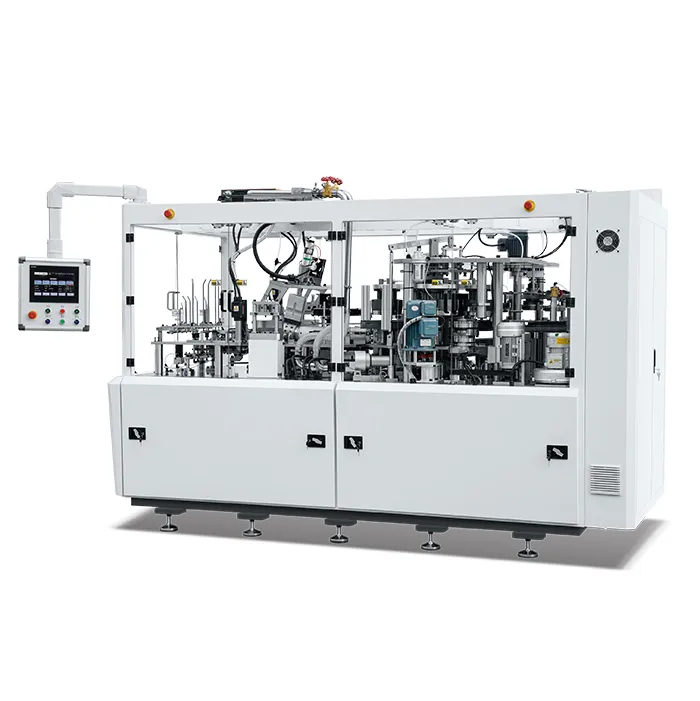
What is the future of high-speed paper cup machines? In short: reliability at speed, not just raw output. Manufacturers who bought cheap “fast” machines are discovering that peak brochures mean nothing when your line stops every 45 minutes for a misfeed. Across the board, buyers are now prioritizing three things: sustained forming speed, servo-driven consistency, and ultrasonic sealing that eliminates glue-related downtime. The high‑speed segment (100+ cups per minute) is growing fastest, driven by 137 countries with single‑use plastic bans and coffee chains that need stable, low‑waste production.
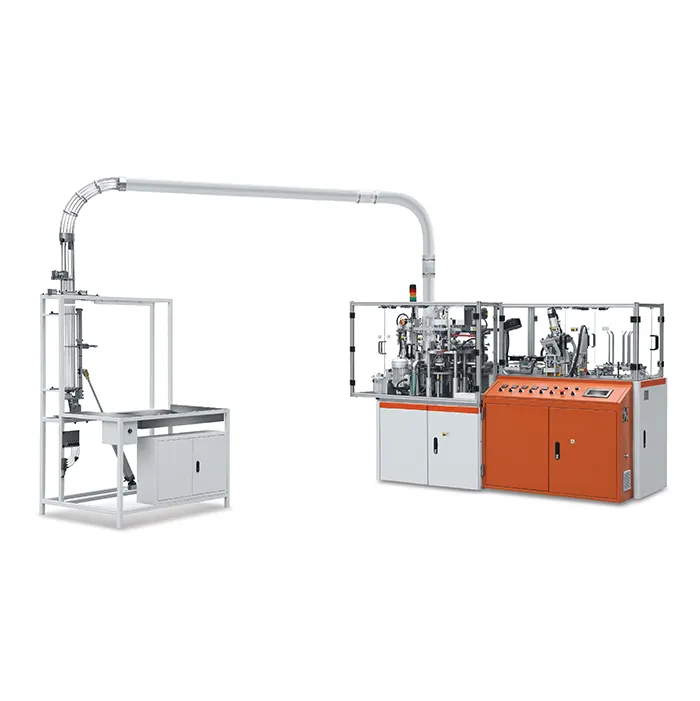
What “High Speed” Actually Looks Like on the Floor
Let’s get honest. A quote that says “speeds up to 150 cups/min” means almost nothing if the machine runs that fast for only the first ten minutes of a shift. Over 8 hours, sustained production is what pays bills. High‑output models rated for 120 to 150 pieces per minute generally fall into an actual sustained band of 100 to 130 cups per minute – still dramatically better than slower alternatives.
When you compare a standard low‑speed cup forming system (around 45 u/min) against an industrial‑grade high‑volume paper packaging machine (130+ u/min), the gap is not just about output. It changes how you hire. A slower unit needs one operator per machine. A high‑speed intelligent model lets one person watch three to four machines simultaneously, thanks to auto‑stop sensors and visual fault detection that catch jams before they become jams. That is a direct payroll reduction – not penny‑pinching, but real structural advantage.
Why “Fast but Fragile” Fails Every Time
Cheap high‑speed lines are a trap. They use open cams and chain drives that wear out, stretch, and drift. The result? By month six, your 150‑cup line runs like a 60‑cup headache. One packaging plant I visited last year bought a “bargain” high‑speed model and watched scrap rates climb to 12% within 90 days. Mold wear accounts for 34% of forming‑stage failures industry‑wide – and cheap machines use soft 45# steel that wears out in half a year, causing bottom leaks and wrinkled rims.
The moment you cross into true high‑speed territory – consistently over 100 cups per minute – the engineering shifts fundamentally. At 60 cups per minute, an operator can spot a jam, tweak a temperature, or swap a paper roll without breaking stride. At 150 cups per minute, a machine not built for that rhythm will choke: misfeeds, wrinkled rims, leaky bottoms, constant stops. Every component must be designed for that pace, not tuned up to it.
Sustainability Isn’t Optional – It’s the License to Operate
The regulatory picture has hardened. In the EU, the Single‑Use Plastics Directive is already reshaping procurement. California’s AB 1371 forces similar shifts. Consumers now actively choose paper over plastic – global paper cup demand is projected to hit $9.32 billion by 2034. This is not a trend; it’s a structural realignment.
But here is the twist: raw sustainability isn’t enough. Buyers now ask for PLA‑coated cup production or aqueous‑based barrier capabilities. A machine that only handles traditional PE coating will be obsolete in certain markets within three years. Smart factories invest in converting flexibility – being able to switch between PE, PLA, and water‑based coatings without a weeklong retooling.
Energy efficiency also matters more than ever. Modern servo‑driven servo forming lines typically consume 18–30% less electricity per thousand cups compared to mechanical cam machines. That directly hits your bottom line, especially in regions where industrial electricity rates have spiked.
Branding and Customization as Margin Multipliers
Plain white cups are a race to the bottom – margins usually sit around 25–30%. But custom‑printed beverage cups with full‑color branding frequently exceed 50% profit. The machine that just forms cups leaves money on the table. The integrated line that can receive pre‑printed paper from an inline flexo press – or at minimum has registration controls precise enough for tight‑tolerance post‑printing – turns you from a commodity supplier into a marketing partner for coffee chains and QSRs.
A local roaster paying 0.08foraplaincupwillhappilypay0.08foraplaincupwillhappilypay0.12 for a cup that carries their logo and seasonal artwork. That extra four cents is nearly pure margin once you have the capability.
Solutions for Real Production Challenges
You might be looking for a specific answer at this point. The core problem most buyers face is this: “I need higher throughput without doubling my labor cost or my scrap rate.” That is the sweet spot where paper cup machine technology has evolved most dramatically over the past three years. The best models now integrate:
-
Servo‑driven cam boxes that hold exact timing cycle after cycle, eliminating drift
-
Ultrasonic side‑seam welding that seals instantly without adhesive residue or drying time – essential for high‑speed runs
-
Automatic shutdown on misfeed that prevents catastrophic jams that could damage tooling
-
Recipe‑based changeovers that let an operator switch cup sizes in minutes rather than hours
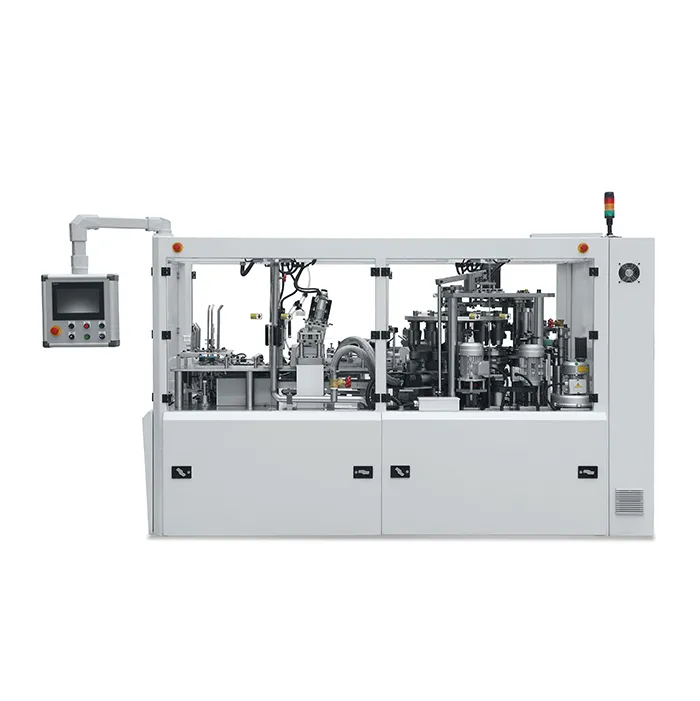
If you are exploring solutions for your specific line, the best path forward is to evaluate actual sustained speed, not brochure numbers. Learn more about current high‑speed configurations from manufacturers who publish real specs, not just marketing claims. Check equipment specifications and live demonstrations before committing – nothing replaces seeing a machine run for two hours straight.
A quick word on brand reliability: Chinese manufacturers now account for roughly 65% of global paper cup machinery production. But quality varies wildly between suppliers. The difference usually comes down to three components: drive system (sealed gearbox vs. open cams), electronics (Schneider/Panasonic vs. unbranded clones), and sealing method (ultrasonic vs. hot air). Paying 30–40% more for a machine with verified global‑brand electronics often pays back in reduced downtime within the first year.
When High Speed Doesn’t Make Sense – Match Your Business Model
Not every operation needs 150 cups per minute. If you are a small regional supplier making 50,000 cups per month, a slower but robust machine at 8,000–8,000–12,000 might be the smarter play. But if you have contracts with two coffee chains requiring 2 million cups per month, anything below 100 cups per minute becomes a bottleneck that costs you customers.
The math changes dramatically when you factor economic production speed into depreciation. A high‑speed unit at 50,000producing144,000cupsina20‑hourshiftcostsroughly50,000producing144,000cupsina20‑hourshiftcostsroughly0.00035 per cup in machine depreciation. A low‑speed unit at 12,000producing54,000cupscostsabout12,000producing54,000cupscostsabout0.00022 per cup – actually lower. But the high‑speed machine’s real advantage is labor: one operator for three machines versus one per machine. At 20/hour,thatsavingaddsupto20/hour,thatsavingaddsupto30,000+ annually. The high‑speed machine pays for itself in labor reduction alone within two years.
Maintenance and Longevity – What Smart Buyers Check
After sale support matters. A high‑speed production line is only as good as the parts availability. When you buy from a manufacturer with regional warehousing and published parts diagrams, you avoid the nightmare of a 50sensorshuttingdowna50sensorshuttingdowna60,000 machine for three weeks.
Predictive maintenance is becoming standard on better equipment. Vibration analysis (20 kHz sampling rate) and thermal imaging can detect forming‑stage degradation 120–150 hours before breakdown, reducing unplanned downtime by 57%. That is not future‑tech – it is available on mid‑tier machines right now.
Before you finalize any purchase, explore the differences between drive systems and sealing technologies – these are the two factors that separate a ten‑year machine from a three‑year headache. Find out how customizable your production line can be with options like PLC touch controls, remote diagnostics, and modular tooling. Many factories overlook these details until a small issue becomes a line‑stopping crisis.
Wrap‑Up: What the Next Five Years Bring
The trajectory is clear. Smart forming equipment will continue integrating more sensors, more automation, and better energy management. By 2030, expect standard automated cup manufacturing lines to include real‑time quality inspection cameras and AI‑driven predictive adjustments that tune heater temperatures and sealing pressure on the fly.
But the fundamentals won’t change. A good high‑speed system is one you can run at 80% of its peak speed for 18 hours a day, produce cups that don’t leak, and service without a PhD in engineering. Everything else is noise.

 English
 Pусский
 عربي
عربي