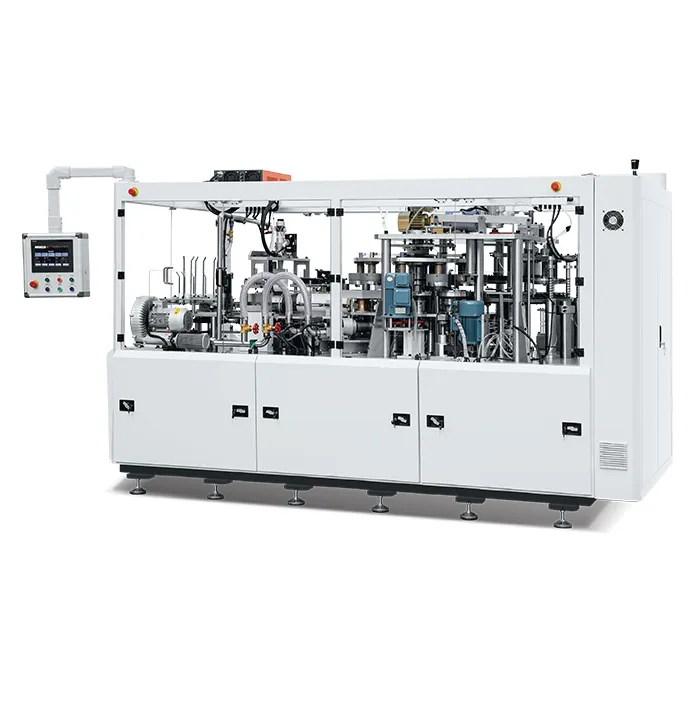
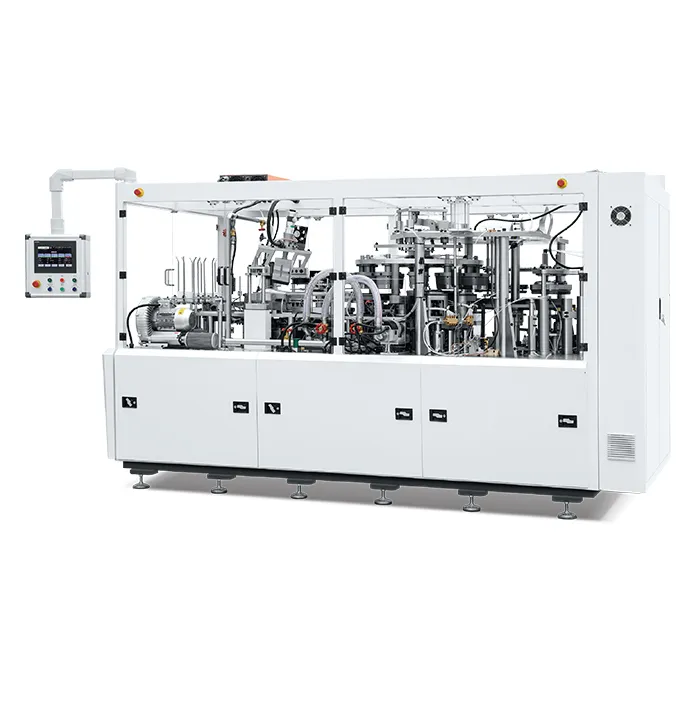
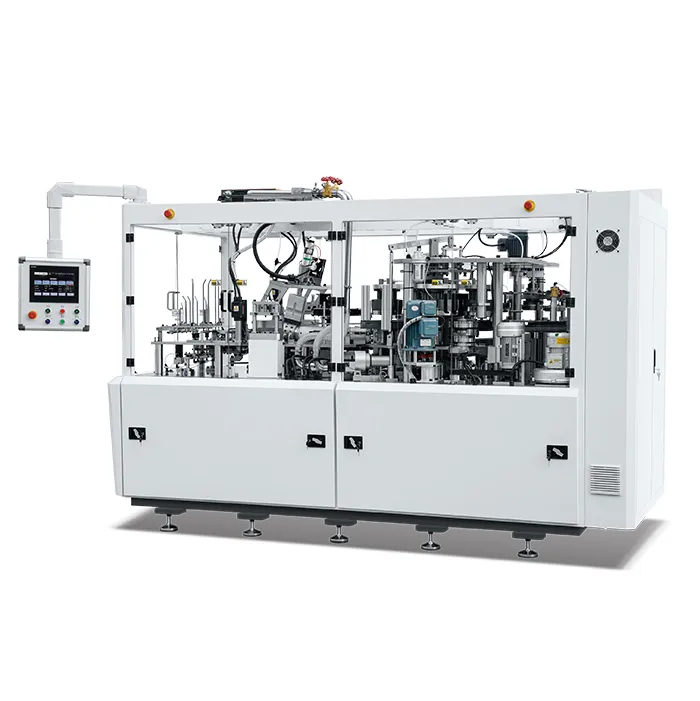
Starting a paper cup production line sounds straightforward: feed the raw material, run the forming process, and collect finished cups. But ask any plant manager who has faced wrinkled side seams, leaking bottoms, or sudden output drops, and you will hear a different story.
Small errors in adjustment, material handling, or maintenance quickly compound into thousands of rejected cups and missed delivery deadlines. The good news is that most of these mistakes are entirely preventable. Based on common failure patterns observed across dozens of small-to-medium workshops, here are the critical pitfalls you should avoid.
Wrong Blank Alignment Ruins Side Seam Integrity
One of the most frequent issues begins with the fanfolded paper blank feeding into the forming station. When the side guides or registration sensors drift even 1 mm off position, the overlap seam either fails to seal properly or creates a sharp edge that leaks. Operators often try to compensate by raising heating temperatures, which burns the polyethylene coating.
Root cause: Lack of a daily calibration routine for the feed track. After each reel change or shift handover, the blank position should be verified using a test piece.
Fix: Install a visible scale marker on the feeding guide and make zero adjustment part of your shift-start checklist. If your equipment allows, use a photoelectric registration system that alarms when misalignment exceeds tolerance.
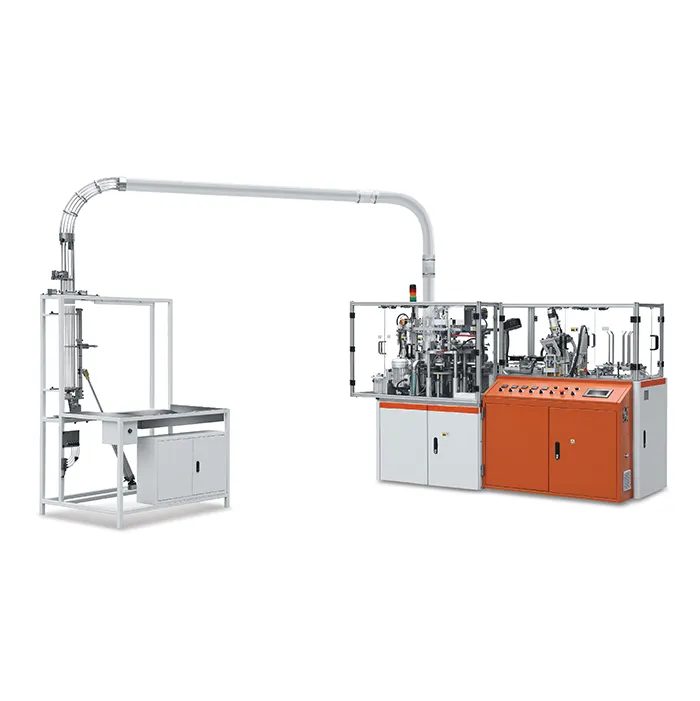
Ignoring The Pre-Heating Curve For Coated Paper
Many operators assume that room-temperature paper rolls are fine to run immediately. However, cold or moisture-absorbed paperboard causes inconsistent heat sealing. The result: bottoms pop open under hot liquid, or the curled rim unrolls after filling.
Industry data: According to a 2022 technical bulletin from TAPPI (Technical Association of the Pulp and Paper Industry), PE-coated paper stored below 18°C requires at least 45 minutes of acclimation in the production area before running at full speed.
Prevention strategy: Store your raw material in a conditioned space (20–24°C, 50–60% RH) for 24 hours before use. For urgent orders, run the first 30 minutes at 60% of normal speed while using the forming station’s pre-heater zone. This allows the coating to reach ideal plasticity without scorching.
Neglected Ultrasonic Or Heating Element Calibration
Mechanical wear is easy to see; thermal drift is invisible until quality fails. Side seam sealers and bottom knurling units rely on precise temperature zones. When a thermocouple ages or a heating element builds up oxide scale, the actual temperature can drop 15–20°C below the setpoint while the controller still reads normal.
One customer producing 8 oz cups for a coffee chain reported a sudden 12% rejection rate. After two days of troubleshooting mechanical parts, the problem traced back to a heating element that had lost 40% of its power output. Replacing it and re-calibrating the PID controller dropped rejections below 1% within an hour.
Actionable tip: Every 500 operating hours, measure the actual die temperature using a contact pyrometer (not the machine’s built-in display). Compare readings and adjust the offset parameter in your controller.
Running The Same Speed For All Cup Sizes
A common misconception: “If the machine makes 4 oz cups at 80 cups/min, it should do 16 oz cups at the same speed.” In reality, larger diameters and taller walls require longer heat soak and cooling times. Forcing the same cycle time leads to soft seals and cup deformation when the forming mandrel retracts.
Expert recommendation: From forming tool suppliers, a safe rule of thumb is to reduce linear speed by 8–12% for every 2 oz increase beyond the machine’s base size. Additionally, increase the cooling air dwell time by 0.2–0.3 seconds for larger diameters. Always run a 100-cup sample batch and perform a hot-fill test before committing to full production speed.
Skipping The Weekly Mandrel And Die Inspection
The forming mandrel wraps the paper into a cylinder, and the die pushes the bottom disc into place. These two components experience high cyclical loads and paper dust accumulation. A scratch as thin as 0.1 mm on the mandrel surface will imprint a leak path on every single cup.
Field experience: A Midwest US contract packer discovered that 9% of their cups failed a dye penetration test. The culprit was a tiny nick from a metal spatula used to clear a jam. Their solution now includes a weekly visual inspection with 5x magnification and a mandatory change of non-marring cleaning tools.
Preventive schedule:
-
Daily: Wipe mandrel and die with lint-free cloth, check for paper residue.
-
Weekly: Inspect under good light for scratches or edge dullness.
-
Monthly: Measure mandrel outer diameter and die inner diameter with a micrometer; replace if wear exceeds 0.05 mm.
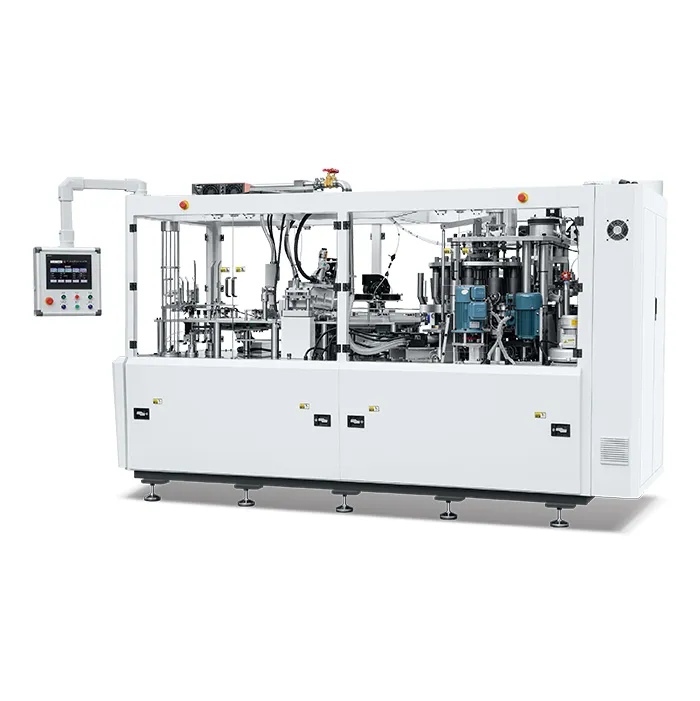
Underestimating Lubrication Points On The Cam Drive
High-speed cup forming machines rely on cam-driven indexing for precise motion. Many operators lubricate visible gears but miss the cam followers, oscillating arms, and the press ram guide bushings. When these dry out, the motion becomes jerky, causing uneven bottom curl heights and mis-timed ejection.
Trustworthiness note: A leading German cam manufacturer, after analyzing 42 field failures, found that 68% originated from under-lubrication of concealed cam track surfaces. Their recommendation: use a lithium-based EP2 grease applied weekly with a special needle nozzle to reach internal tracks.
If your current maintenance sheet only lists “lubricate as needed,” replace it with a time-based chart. Mark the exact grease points with numbered stickers on the machine frame.
How To Build A Mistake-Proof Environment
All the above errors share one theme: they rely on human memory and visual estimation. The most reliable shops transition from reactive fixes to systematic prevention. This means adopting:
-
Standardized checklists for shift change, material change, and tooling change.
-
Simple visual controls – color-coded temperature zones, position scales, and wear limits painted on parts.
-
Rapid feedback loops – if an operator finds a defect, stop the line immediately, document the symptom, and verify the corrective action within 30 minutes.
For teams looking to move beyond band-aid solutions, exploring equipment designed with maintenance-first engineering can pay off quickly. Modular forming stations, digital temperature readouts with auto-calibration, and tool-less mandrel change systems eliminate many common mistakes at the source.
If you want to see how modern cup forming platforms address these pain points, explore reliable cup forming solutions that include guided maintenance software and real-time thermal monitoring. The right equipment not only reduces reject rates but also frees your skilled operators to focus on continuous improvement instead of firefighting.

 English
 Pусский
 عربي
عربي