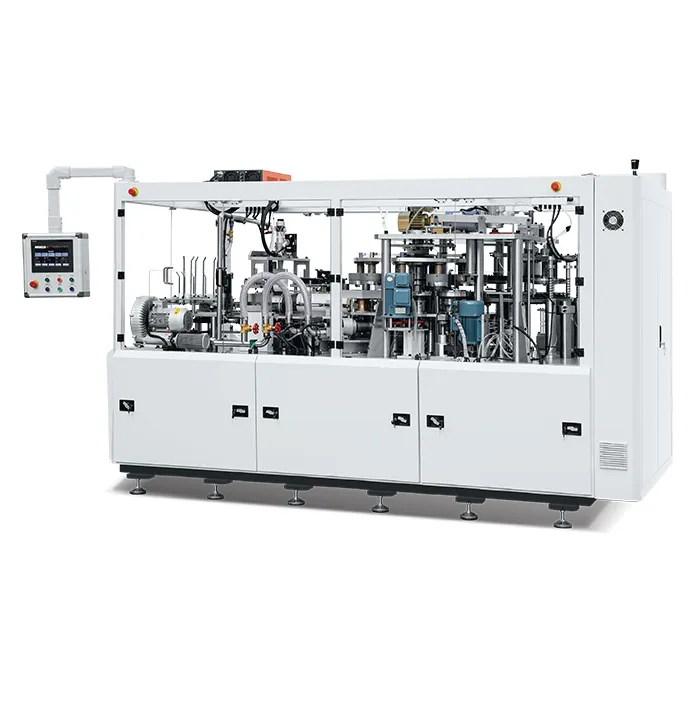
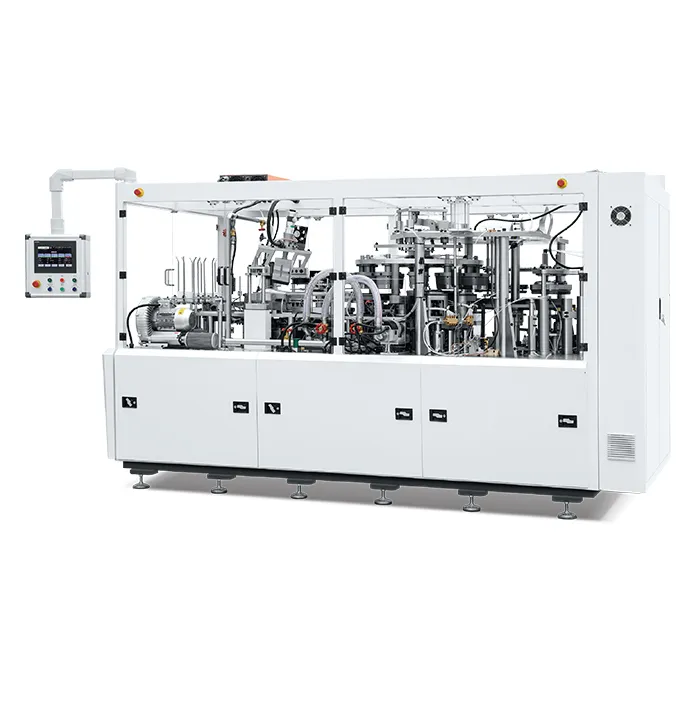
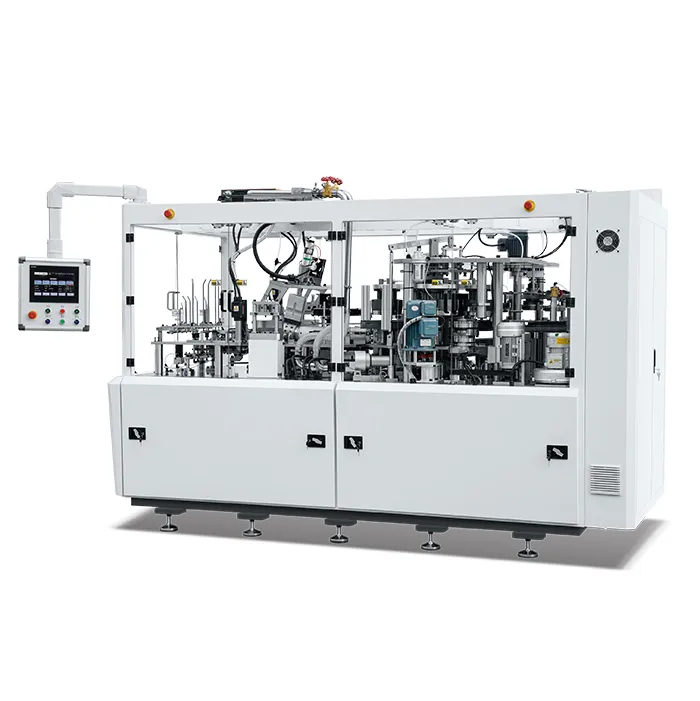
Quality defects in paper cup production rarely have a single cause. The same symptom—a leaking bottom or a deformed rim—can originate from material variation, tooling wear, parameter drift, or mechanical misalignment. This article provides a practical troubleshooting framework organized by defect type, helping operators and quality engineers identify root causes efficiently.
Before troubleshooting specific defects, it helps to confirm the equipment configuration and available settings. You can review the paper cup machine category for general equipment reference.
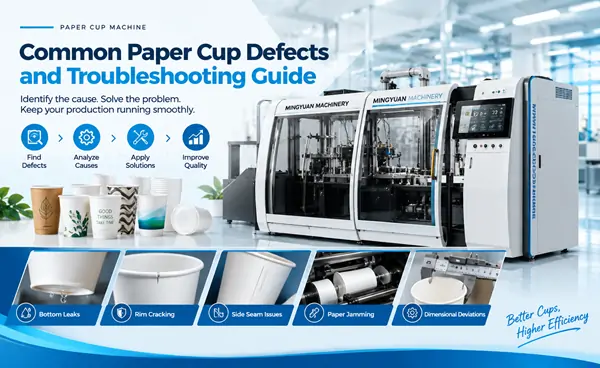
Defect 1: Bottom Sealing Failures
Bottom sealing failures are among the most common quality issues in cup production. Symptoms include water leakage, weak seal strength, and inconsistent bonding across the bottom.
Possible Causes
- Uneven sealing plate temperature: If temperature varies by more than ±5°C across the plate, some cups seal properly while others leak. The PE coating typically requires the sealing plate to reach 230°C to 300°C to transfer heat through the paper thickness.
- Insufficient or uneven pressure: The sealing plate must be parallel to the bottom forming station. Uneven pressure causes one side of the cup bottom to seal while the other remains open.
- Worn knurling wheel: If the knurling pattern has worn flat, bonding effectiveness drops significantly. The wheel should be inspected every 500 operating hours.
- Inconsistent paper web tension: Low tension causes the paper to shift during feeding, leading to misaligned bottom discs.
Diagnostic Approach
- Use an infrared thermometer to measure the sealing plate at three points: left, center, and right. All readings should be within a narrow range.
- Use a feeler gauge to verify the gap around the perimeter when the press is closed. Adjust the top pressure spring tension or cylinder stroke if one side shows a wider gap.
- Inspect the knurling wheel pattern. Replace if the texture is no longer visible.
- With the machine stopped, pull the paper web by hand at the unwind stand. There should be uniform resistance across the full width.
Defect 2: Rim Cracking and Deformation
Rim cracking appears as splits or fractures along the curled edge. Deformation includes uneven rims or flattened sections.
Possible Causes
- Low paper moisture content: Paper that is too dry becomes brittle and prone to cracking during rim curling. Split rim rolls are most often caused by low moisture content in the cupstock.
- Incorrect curling die adjustment: Improper height or pressure settings cause uneven rims or curling defects.
- Excessive forming speed: Rapid forming increases the risk of rim cracking.
- Worn curling dies: Surface wear or incorrect die dimensions affect rim quality.
Diagnostic Approach
- Verify paper moisture content. Paper cup base paper typically requires 6% to 8% moisture for stable forming.
- Check curling die height and pressure settings against the machine manual.
- Inspect curling die surfaces for wear or damage.
- Reduce forming speed temporarily to confirm whether speed is a contributing factor.
Defect 3: Side Seam Issues
Side seam defects include gaps, uneven bonding, visible coating damage, and seam buckling.
Possible Causes
- Improper blank positioning: Off-center positioning can cause folded side seams or failure in overlapping seam surfaces.
- Incorrect sealing temperature: Temperature that is too low results in weak bonding; too high causes coating degradation.
- Paper tension variation: Inconsistent feed tension causes misalignment during seam formation.
- Worn side seam tooling: Mandrel wear or sealing jaw wear affects seam quality.
Diagnostic Approach
- Check blank positioning guides for alignment.
- Verify side seam sealing temperature against the material specification.
- Inspect feed roller condition and tension settings.
- Examine mandrel and sealing jaw surfaces for wear.
Defect 4: Paper Jamming and Feeding Problems
Paper jamming causes production interruptions and increases waste.
Possible Causes
- Excessive paper web tension: Tension that is too high stretches the paper and causes misalignment.
- Worn feed rollers: A worn roller may drive one edge faster, skewing alignment. If roller diameter differs by more than 0.5mm, replacement is recommended.
- Incorrect suction cup timing: Misaligned suction cups cause misfeeds.
- Paper dust accumulation: Paper dust and coating residue on the feed track interfere with smooth feeding.
Diagnostic Approach
- Check web tension at the unwind stand for uniform resistance.
- Measure feed roller diameter and replace if wear exceeds 0.5mm difference.
- Clean the feed track and suction cups regularly.
- Verify suction cup timing against the machine manual.
Defect 5: Dimensional Deviations
Cups that are out of specification for height, diameter, or wall thickness.
Possible Causes
- Worn tooling: Mandrel wear or punch wear affects dimensional accuracy.
- Paper thickness variation: Thickness variation changes how the paper compresses under forming pressure.
- Parameter drift: Gradual changes in temperature or pressure settings.
- Mechanical misalignment: Cam timing or guide rail misalignment.
Diagnostic Approach
- Measure sample cups at regular intervals and compare to target specifications.
- Inspect mandrel and punch for wear.
- Verify paper thickness consistency within the batch.
- Check cam timing and guide rail alignment.
Quick Reference: Defect Symptom to Cause Table
| Defect symptom |
Most likely cause |
First check |
| Bottom leaks |
Uneven sealing temperature |
Measure plate temperature at 3 points |
| Rim cracking |
Low paper moisture |
Check moisture content |
| Side seam gaps |
Off-center blank positioning |
Inspect positioning guides |
| Paper jamming |
Excessive web tension or worn rollers |
Check tension and roller diameter |
| Dimensional deviation |
Worn tooling or parameter drift |
Measure mandrel and verify settings |
| Inconsistent seal |
Worn knurling wheel |
Inspect knurling pattern |
When to Seek Technical Support
If defects persist after checking the most likely causes, the issue may involve electrical control components, sensor calibration, or mechanical components requiring professional inspection. Review the paper cup machine FAQs for additional guidance or contact Discover for technical support.
FAQ
What is the most common cause of paper cup bottom leaks?
Uneven sealing plate temperature is the most common cause. If the temperature varies by more than ±5°C across the plate, some cups will seal properly while others leak. Use an infrared thermometer to verify temperature at multiple points.
Why do paper cup rims crack during forming?
Low paper moisture content is a frequent cause. Paper that is too dry becomes brittle and prone to cracking during rim curling. Verify that paper moisture content is within the recommended range of 6% to 8%.
How do I know if the knurling wheel needs replacement?
Inspect the knurling pattern every 500 operating hours. If the texture is no longer visible or the surface appears smooth, the wheel should be replaced. A worn knurling wheel cannot create sufficient pressure for proper bonding.
What causes paper to jam in the feeding section?
Excessive web tension or worn feed rollers are common causes. Check the web tension at the unwind stand and measure feed roller diameter. If roller diameter differs by more than 0.5mm, replacement is recommended.
Can the same defect have multiple causes?
Yes. For example, a leaking bottom could result from uneven temperature, insufficient pressure, worn knurling, or inconsistent paper tension. Troubleshooting requires checking each potential cause systematically.
How often should dimensional checks be performed?
Dimensional checks should be performed at least every 30 to 60 minutes during production, and immediately after any parameter change or tooling adjustment.
Conclusion
Troubleshooting paper cup defects requires a systematic approach that considers material, tooling, parameters, and mechanical condition. By using the defect-to-cause framework in this article, operators can identify root causes more efficiently and reduce downtime. For specific equipment questions, review the available configurations or contact Discover to discuss your production challenges.

 English
 Pусский
 عربي
عربي