How to Choose the Right Paper Cup Machine for Your Capacity
May 20,2026
Let’s start with a situation I’ve seen too many times. A small business owner buys a compact cup forming unit rated for 50 cups per minute, thinking it will handle their growing order book. Six months later, they are running three shifts, the machine never stops, and maintenance costs have doubled. On the other side, a larger manufacturer invests in a high‑speed line that can do 200 cups per minute, only to discover their average batch size is 10,000 cups – and changeovers eat up half the day.
Matching your cup forming equipment to actual demand isn’t just about looking at a spec sheet. It’s about understanding your peak seasons, your cup size range, your material (PE‑coated paper or biodegradable alternatives), and your operator skill level. In this guide, I’ll walk you through a capacity‑first decision framework that has helped dozens of packaging converters avoid costly mismatches.
Why “Cups Per Minute” Can Be Misleading
Almost every buyer starts with the speed number: 60, 80, 120 cups per minute. But that number is usually measured under ideal lab conditions – single size, perfect paper rolls, no stoppages. In real life, you lose time during roll changes, jam clearances, and quality checks.
A better metric is net effective output per shift. For example, a machine rated at 100 cups per minute might only deliver 70–75 cups per minute across an 8‑hour shift once you account for setup, cleaning, and minor interruptions. That 25–30% efficiency gap is where most capacity miscalculations happen.
Step 1: Calculate Your Required Throughput – Honestly
Before looking at any equipment, write down three numbers:
Peak daily demand (the busiest month’s average day)
Typical daily demand (rest of the year)
Largest single order quantity
Then add a 15–20% buffer for growth. If your peak is 50,000 cups per day, you need equipment that can sustainably produce 60,000 cups per day.
Now convert that to net required speed. Assume you will run two shifts (16 hours) at 70% efficiency for heavy duty machines, or one shift (8 hours) for smaller units. For 60,000 cups in 16 hours, you need a net output of 62.5 cups per minute. Adding the efficiency factor, the machine’s rated speed should be around 90 cups per minute. See how the math changes? Many would have bought a 60‑cup machine and regretted it.
Step 2: Match Machine Type to Your Cup Portfolio
Not all cup forming lines handle every cup style equally. Here is a quick breakdown:
Cup Type
Typical Size Range
Key Challenge
Recommended Station Design
Single‑wall drinking cups
4–16 oz
High speed, consistent bottom seal
Rotary with servo‑driven punch
Double‑wall insulated cups
8–24 oz
Air layer formation, longer heating
Dual‑turret or multi‑station
Soup / food containers (wide rim)
8–32 oz
Large diameter, curl strength
Heavy‑duty press with reinforced cams
Custom printed / specialty cups
2–12 oz
Registration accuracy
In‑line registration system
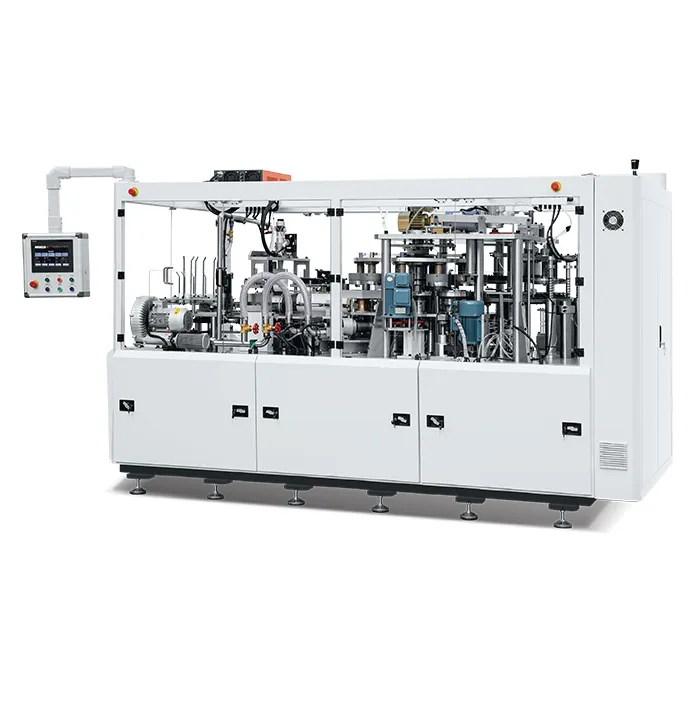
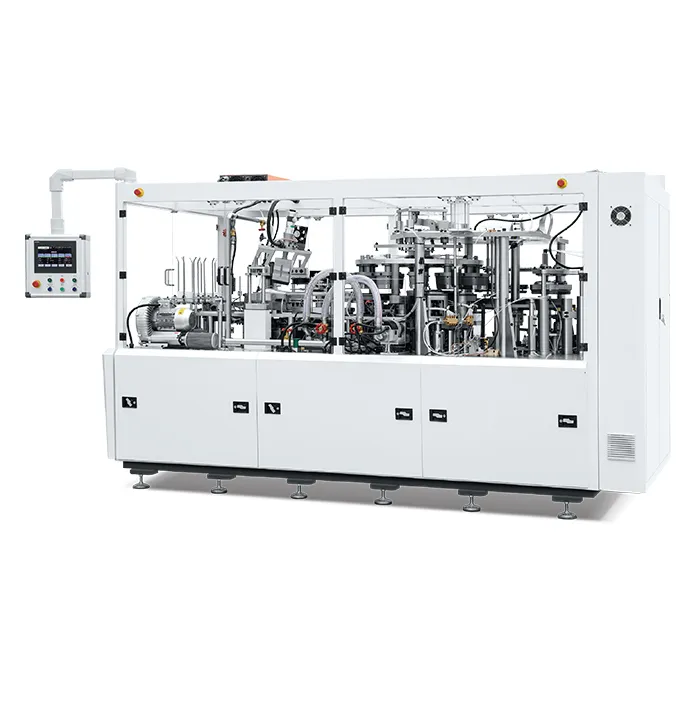
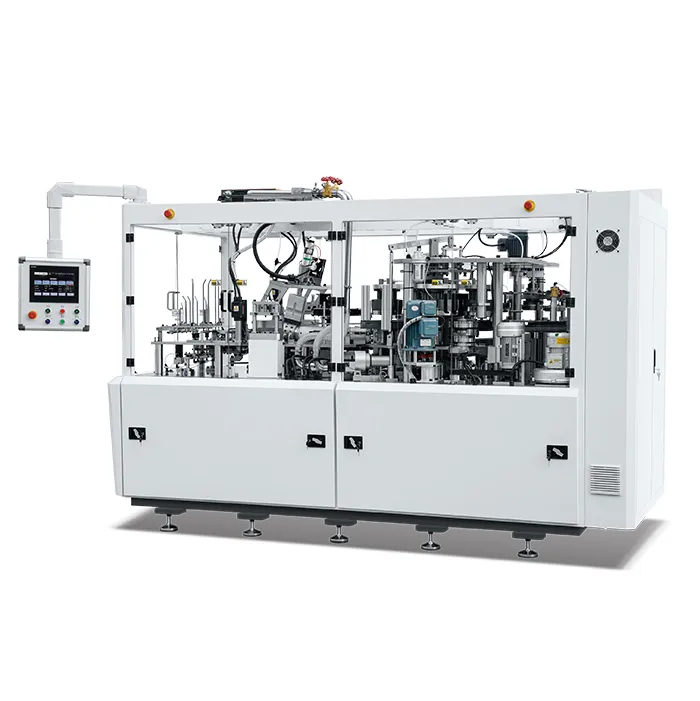
A high‑capacity production system for double‑wall cups will look very different from one optimized for standard 9‑oz cups. If your customers ask for both, you may need interchangeable mold sets or even two dedicated lines.
Step 3: The Hidden Capacity Killer – Changeover Time
This is where many buyers get trapped. A high‑speed unit might claim 150 cups per minute, but if switching from an 8‑oz to a 12‑oz cup takes 90 minutes, and you run six size changes per day, you lose 9 hours of production. Suddenly that “fast” machine becomes your bottleneck.
Ask any supplier: “What is the tool‑change time from 8 oz to 12 oz, including heating zone adjustments and registration?”
I have seen manufacturers cut changeover from 75 minutes to under 15 minutes simply by choosing a modular forming station with quick‑release mold clamps and recipe storage. The extra upfront cost paid for itself in less than four months of saved downtime.
Step 4: Material Compatibility Affects Real Speed
The shift to compostable and PLA‑coated papers has changed the game. These materials behave differently from standard PE‑coated paper. PLA requires narrower temperature windows (typically 10–15°C lower) and longer sealing dwell times. Running PLA on a machine designed only for PE can cut your effective speed by 30–40%.
If you plan to offer eco‑friendly cups – and most converters do by 2025 – make sure your cup forming system includes:
Independent heating zone control (top/bottom)
Digital temperature readouts with 1°C resolution
Optional servo‑driven sealing pressure adjustment
Some modern lines come with pre‑stored recipes for different materials, which reduces trial‑and‑error waste. This is a feature worth paying for.
Step 5: Operator Skill & Automation Level
A fully automatic line with auto‑stacking and auto‑counting can run reliably with one operator watching three units. A semi‑automatic machine might need one operator per unit. Labor costs add up fast.
Calculate your fully loaded labor cost per hour (wage + benefits + overhead). If a fully automatic line costs $30,000 more but saves one operator per shift across three shifts, the payback period is often under 12 months. That is not an expense; it is an investment in consistency.
Common Capacity Mistakes I’ve Witnessed
Mistake #1: Buying a machine rated for your average demand.
Then the holiday season hits, and you have to turn away orders or pay for expensive outsourcing. Always size for peak + buffer.
Mistake #2: Ignoring the edge‑trim waste rate.
Some machines waste 8–10% of paper on side trims, especially when running narrow cup sizes. High‑precision slitting and registration can bring waste down to 3–5%. Over a million cups, that 5% difference is a small fortune.
Mistake #3: Not testing with your actual paper rolls.
Paper stiffness, moisture content, and coating weight vary by supplier. A machine that runs perfectly on premium paper may choke on economy rolls. Ask for a trial run using the paper you intend to buy.
The 2025 Capacity Planning Cheat Sheet
Before signing any purchase order, get answers to these six questions:
What is the net cups per minute for my cup size and paper grade?
How long does a full tooling change take (video proof)?
What is the energy consumption per 1,000 cups (kWh)?
Does the supplier provide remote diagnostics and spare parts availability within 48 hours?
Can the machine run PLA and PE without hardware modification?
What is the expected lifespan of wear parts (cutting knives, heating elements)?
A supplier that answers these with data – not brochures – is worth considering.
When Should You Consider a Modular or Expandable System?
Some manufacturers think they have to buy a line that exactly matches today’s volume. But if you expect 30% year‑over‑year growth, a modular design might be smarter. You start with a single‑lane configuration at 80 cups per minute, then add a second lane later to reach 160 cups per minute. The upfront cost is higher than a fixed‑speed machine, but you avoid selling and replacing equipment every two years.
Brands like Discover have focused on this scalability approach. Their cup forming platforms are built with common rail systems that let you add forming stations, stackers, and counters as your order book grows.
If you are still unsure about the right capacity tier, many suppliers offer a free production simulation based on your cup sizes, shifts, and material. You can request a capacity auditthat compares three machine configurations side by side.
And for those who want to see real‑world data, download the 2025 cup forming efficiency report – it includes 12 case studies from converters who upsized or downsized their lines based on actual demand patterns.
Final thought: The right capacity is not the biggest number you can afford. It is the number that keeps your line running at 80–85% utilization during peak season, with enough slack for maintenance and unexpected orders. Start with honest demand data, work backwards, and never trust lab‑speed claims without a factory acceptance test using your own paper and cup design.
References:
Smithers (2024). The Future of Paper Cup Manufacturing to 2029. Report summary.
ISO 536:2019 – Paper and board – Determination of grammage (affects cup stiffness and machine feed consistency).
TAPPI T 410 om-18 – Basis weight of paper and paperboard.
Discover Machinery internal white paper: “Changeover Time Reduction in Double‑Wall Cup Lines” (2024).
Zhejiang Discover Machinery Manufacturing Co., Ltd. is a premier manufacturer with 27 years of experience, specializing in high-precision machinery for diverse applications. Certified with CE, ISO, SA8000, and more, we offer innovative solutions, 60+ export countries, and a robust production capacity of 100 units monthly. Discover our advanced technology, quality assurance, and global expertise.
Quality control in paper cup production is most effective when it prevents defects rather than detecting them after they occur. A systematic approach covers five checkpoints: incoming material inspect
Electricity cost is a recurring expense that affects the profitability of any cup production operation. The key challenge is that the power rating on a machine's nameplate does not represent actual op
Changeover efficiency determines how much productive time is lost when switching between different cup sizes. Factories that change cup sizes frequently often find that the time and quality impact dep
Our paper cup machine service is supported by a dedicated team of professionals, from providing pre-sales advice and customizing machines to meet specific production requirements, to providing ongoing post-sales support and guidance.
Genuine parts ensure long-term availability
Seamless installation by technicians
Digital back-office management and compatible systems
Products and solutions to support a wide range of production needs
Exhibitions
We value your privacy
We use cookies to provide you with a better online experience, analyse and measure website usage, and assist in our marketing efforts.

 English
 Pусский
 عربي
عربي