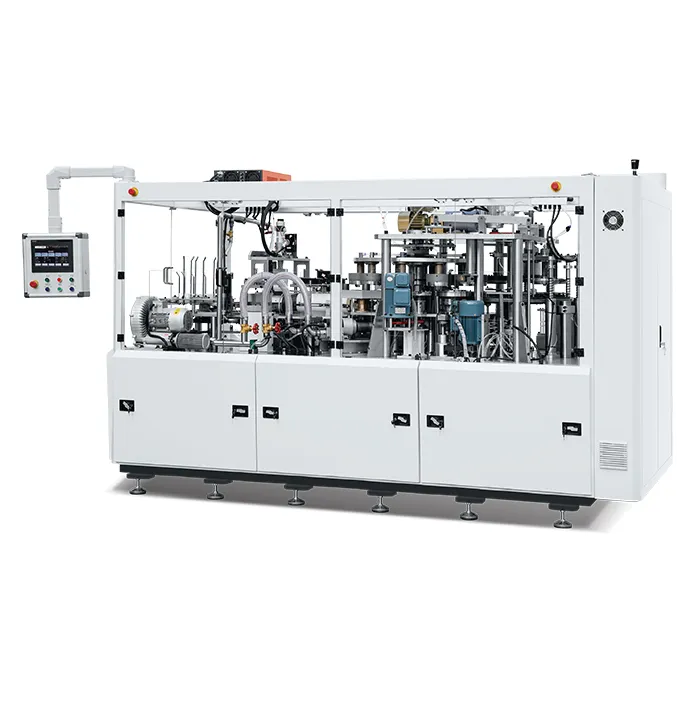
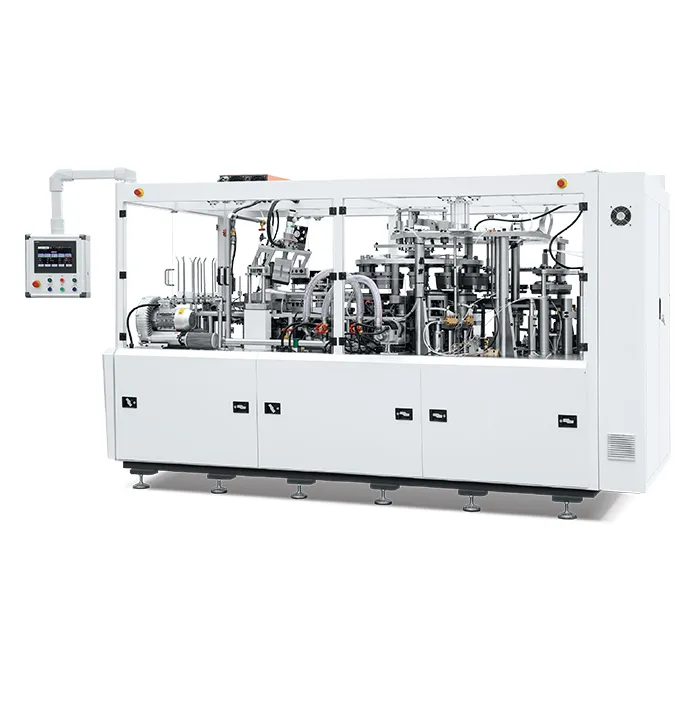
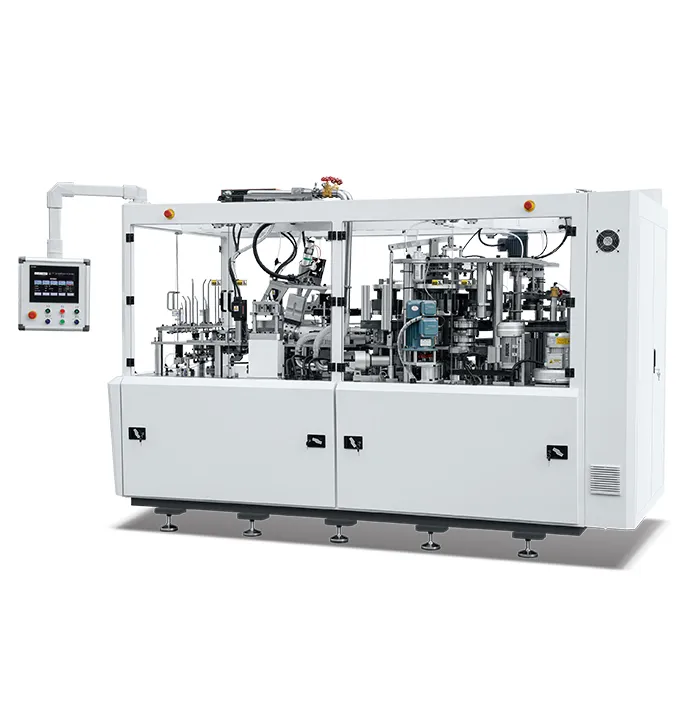
Many paper cup manufacturers operate the same machine across different orders, which often means switching between single PE (polyethylene) and double PE coated paper. While the machine is designed to handle both materials, running double PE paper with the exact same parameters used for single PE will result in frustrating defects—most commonly scorched seams, coating buildup on tooling, or uneven rim curling. This article explains the material differences and provides a practical guide for adjusting sealing temperature, pressure, and speed.
Before changing your machine settings, it is essential to understand the equipment's capabilities. You can review the standard configurations and heating specifications on the paper cup machine category page.
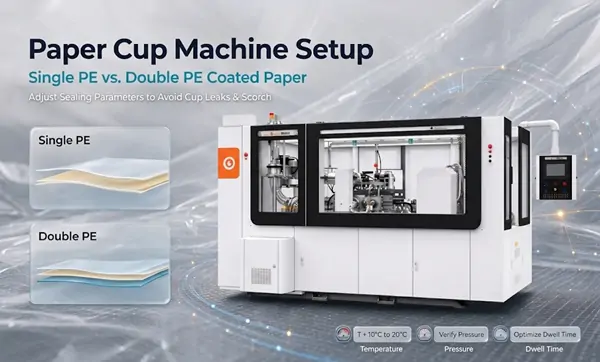
The Core Difference Between Single and Double PE
The difference is not just thickness; it is about thermal mass and heat transfer.
- Single PE Paper: Typically has a coating weight of around 12 to 15 g/m² on one side. Heat transfers quickly through the single layer to the paper substrate. It requires less energy (lower temperature) to melt the PE for sealing.
- Double PE Paper: Has a PE coating on both the inside and outside of the cup. The total coating weight can be 20 to 30 g/m² or more. This extra layer acts as an insulator. The heat from the sealing jaw or hot air must penetrate this additional plastic layer before it can fuse the paper.
Adjusting Sealing Temperature
Because double PE has more plastic to melt, it requires a higher temperature—but not excessively so.
- Single PE Settings: If your machine runs single PE 250 GSM paper well at 250°C, keep it there.
- Double PE Settings: You may need to increase the sealing plate or hot air temperature by 10°C to 20°C. However, do not overheat. Excessive heat will cause the outer PE layer to stick to the sealing jaws or mandrel, leaving the cup with a rough, scorched appearance. Increase in small increments and test the seal.
Adjusting Dwell Time (Sealing Time)
If the temperature is correct but the seal is still weak, the heat is not having enough time to transfer through the double layer.
- The Change: Increase the dwell time (the duration the sealing jaw stays closed or the hot air blasts). Some machines allow this adjustment directly on the HMI (touch screen), while mechanical machines may require adjusting the cam profile or mechanical stop.
- The Risk: Slowing the machine down to increase dwell time reduces overall output. It is better to optimize temperature first, and only then adjust speed or dwell time.
Adjusting Sealing Pressure
Double PE paper is slightly thicker and stiffer than single PE.
- The Change: Ensure the sealing pressure is sufficient to force the two layers together while the melted PE acts as an adhesive. If the pressure is too low, microscopic gaps will remain even if the temperature is correct, leading to leaks.
- Tooling Clearance: Because double PE adds thickness, check that the knurling wheel or crimping jaw has enough clearance. If the pressure is too high, it may fracture the paper fibers and cause the cup to crack at the seam.
Common Defects When Switching to Double PE
| Defect |
Probable Cause |
Adjustment |
| Scorched or brown edges |
Temperature too high, or dwell time too long |
Reduce temperature by 5°C increments |
| Coating sticks to mandrel |
Outer PE layer overheated and melted onto the metal |
Lower sealing jaw temperature; check for tooling wear |
| Weak side seam |
Insufficient dwell time or low pressure |
Increase dwell time slightly; verify pressure settings |
| Rim curling cracks |
Paper too thick for the curling die clearance |
Check die gap; ensure paper moisture is adequate |
Best Practices for Switching Materials
- Run a Scrap Test: Never start full production immediately after changing paper rolls. Run 10–20 cups and perform a manual tear test on the seam and a water leak test on the bottom.
- Clean the Tooling: Double PE leaves more plastic residue. When switching back to single PE, thoroughly clean the sealing jaws and mandrels to prevent carbonized plastic buildup from affecting the next run.
- Check the Knurling Pattern: On the bottom seal, ensure the knurling wheel is creating a clear, deep impression. On double PE, a shallow impression usually means air pockets are trapped, leading to leaks.
FAQ
Can my machine run both single and double PE paper?
Yes. Most standard cup forming machines are designed to handle both. However, you must adjust the temperature, pressure, and potentially the dwell time when switching between the two materials.
Why does double PE paper require a higher temperature?
Double PE paper has a plastic layer on both sides, increasing the total thickness of the coating. The heat must penetrate this extra layer to properly fuse the paper fibers together.
Why are my double PE cups getting scorched on the seam?
Scorching occurs when the temperature is too high or the dwell time is too long. The outer plastic layer burns before the inner layers have bonded properly. Reduce the heat and test again.
Do I need different molds for single and double PE?
Usually, no. The difference in thickness is minimal (measured in microns). However, if you experience rim cracking, you may need to adjust the curling die clearance slightly to accommodate the thicker paper.
How do I test if the cup is properly sealed?
A simple water leak test is the most effective method. Fill the cup with dyed water, place it on a paper towel, and wait a few minutes. Any color transfer on the towel indicates a bottom or side seam leak.
Conclusion
Switching between single PE and double PE paper requires a basic understanding of heat transfer and pressure. By slightly increasing the temperature and verifying pressure, you can maintain high production speeds without sacrificing cup quality. To confirm the heating capacity and parameter limits of your specific machine, contact Discover for technical assistance.

 English
 Pусский
 عربي