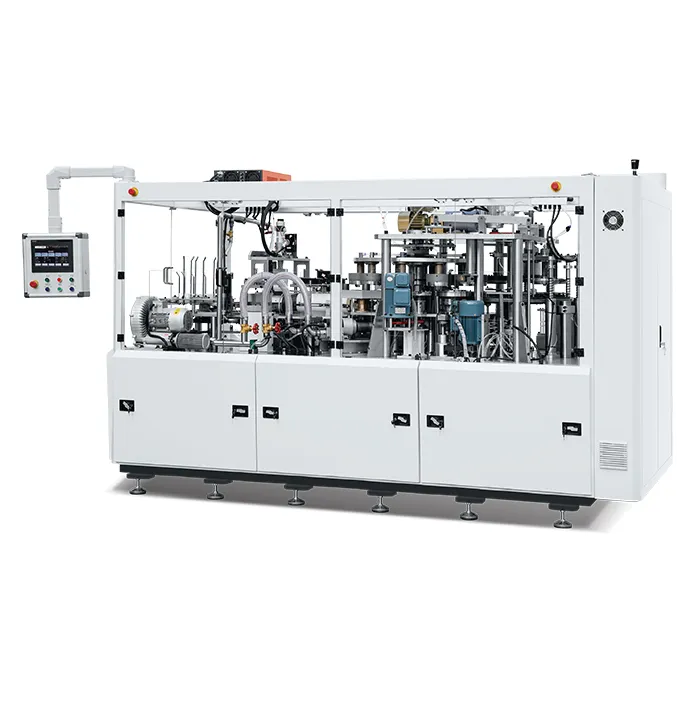
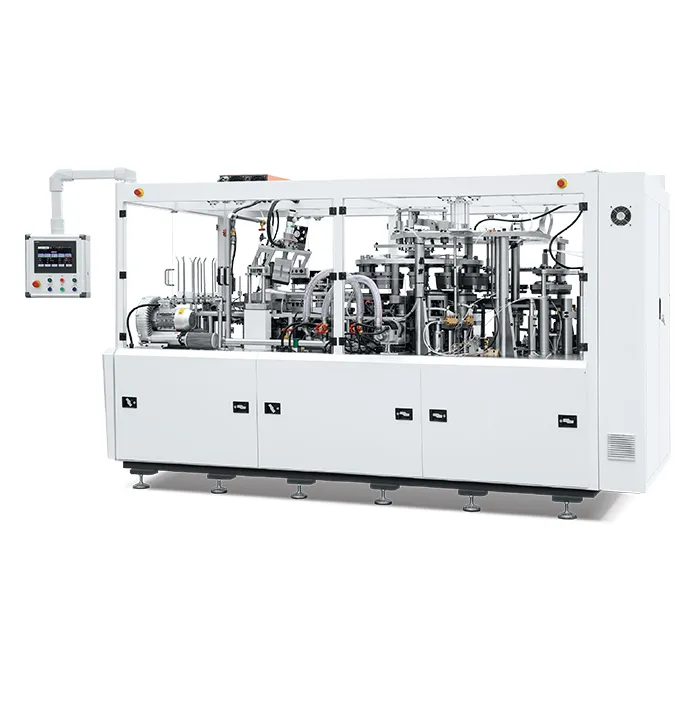
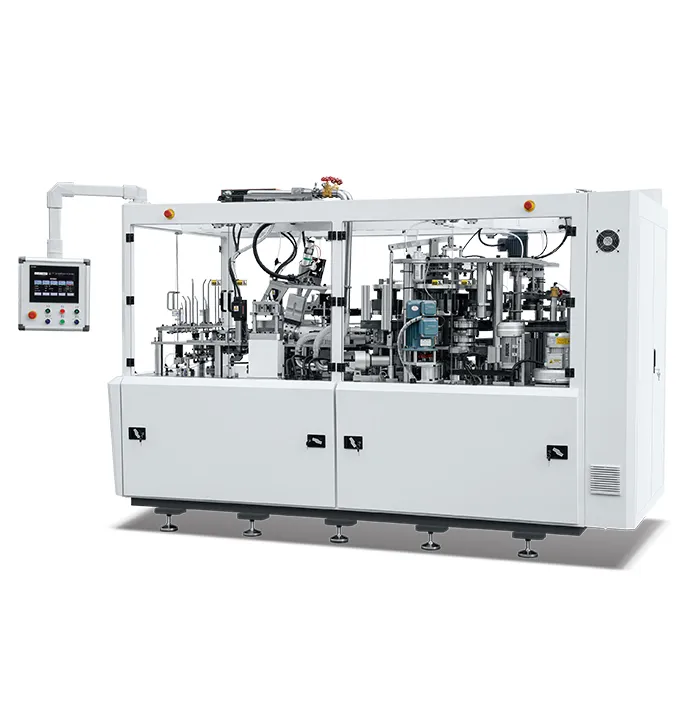
Compressed air is the invisible utility behind every paper cup machine. While electricity drives the main motor and heaters, compressed air powers the precise, repetitive actions—vacuum suction for paper feeding, pneumatic cylinders for bottom punching, and gripper mechanisms. If the compressed air system is undersized or contaminated, even a perfectly tuned machine will produce misaligned cups, suffer frequent jams, or stop entirely. This guide explains how to size the air supply and maintain it to avoid production losses.
Before calculating air requirements, it helps to review the equipment specifications on your planned line. You can check the paper cup machine category to identify the typical air consumption figures for different models.
Why Compressed Air Quality Matters in Cup Forming
Air is not just used for blowing; it is used for holding and moving.
- Paper Feeding (Vacuum): Suction cups pick up the fan-shaped paper blank from the stack. If vacuum pressure is weak or the suction cup is clogged with oil/water, the paper will drop mid-transfer, causing a jam.
- Bottom Punching (Cylinders): Pneumatic cylinders drive the punch that forms the cup bottom. Fluctuating air pressure results in inconsistent bottom formation, leading to leaks.
- Rim Curling and Ejection: Air blasts help eject finished cups. Moisture in the air will leave water spots on the cups, which damages the PE coating and poses a food safety risk.
To ensure your production meets food-grade requirements, it is important to use clean air and equipment built to rigorous standards. You can review our certificate page to see our compliance with international safety regulations.
Key Air Requirements for Paper Cup Machines
Paper cup machines typically require a working pressure of 0.4 to 0.8 MPa (approximately 4 to 8 bar). The required air volume depends on the machine speed and number of stations:
- Medium-speed machines: Typically require about 0.4 m³/min.
- High-speed or fully automatic lines: May require 0.6 to 0.8 m³/min or more.
More critical than the volume is the air quality. The International Organization for Standardization (ISO) defines air quality classes in ISO 8573-1. For food-contact packaging equipment, the air should ideally meet:
- Solid particles: Class 2 or better (filtered).
- Water (pressure dew point): Class 2 or better (typically +3°C to -20°C dew point, requiring a refrigerated dryer).
- Oil: Class 1 or 2 (if using an oil-lubricated compressor, coalescing filters are mandatory).
How to Size the Air Compressor and Receiver Tank
A common mistake is buying an air compressor that matches the machine's rated consumption exactly. In reality, the compressor must supply the machine plus cover system leaks and future expansion.
Calculate the Compressor Output
Formula: Compressor Output = Machine Consumption × 1.3 to 1.5
Example: If the machine requires 0.4 m³/min, choose a compressor that outputs at least 0.55 m³/min (0.4 × 1.3). The extra margin prevents the compressor from running continuously at 100% load, which shortens its lifespan.
Size the Receiver Tank
The receiver tank acts as a buffer. It absorbs pressure spikes when multiple cylinders on the machine fire simultaneously. A tank that is too small will cause pressure drops, even if the compressor is large enough.
Rule of thumb: For every 0.1 m³/min of compressor output, provide at least 50 to 100 liters of tank capacity. For a 0.6 m³/min system, a 300L to 500L tank is typically appropriate. Detailed air consumption metrics are usually listed in the product specifications for each model.
Install a Refrigerated Air Dryer
Air from a compressor is hot and saturated with moisture. As it cools in the pipes, water condenses. This water will eventually reach the machine's solenoid valves and suction cups, causing rust and jams. A refrigerated air dryer drops the dew point to about +3°C, removing the bulk of the moisture. If the factory is in a high-humidity climate, a desiccant dryer may be required.
Troubleshooting Cup Defects Caused by Air Issues
If the machine is experiencing issues, check the air supply before adjusting the mechanical settings.
| Defect / Symptom |
Air-Related Cause |
Solution |
| Paper feeding jams |
Weak vacuum due to leaking suction cups or clogged air lines |
Check suction cup wear; clean inline filters; verify vacuum generator |
| Inconsistent bottom seal |
Air pressure drops during the punching stroke |
Install a dedicated air receiver closer to the machine; check cylinder seals |
| Cups eject inconsistently |
Air blast nozzle misaligned or clogged |
Clean nozzles; verify solenoid valve timing |
| Rust in pneumatic cylinders |
Water carryover from the compressor |
Install/drain filters and air dryer; check for water traps |
Daily and Weekly Air System Maintenance
The air system requires less attention than the mechanical parts of the machine, but skipping routine checks leads to sudden failures.
Daily Tasks
- Drain the receiver tank: Open the drain valve at the bottom of the tank to remove condensed water.
- Check the regulator gauge: Ensure the machine is receiving stable pressure during operation, not just when idle.
- Empty filter bowls: Drain water from the water separator and filter regulator at the machine inlet.
Weekly Tasks
- Inspect the air dryer: Verify the dew point indicator (if equipped) and ensure the condenser is clean.
- Check for leaks: Walk the air lines while the machine is pressurized. Listen for hissing sounds at joints and fittings.
- Clean suction cups: Remove paper dust and oil film from the vacuum cups to ensure a tight grip.
Consistent maintenance is the key to equipment longevity. Built with high-quality components and backed by decades of manufacturing expertise, you can learn more about Discover and our commitment to reliable machinery.
FAQ
What is the typical air pressure required for a paper cup machine?
Most paper cup machines operate at a working pressure of 0.4 to 0.8 MPa. The specific requirement depends on the machine model and cylinder design.
Can I use a standard workshop air compressor for a paper cup machine?
You can, but it must be paired with a refrigerated air dryer and filtration system. A standard compressor without drying will introduce moisture into the pneumatic system, causing rust and food safety issues.
Why does my machine jam when picking up paper?
A jam during paper picking is usually caused by weak vacuum. Check if the suction cups are worn or clogged, and verify that the air pressure is stable and free of water.
Do I need an air receiver tank?
Yes. Paper cup machines have multiple pneumatic cylinders that fire in sequence. An air receiver tank provides a buffer to prevent pressure drops during the high-demand portion of the cycle.
How often should I drain the air compressor tank?
Drain the receiver tank and filter bowls daily. If the factory is in a humid climate, it may be necessary to drain them at the end of every shift.
Can oil from the compressor affect paper cups?
Yes. If an oil-lubricated compressor is used without a coalescing filter, oil mist can travel through the air lines and be ejected onto the cups. This damages the PE coating and violates food contact safety standards.
Conclusion
The compressed air system is a critical part of cup forming production. Sizing the compressor and receiver tank correctly, installing a dryer to remove moisture, and performing daily drainage will prevent many of the jams and defects that operators mistakenly attribute to the machine itself. To confirm the specific air consumption and pressure requirements for your planned equipment, review the available configurations or contact Discover to discuss your factory layout.

 English
 Pусский
 عربي