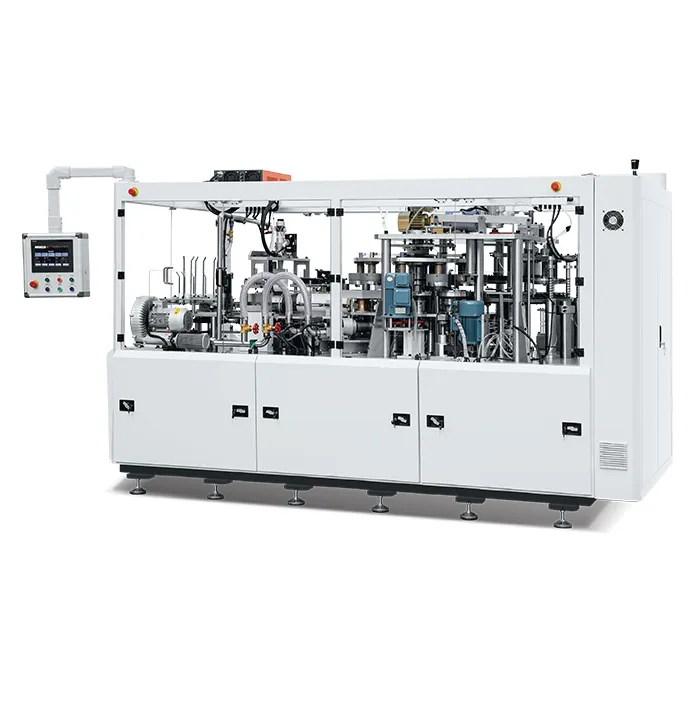
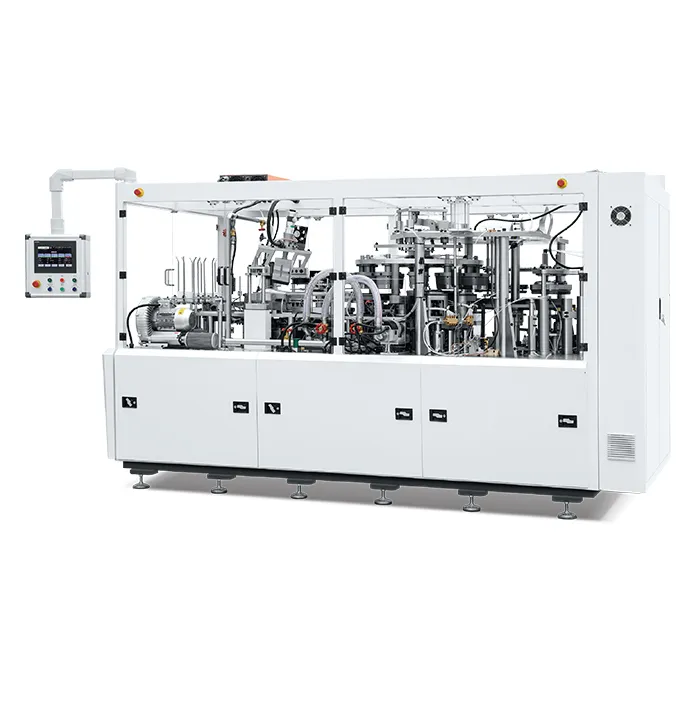
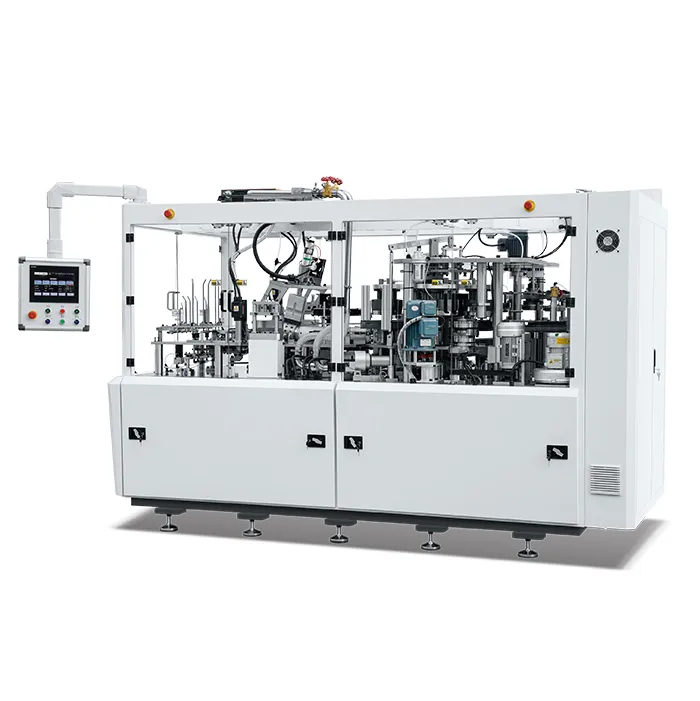
Starting a paper cup production line is exciting. But choosing the actual equipment? That’s where many buyers get stuck — and sometimes make expensive errors.
A buyer recently shared with me: “I went for the cheapest unit, but after three months, downtime killed my margins.”
You don’t want that.
This guide walks you through seven practical checks when you pick a paper cup machine. No fluff. No hard-selling. Just actionable advice to help you make a confident decision.
1. Define Your Output Reality First
Before comparing any technical specs, ask yourself:
Many first-time buyers overestimate. They purchase a high-speed unit (e.g., 100+ cups/min) but run it at 40–50% capacity. That’s capital wasted.
Conversely, underestimating leads to frequent line changes and overtime costs.
Pro tip: Calculate your needed speed as: (daily target cups) ÷ (planned operating hours ÷ 60) × 1.2 (safety buffer). Match that number to the machine’s sustained speed, not the max advertised.
2. Cup Size Range & Changeover Flexibility
Are you making 8 oz takeaway cups? 12 oz? 16 oz for iced drinks?
Most standard units handle a range. But check two things:
-
Tooling change time: Can you switch from an 8 oz to a 12 oz in under 30 minutes without specialized tools?
-
Wall thickness compensation: Does the machine automatically adjust sealing pressure based on paperboard thickness? If not, you’ll see leakers.
Machines with quick-release mandrels and digital thickness calibration save hours weekly. For operations running multiple cup sizes, look for flexible cup forming solutions that minimize downtime — because every minute stopped is money lost.
3. Machine Construction: Steel, Cams & Bearings
This is where hidden costs live.
Open the safety guard — yes, ask for a demo or video. Look at:
-
Cam material: Hardened steel cams last 8–10 years. Nylon-coated? Replace every 18 months.
-
Main bearing brand: SKF or FAG? Generic bearings increase vibration, directly affecting cup bottom sealing consistency.
-
Frame welding: Continuous welding or spot welding? Continuous = stable for high-speed runs. Spot welding = gradual misalignment.
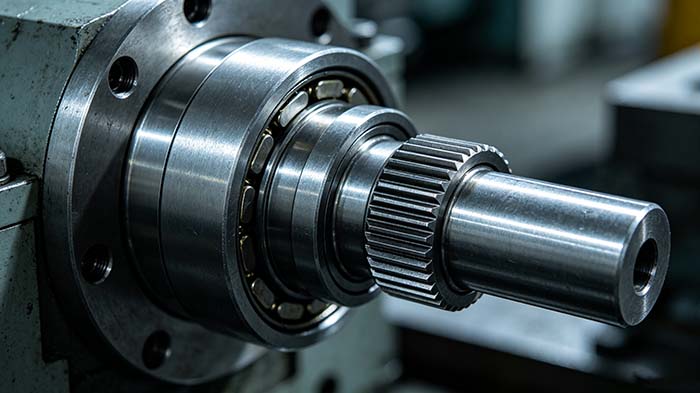
A buyer once told me he saved 3,000onaunitbutspent3,000onaunitbutspent2,200 on bearing replacements in year one. False economy.
If you want to inspect high-quality cup forming solutions, pay attention to these structural details — they separate short-term gadgets from long-term workhorses.
4. Energy Consumption & Utility Setup
Paper cup machines are not huge energy hogs, but differences exist.
Ask the supplier:
-
Installed power (kW) and actual consumption under load — they are rarely the same.
-
Air pressure requirement: 6 bar is standard. But some low-quality machines demand 8+ bar, forcing you to buy a larger compressor.
-
Heat sealing zone wattage: Better insulation around heating elements reduces idle power draw by 15–20%.
One small workshop reduced its electricity bill by €180/month simply by choosing a machine with automatic standby heating. Over five years, that’s real money.
5. Common Failure Points & Spare Parts Availability
Every machine has weak links. Good suppliers are transparent about them. Ask:
I recommend checking the mean time between failures (MTBF) for the bottom knurling mechanism — it’s the most stressed part on any cup former.
Also, demand a spare parts list with prices before purchasing. If a 0.30O−ringcosts0.30O−ringcosts15 as a “special part”, walk away.
For critical operations, having a local stock of wear parts (sealing belts, cutoff knives, mandrel sleeves) is smart. Some manufacturers offer reliable paper cup forming equipment with clearly documented spare part numbers — that transparency is a green flag.
6. Software & Diagnostics: Not Just Mechanical
Modern machines (since ~2018) should include:
-
Cycle counter per tool set — alerts you when bottom sealing tools need replacement.
-
Production log via USB or Wi-Fi — export shift data without proprietary software.
-
Fault code library on the HMI — so your operator can troubleshoot without calling a technician at 11 PM.
I’ve seen shops lose two shifts, just because of a sensor misalignment that a simple diagnostic screen would have shown. Don’t overlook this.
7. After-Sales: The Question Most People Skip
Here’s the question no one asks but everyone should:
“Do you have a local service partner, or do you offer remote video support for adjustments?”
Even the best machine will need fine-tuning.
Ask for three references from customers who bought the same model 12–18 months ago. Call them. Ask: “How fast did they respond when you had a sealing issue?”
If the supplier hesitates, that’s your answer.
When to Explore Professional-Grade Options
If, after these seven checks,s you realize your operation requires higher output consistency, faster changeovers, or better documentation for ISO compliance, it might be time to look beyond entry-level units.
Some manufacturers specialize in building machines for continuous, multi-shift operation with transparent spare parts policies and remote diagnostics built in.
You can explore DISCOVER’s paper cup machine lineup if you want to see how professional-grade cup forming equipment is configured for low downtime and predictable maintenance. Their team also provides a free capacity checklist based on your actual numbers — no obligation.
Disclaimer: The insights above are based on industry practices and buyer experiences as of 2025. Always verify specifications with multiple suppliers. The author does not receive commission from machine sales.
Note: The images in this article are for reference only.

 English
 Pусский
 عربي
عربي